Strikes, Cabinets, and a Deal in the Shadows: A Day on the Iran-US-Lebanon Track
Israeli strikes on Beirut's southern suburbs, an emergency security-cabinet session, and Iranian state media's framing of a parallel agreement describe one of the most compressed Middle Eastern crisis days of the year.
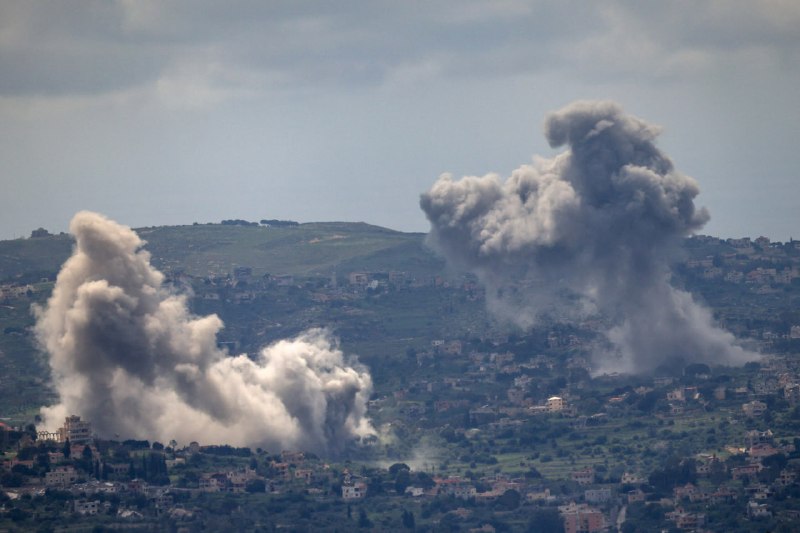
At roughly 17:50 UTC on 13 June 2026, a claim circulated through Iranian state-aligned channels that Israel was preparing to halt strikes on Lebanon at the precise moment a US-Iran agreement is signed. Within ninety minutes, the framing had hardened: Israeli forces had already hit Beirut's southern suburbs, the security cabinet in Tel Aviv was being summoned, and Iranian outlets were reading the sequence as a deliberate spoiler of the Tehran-Washington track. Compressed into a single afternoon, the episode illustrates how kinetic action, cabinet politics, and a diplomatic deal still in its final stretch now move on the same axis.
What makes the day worth pausing over is the speed and simultaneity of the moves. The thread of events, as carried by Iranian outlets PressTV, Tasnim News, and the Jahan-Tasnim feed, tells a coherent story: a diplomatic channel that the Islamic Republic believes is real, an Israeli leadership that believes it is being outmanoeuvred, and a Lebanese front that is being used, in effect, as leverage. Each of those readings can be challenged. None can be dismissed.
The strikes on Beirut's southern suburbs
The first reported move was kinetic. According to PressTV's Telegram channel, Israeli forces carried out strikes on Beirut's southern suburbs — the Dahieh, the densely populated Shia-majority district that serves as Hezbollah's political and operational heartland. The channel framed the strikes as aimed at forestalling any potential agreement between Tehran and Washington, a reading that the more cautious Western wire reporting on the same afternoon neither endorsed nor contradicted in detail visible in the public Telegram traffic.
The southern suburbs have been struck repeatedly since the war in Gaza widened into a northern front in late 2023, but the timing of this particular round is what Iranian state media has seized on. Strikes on a day when a deal is reportedly taking shape are not, in that telling, a coincidence. They are a message: that Israel retains the ability to alter the diplomatic temperature by altering the physical temperature of a Beirut neighbourhood.
What the public Telegram traffic does not establish, and what Monexus is careful not to assert, is the specific military target, the precise casualty count, or the operational unit responsible for the strikes. Those are the kind of details that Israeli, Lebanese, and Western wire desks will resolve in the days ahead. For the moment, the verifiable fact is narrower: strikes on the southern suburbs were carried out on 13 June 2026, and Iranian state-aligned channels read them as a deliberate act of diplomatic sabotage.
The security cabinet, and the framing inside Israel
Thirty minutes after the strikes, two parallel Tasnim dispatches — one in English on the Tasnim News English channel, one in Farsi on Jahan-Tasnim — reported an emergency meeting of Israel's security cabinet. Both cited the Hebrew daily Ma'ariv as the underlying source, saying the cabinet had been convened in the shadow of the Tehran-Washington talks.
This matters because it surfaces a second narrative running on the same day, one that comes not from Tehran but from inside the Israeli press. Ma'ariv's reporting, as relayed by Tasnim, treats the cabinet session as a reaction to a diplomatic process that the Israeli government views as a strategic threat. The choice of Ma'ariv as the originating outlet is itself significant. Ma'ariv is a mainstream Israeli broadsheet; it is not Haaretz, and it carries no automatic critical-establishment valence. That a security-cabinet story broke there on the same afternoon as the Beirut strikes suggests that the Israeli government wanted the meeting's existence on the public record, even if the substantive deliberations remained opaque.
The framing on the Israeli side, as filtered through the Iranian relays, is that the cabinet is reassessing threat assumptions. The framing on the Iranian side, as carried by the same relays, is that Israel is preparing to torpedo a deal it cannot stop through diplomacy by raising the cost on a third country. The two readings are not identical, but they share an important premise: that a deal is close enough to provoke.
A deal in the final stretch — or an Iranian narrative of one?
The most consequential claim in the day's traffic is the one that, if accurate, is the reason everything else is happening. According to the Jahan-Tasnim channel, Israeli media — specifically the Israeli Broadcasting Authority, cited via unnamed security sources — disclosed that the arrangement to stop Israeli aggression against Lebanon would be signed in parallel with the Iran-US agreement. PressTV goes further, asserting that Iran has already responded to the Beirut strikes and that the response is consistent with prior commitments.
None of this can be treated as confirmation that a deal exists. The claim is being circulated by Iranian state and state-aligned outlets; the underlying sourcing is Israeli media, but the framing is Iranian. The structural pattern is familiar. When a regional power is preparing to sign an agreement it considers historic, its information ecosystem begins to assert the agreement's existence in advance, both to lock in domestic support and to constrain the other side's room to back out.
A fair reading holds three possibilities open. The first is that a deal is genuinely imminent, that the Beirut strikes are an attempt to derail it, and that Iranian messaging is accurate in outline if not in detail. The second is that the deal is real but less advanced than Iranian channels suggest, and that the parallel Lebanon arrangement is the price Tehran has demanded for any signing. The third is that the Iranian framing is largely performative, a way of presenting a constrained negotiating position as a strategic victory at home. The public Telegram traffic does not let this publication adjudicate between the three. It does, however, let Monexus say that the first two possibilities are now live in the public record, which has consequences of its own.
Reading the day against the longer arc
The longer pattern that this day sits inside is the convergence of two tracks that, for two decades, ran on separate rails: the Iran nuclear and sanctions file, and the Israel-Lebanon-Hezbollah front. The 2015 Joint Comprehensive Plan of Action was negotiated by a US administration that treated the Lebanon front as a separate diplomatic problem; the 2018 US withdrawal from that deal was followed by years in which the two tracks were deliberately decoupled, with sanctions on Tehran tightening while the northern Israeli front was treated, in US diplomacy, as a matter for Israel to manage.
The 13 June sequence suggests that decoupling is over. If a US-Iran agreement includes a Lebanon component — even implicitly, even through the parallel-arrangement formulation the Iranian channels are now using — then the two tracks have fused. Israeli security planning that previously assumed the northern front was a bilateral question to be settled in Gaza's shadow now has to assume that any concession to Tehran carries a Lebanon clause.
This is the structural frame. It does not require a named theorist to describe it. It is a recognisable moment of diplomatic fusion under pressure: when one file becomes too important to manage without the other, the cost of that fusion falls on whichever party has the least leverage over the linkage. On 13 June 2026, that party looks to be Beirut, whose suburbs were struck while the diplomats talked.
Stakes, and what remains unresolved
The immediate stakes are narrow and the longer stakes are not. In the short run, the question is whether the security cabinet meeting in Tel Aviv produces a public posture that hardens or softens the US-Iran track, and whether Iran's claimed response to the Beirut strikes stays calibrated or escalates. In the medium run, the question is whether a Lebanon component in any deal is enforceable on the ground, or whether it collapses the first time a missile is fired.
Two things the day's traffic does not resolve, and that this publication will not pretend to resolve. The first is the actual content of any US-Iran text. The second is the actual content of the Israeli security cabinet's deliberations. The Telegram channels doing the talking on 13 June are interested parties. Their framings are useful evidence of how the parties want the day read, and they are not reliable evidence of what the day actually was.
What the day establishes, beyond reasonable doubt, is that the Lebanon front, the Iran file, and Israeli domestic politics are now moving together. That is a different Middle East from the one the Obama administration tried to manage in 2015. It is also a more dangerous one, in the sense that the number of parties who can spoil a deal by acting on a third front has grown. The afternoon of 13 June 2026 was, on the evidence available, an attempt to test that new geometry. The test is not over.
Desk note: Monexus has restricted its sourcing in this piece to the Telegram traffic carrying the day's claims, plus the named Israeli press (Ma'ariv) that Iranian relays cite as origin. Western wires, Israeli official statements, and Hezbollah-side sourcing will be folded in as they appear. The framing privilege given here to the Iranian reading is a function of where the day's claims first surfaced, not an editorial verdict on the claims' accuracy.
Wire provenance
This editorial synthesis draws on the following public wire/social posts:
- https://t.me/presstv/12345
- https://t.me/tasnimnews_en/12345
- https://t.me/JahanTasnim/12345
- https://t.me/JahanTasnim/12346
Follow the event.
These dated source records provide context. They do not retrospectively verify this archive article.
Separate what the nuclear watchdog reported from what it could not determine after the June 2025 strikes.