Trump's Truth Social Iran salvo: deal theatrics, Strait of Hormuz bargaining, and a JCPOA ghost
A flurry of Truth Social posts on 13 June 2026 frame a US-Iran accord as imminent, denounce the 2015 deal as an Obama-era surrender, and dangle the Strait of Hormuz as a Trump-only concession. The claims, the contradictions, and what a signed text would still have to settle.
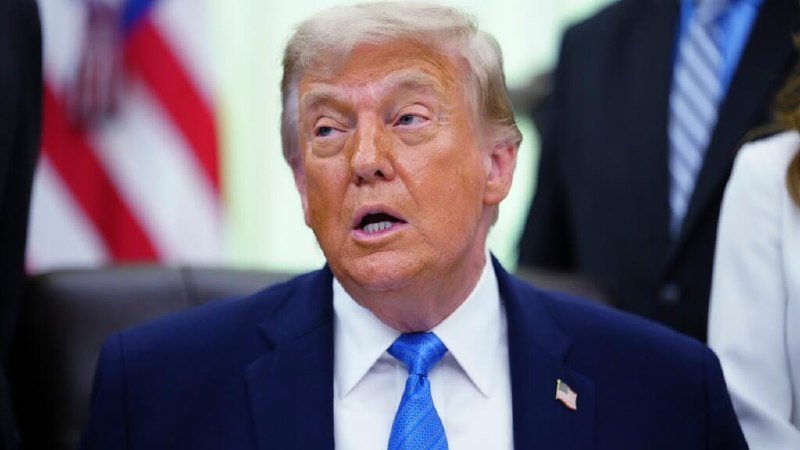
On 13 June 2026, US President Donald J. Trump took to Truth Social with a sequence of posts that touched every nerve of the long-running US-Iran confrontation: nuclear weapons, the Strait of Hormuz, the legacy of the 2015 Joint Comprehensive Plan of Action, and a sharply worded personal jab at his predecessor. Within hours, the same posts were being read in three very different registers — Tehran, Gulf Arab capitals, and Western foreign-policy shops — and the divergences say as much as the text itself.
The substantive claim, stripped of the political theatre, is concrete. Trump announced that a deal with the Islamic Republic of Iran will be signed on Monday, 14 June 2026, and that, once it is, the Strait of Hormuz will be "OPEN TO ALL" — language that effectively rolls a maximalist US maritime-security posture into the agreement's marketing. The same posts insist that the Iranian side "neither wants nuclear weapons nor will they have them, neither by purchase, development" — a phrasing that, in diplomatic shorthand, forecloses the breakout scenarios that have shaped sanctions architecture since 2018. Whether either of those declarations survives contact with the signed text is the question that will define the next 72 hours.
What Trump actually wrote
The sequence began shortly after 17:00 UTC on 13 June 2026, when Trump posted on Truth Social that his agreement with Iran was "absolutely the opposite" of permitting nuclear weapons, and that Iran "neither wants nuclear weapons nor will they have them, neither by purchase, development" — citing that phrasing, the user channel OSINTdefender reported, ahead of any wire pickup. Within the same hour, OSINTdefender also reported Trump's claim that "once the deal with Iran is signed tomorrow, the Strait of Hormuz will be 'OPEN TO ALL'," adding — per the same channel summary — that Trump went on to state that, at some point, the chokepoint would have been closed by the other side absent this arrangement.
A third summary, from the user channel BellumActaNews, captured the comparative frame: "Barack Hussein Obama's Deal with Iran, the JCPOA, was an easy, beautiful, sm..." — the post trailing off, but the thrust unmistakable. Trump was positioning the imminent accord as the inverse of the 2015 deal, recasting JCPOA as the naive original and his own text as the corrective. A fourth item, from the channel DDGeopolitics, registered the tonal register: blame for Obama, the claim that Iran "no longer wants nukes" — described in the channel's own framing as something Tehran "has been saying themselves for decades."
The pattern is consistent enough to read as deliberate. The Truth Social thread is doing four things at once: announcing a signing date, asserting a maximalist non-proliferation outcome, claiming credit for a strategic chokepoint, and recasting the JCPOA as the foil. The same four claims, in roughly that order, are the building blocks of any US political case for the deal at home.
The Strait of Hormuz question
The Hormuz language is the most consequential — and the most legally vague. The strait, a 21-nautical-mile-wide corridor between Iran and Oman through which roughly a fifth of global seaborne oil transits, has been the single most cited flashpoint in US-Iran naval brinkmanship for four decades. Iran's Islamic Revolutionary Guard Corps Navy has periodically seized commercial tankers there, often in retaliation for US sanctions enforcement; the US Fifth Fleet, headquartered in Bahrain, has run interoperability exercises with Gulf Arab partners explicitly framed around keeping the corridor open.
To declare Hormuz "OPEN TO ALL" as a deliverable of a bilateral deal is to assert that a single agreement between Washington and Tehran can determine the legal status of a waterway bordered by three sovereign states — Iran, Oman, and the United Arab Emirates — and patrolled under regimes (UNCLOS, customary international law, and a thicket of bilateral transit arrangements) that none of those parties are about to amend in a side letter. The more defensible reading, and the one most regional analysts have begun to circulate in private, is that Trump's language is a unilateral declaratory statement: a promise that the US side will not itself impede transit, bundled with a demand that Iran reciprocate. Read that way, "OPEN TO ALL" is political theatre wrapped around an arms-control outcome — not a legal determination of the strait's status.
Iranian state-aligned outlets have, historically, rejected exactly that framing. Tehran's preferred position is that Hormuz's openness is contingent on the behaviour of extra-regional fleets; a closure threat, in that reading, is a sovereign prerogative. The text Trump is advertising implicitly disclaims the Iranian position. The question is whether Tehran has agreed to disclaim it in writing, or whether the Truth Social post is, in effect, an American opening offer that the other side has not yet signed on to.
The JCPOA as foil, not as template
Trump's contrast with the 2015 deal is the rhetorical engine of the whole exercise, and it deserves to be read carefully. The JCPOA was a multilateral instrument — Iran, the United States, the United Kingdom, France, Germany, Russia, and China, with the European Union as coordinator — that traded constraints on Iran's enrichment capacity, centrifuge counts, and stockpile for sanctions relief, with a sunset architecture and a dispute-resolution mechanism. Its critique from the Trump administration, first delivered in 2018, was that it expired too soon, excluded missiles and proxies, and offered relief before verified behavioural change.
What the Truth Social posts describe is, structurally, a different animal: a bilateral, sunset-resistant arrangement that, on the US side, asserts an outcome ("no nukes, no purchase, no development") rather than a process. If the signed text delivers what Trump is promising, it is a denial architecture — a permanent, verification-anchored commitment not to acquire — rather than a containment architecture, which is what the JCPOA was. That distinction matters. Containment expires; denial is meant not to.
But the same distinction is what makes the deal fragile. Containment deals survive verification disputes because the verification regime is the deal. Denial deals survive verification disputes only if the verification regime is robust enough to detect the pathway the deal forecloses — a particularly high bar in the case of a state with the technical depth Iran accumulated under the JCPOA itself.
Counter-narrative: what the framing obscures
The deal-as-inversion story is a clean one. It is also incomplete. The Iranian position — articulated by Tehran's own spokespeople and echoed in commentary from outlets including The Cradle and Middle East Eye — has long been that Iran never sought nuclear weapons in the first place, that a fatwa against weapons of mass destruction issued by Supreme Leader Ayatollah Ali Khamenei in the early 2000s foreclosed the programme politically, and that the JCPOA's value was precisely that it recognised that fact in exchange for sanctions relief. On that reading, Trump's "Iran neither wants nor will have" formulation is not a concession wrung from Tehran — it is the opening position Tehran has held for the better part of two decades, now being celebrated in Washington as a Trumpian triumph.
The harder question, which the Truth Social thread does not address, is the verification architecture attached to the deal. The JCPOA's verification regime, run by the International Atomic Energy Agency, was the deepest inspections arrangement ever negotiated for a non-weapons state, and it was the principal casualty of the 2018 US withdrawal. Whatever the 14 June text contains on that front will determine whether the deal ages well or badly. The Truth Social posts do not, at this stage, give a reader much to go on.
Stakes
If a deal is signed on 14 June 2026 along the lines Trump is advertising, three sets of actors have something significant at stake. The first is the Iranian economy, where the sanctions architecture of the last eight years has compounded into a structural constraint on oil exports, foreign exchange access, and imported intermediate goods; even partial relief, sequenced over the second half of 2026, would change the country's fiscal trajectory. The second is Gulf Arab energy markets, where Saudi Arabia, the UAE, and Iraq have been operating on the assumption of continued Iranian isolation; a reopened Hormuz and a sanctions-eased Iran reshape regional spare-capacity calculations in real time. The third is the US domestic political market for the deal: Trump's Truth Social framing is built to convert the announcement into a domestic win on his own terms, and the speed of the rollout — claims, signing, framing, contrast — is calibrated to a 24-hour news cycle rather than a 24-month implementation horizon.
The risk in that last calculation is the gap between political language and verified outcome. A deal that promises denial delivers, in practice, only what its verification regime can enforce; a deal that boasts an open strait delivers only what its signatories are willing, in a crisis, to honour. The posts of 13 June 2026 stake a great deal on the assumption that those two things will line up — and that the 14 June signing text is robust enough to make them line up.
Desk note: Monexus has carried Trump's claim of an imminent signing at face value as a political declaration, and treated the Strait of Hormuz language as a US-side political promise rather than a legal determination. The independent confirmation of the 14 June text, and the verification architecture that travels with it, will determine whether the deal holds up to the framing that has been built around it in the last 24 hours.
Wire provenance
This editorial synthesis draws on the following public wire/social posts:
- https://t.me/DDGeopolitics
- https://t.me/osintlive
- https://t.me/osintlive
- https://t.me/BellumActaNews
Follow the event.
These dated source records provide context. They do not retrospectively verify this archive article.
Separate what the nuclear watchdog reported from what it could not determine after the June 2025 strikes.