Tehran's 48-hour whiplash: how close is the U.S.–Iran deal, really?
A presidential announcement of completion, a CIA caveat on Iranian intent, and a $300 billion fund the public has never seen: the 48-hour arc from 12 to 15 June tells a different story than the headline.
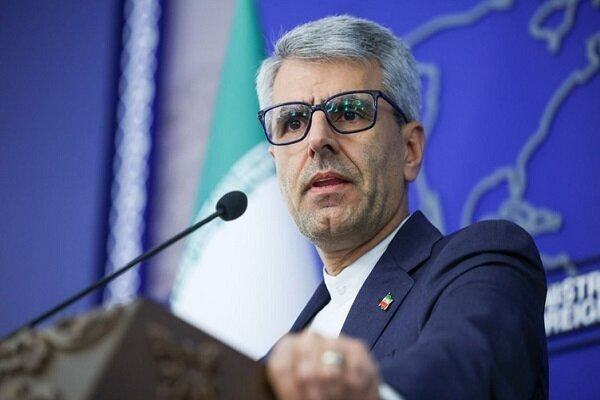
By the close of trading on 15 June, the Dow sat at a record high, crude oil futures fell, and the Trump administration told the world a deal with Iran was "now complete." Forty-eight hours earlier, the picture had looked entirely different: a 12 June framework that officials described as imminent and Tehran treated as a starting point, with the Islamic Republic publicly sequencing its own demands before any signature. The whiplash between those two moments is the story, and the gap between a deal announced and a deal agreed is what the next week will turn on.
The framework that wasn't signed
On 12 June, the U.S. side circulated what it called a framework for a nuclear understanding, and senior officials briefed reporters that a signing was close. Tehran's response was to insist on a different order of operations: economic relief first, verification milestones after, and no political commitment to limits that hadn't yet been negotiated in writing. Iranian state-linked outlets framed the framework as a basis for talks, not a deal. The distinction mattered because every subsequent announcement, from the blockade announcement to the $300 billion reconstruction fund under consideration, sits on top of an unsigned document whose text no one outside the talks has seen.
The New York Times captured the resulting confusion on Capitol Hill. Senators in both parties said they had no information on an agreement the administration has declined to release, and Democrats demanded an immediate briefing. The piece's headline said it plainly: lawmakers were "in the dark" on a deal the White House was already calling finished.
The 15 June package
Donald Trump announced on 15 June that the U.S. naval blockade of Iran was over and that "the deal with the Islamic Republic of Iran is now complete." Vice President Vance told NBC that Qatari and Pakistani mediators had played a critical role in bringing the process across the line. The Financial Times reported the same day that the administration was weighing approval of a roughly $300 billion private investment and reconstruction fund for Iran, with access conditional on Tehran upholding the memorandum of understanding.
The market reaction was immediate. Wall Street's three major indexes rallied into the close, the Dow printed a record, and crude slid on the assumption that a reopened Iranian export channel would ease the inflation pressure that has dogged the administration since the blockade began. President Trump told reporters the deal could "help reshape the Middle East and deliver economic benefits worldwide," per the Epoch Times. A separate report noted a sanctioned VLCC had slipped through the blockade line while spoofing its location and begun loading roughly two million barrels of Iranian crude.
What the intelligence community is saying out loud
Within hours of the presidential announcement, Axios reported that CIA Director John Ratcliffe had told the president and other senior officials that U.S. intelligence indicates Iran does not intend to abide by its nuclear commitments under a final deal. A separate alert framed the assessment more sharply: that intelligence raised "serious doubts" about Iran's willingness to make the nuclear concessions Washington is seeking. The reporting did not say whether the assessment was shared before or after the 15 June announcement, but its timing made it impossible to ignore.
The prediction markets moved accordingly, but only partway. The Spectator Index flagged that the implied probability of a U.S.–Iran nuclear deal before October, on Kalshi, had risen to roughly 52%. Polymarket's tape on the same question sat in a similar range. Traders were pricing the headline and discounting the intelligence in roughly equal measure.
The Israel problem
In Jerusalem, the response was cooler. Prime Minister Benjamin Netanyahu told Israelis that "the struggle has not ended" and that Israeli forces would remain in Lebanon despite the U.S.–Iran understanding. Deutsche Welle noted he had refrained from publicly criticizing the deal, content to register distance rather than dissent. Residents on the Israeli border with Lebanon told Middle East Eye they were unhappy that Tel Aviv's military campaign was being treated as a negotiating chip.
Netanyahu's posture is the political tell. Israel is not a signatory to the framework, holds its own veto over any arrangement it views as enabling a nuclear-armed Iran, and has the means to act unilaterally. A deal Washington calls complete is, from Jerusalem's vantage, a draft until the nuclear question is settled to Israeli satisfaction.
The handoff
The next seventy-two hours are about text. If the memorandum of understanding is published, the intelligence dispute becomes a debate about clauses. If it isn't, the gap between Ratcliffe's caveats and Trump's announcements widens, and the $300 billion fund becomes a contested political object in Washington before it ever becomes a balance-sheet entry in Tehran. Either way, the Polymarket tape is no longer the story. The story is whether the document exists at all.
Sources
- New York Times, The (Mostly) Unanswered Questions at the Heart of a U.S.–Iran Accord
- New York Times, In the Dark on U.S.–Iran Deal, Senators Refrain from Praising It
- New York Times, Netanyahu Says Israel Will Keep Forces in Lebanon, Despite U.S.–Iran Deal
- Reuters, Wall Street rallies as Dow hits record on U.S.–Iran preliminary agreement
- Financial Times via WF Witness, U.S. weighs $300 billion Iran reconstruction fund
- Axios via Middle East Spectator, Ratcliffe warns Trump on Iran's nuclear intent
- Deutsche Welle, Netanyahu refrains from criticizing Iran deal
- Spectator Index via Osintlive, Kalshi puts October nuclear deal odds at 52%
- TankerTrackers via WF Witness, Sanctioned VLCC slips blockade line
- Al Alam Arabic, Vance credits Qatari and Pakistani mediation
Desk note: Monexus treated the 12 June framework as a reported shape, not as a signed instrument. The most informative fact in the 15 June record is that the president announced completion while the CIA was telling him Iran does not intend to comply; the tension between those two claims is the predictor worth watching.
Follow the event.
These dated source records provide context. They do not retrospectively verify this archive article.
Separate what the nuclear watchdog reported from what it could not determine after the June 2025 strikes.