Two holdouts: what's left before a US-Iran memorandum becomes a deal
A US-Iran memorandum of understanding is hours from signature, according to the president. Iranian officials tell DropSite two issues still stand between the text and a final agreement — and the market is pricing both possibilities.
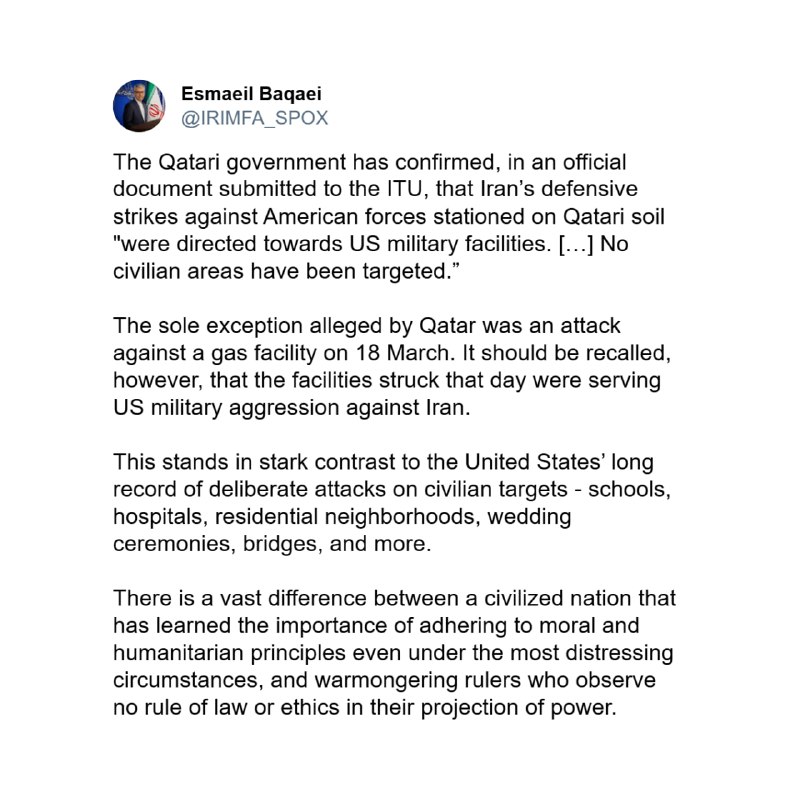
The announcement landed in the late Washington afternoon of 12 June 2026, threaded through the usual channel: a Truth Social post, a press-pool read-out, and a Polymarket contract that has spent the week oscillating between cautious optimism and outright scepticism. Donald Trump told reporters that a memorandum of understanding between the United States and Iran would be signed the following day, 13 June. The text, he suggested, was imminent. The Iranian side, in remarks relayed the same evening to DropSite News via an official who has surfaced in earlier rounds of the negotiation, said the document was close — but not closed. Two issues, the official said, were still outstanding, and the final shape of the deal would depend on the US position on those two points.
That is the narrowest possible framing of a story that has consumed sanctions lawyers in Dubai, energy traders in Geneva, and hostage-families' representatives in Oslo for the better part of a year. The narrower it gets, the more consequential each remaining word becomes. This publication reads the available reporting as a deal that is genuinely close — but genuinely conditional — and the next forty-eight hours as the window in which the conditional becomes the actual.
What is actually being signed
A memorandum of understanding is not a treaty, and the distinction matters more than the press coverage of the past week has tended to suggest. A treaty requires Senate advice and consent under Article II of the US Constitution; an MoU, by long-standing State Department drafting practice, is a political commitment that records what the two sides have agreed to negotiate toward — and, just as importantly, what they have not yet agreed to dispose of. The 2015 Joint Comprehensive Plan of Action was a political accord of this kind, never ratified, and the Trump administration's 2018 withdrawal from it was therefore a presidential prerogative exercised without congressional involvement.
That precedent sits underneath every paragraph being written in both capitals. The Iranian negotiating team, according to the DropSite relay, understands that an MoU is precisely the level of commitment the United States is currently willing to offer. Tehran is treating the document, on the available evidence, as a way to lock the sanctions architecture into a predictable trajectory in exchange for a constrained, verifiable, time-bounded set of nuclear constraints. The constraints, in turn, are being shaped less by what the United States and Iran can agree on bilaterally than by what a third set of actors — the Gulf states, France, the United Kingdom, the IAEA Board of Governors, and the domestic political constituencies on both sides of the Atlantic — will accept.
The Polymarket contract on whether Trump will agree to unfreeze Iranian assets by 30 June sat at 45% on the afternoon of 12 June, after drifting lower through the week. Asset-freezing is one of the two issues the Iranian official flagged to DropSite as unresolved. The other has not been specified in the public reporting this publication has reviewed, but the structure of the negotiation — and the shape of the sanctions inventory — makes the shortlist short. IAEA monitoring access to sites damaged in last year's exchanges; the disposition of Iran's accumulated stockpile of 60%-enriched uranium; the future of the IRGC's regional proxy networks in Iraq, Syria, Lebanon and Yemen; and the scope and sequencing of any sanctions relief are the four items that have tracked through the leaks. Three of them are technically and procedurally complex enough to be the kind of unresolved paragraph a senior Iranian official would describe to a friendly outlet as "outstanding." The fourth — proxy networks — is the kind of issue that, by general accord, does not get resolved in an MoU at all.
The timing problem
What makes the next 48 hours delicate is that the Iranian political calendar and the American political calendar are pulling in opposite directions. The 30 June deadline, after which certain UN Security Council snapback provisions are due to engage, is the public framework inside which this entire round has been constructed. Trump publicly said on 12 June that the deal was "likely" in the coming days, but was not "100%" certain, according to reporting circulated by Unusual Whales the same day. The Polymarket contract is pricing, in effect, the probability that the president's optimism is not over-stated and that the two unresolved issues the Iranian side flagged can be closed in time.
The fact that the president announced the signing for 13 June — the day after his own "likely but not certain" formulation — should be read as a negotiating move rather than a forecast. A signing announcement is itself a piece of leverage. It tells Iranian negotiators that the White House is willing to claim the deal publicly, which raises the political cost of walking away and concentrates Tehran's decision point inside a window the United States has chosen. It also tells the Republican caucus, where the 2018 precedent still resonates, that the president intends to deliver a foreign-policy win on a timeline shorter than the one the JCPOA's critics would have preferred.
The Iranian counter-move, judging by the DropSite relay, is to publicly retain the right to say no on two specific items. That is not brinkmanship for its own sake. It is the standard operating procedure of a negotiation in which the principal has decided to sign but cannot afford to be seen signing a clean surrender. The next 48 hours, on the available reporting, are the interval in which the language of those two paragraphs gets written, reviewed by the relevant legal teams in Tehran and Washington, and then either initialled or sent back for another round.
What the markets are telling themselves
The energy and shipping data for June is consistent with a market that is preparing for some form of relief, without yet pricing the larger end of the spectrum. Iranian crude exports to China have continued at the elevated levels that have characterised the past 18 months, and the discount at which Iranian barrels trade against Brent has narrowed rather than widened, which is what one would expect if the marginal trader believed the sanctions architecture was on a glide-path to relaxation. Refinitiv ship-tracking estimates cited across the trade press in the second week of June put Iranian exports at roughly 1.5 million barrels per day — a level last seen in the early months of the JCPOA's first implementation period. None of that is dispositive. It is, however, the kind of evidence that supports the Polymarket contract's refusal to collapse either way.
The other tell is the price of gold in Tehran's parallel free-market and the depreciation rate of the rial on the unofficial platform Bonbast. Neither is publicly observable in real time at the granularity Western analysts would prefer, but the daily prints that have been moving through the Iran-focused research desks this week suggest that Iranian households are not pricing the deal as fait accompli. The rial has firmed modestly in the past fortnight, but the move is consistent with anticipation rather than celebration. The political class in Tehran, on the evidence of the DropSite relay, appears to be conducting the same calculation as the market: the document is more likely than not to be signed; the two outstanding issues are the kind that can go either way; and the public posture of negotiation in front of domestic audiences will continue until the ink is dry.
The structural question
What is being signed, on the most honest read of the available reporting, is not a settlement. It is a framework for a settlement, negotiated under the same constraints — and with many of the same actors — that defined the 2015 round. The Iran-Israel exchanges of the past 18 months, the operations against Iranian proxy infrastructure in Syria and Lebanon, the IAEA's continuing questions about undeclared sites, and the long-standing US position that any deal must also address Iran's missile programme and regional posture, all of these are still in the room. The MoU is the device by which the United States and Iran are agreeing to put some of those items into a verifiable, time-bounded track and to leave the rest for a later negotiation that may or may not occur.
That is the actual structure of what is being announced. It is closer to the 2013 Joint Plan of Action — the interim deal that bought the JCPOA its negotiating time — than to the JCPOA itself. Critics on the Republican right will describe that as a feature, not a bug, and argue that the president is repeating the same architecture that produced the original Iran deal. Critics on the Democratic left will argue the opposite, and contend that the unsigned, unreviewed, time-bounded architecture is precisely what a tighter sanctions regime should be designed to avoid. The DropSite-sourced Iranian read, expressed as a political fact rather than a substantive position, is that the document being initialled is a deal, and the deal is the best the Iranian system is currently prepared to accept.
The contested analytical question — and the one the Polymarket contract is, in effect, trying to price — is whether the two outstanding issues can be closed inside the 13 June window, and whether the document Trump described tomorrow's signing of is the same document the Iranian side is willing to put its name to. The two descriptions are, on the available evidence, close but not identical. Closing that gap is the work of the next 48 hours.
Stakes and uncertainty
If a memorandum is signed on 13 June, the immediate consequence is a hold on the 30 June snapback track, a partial unfreezing of the Iranian assets the Polymarket contract is pricing, and a defined monitoring regime that gives the IAEA something to verify. If the signature slips, the snapback track resumes, the rial takes another leg down, and the Republican and Democratic critics of the negotiation both acquire fresh material. Either way, the structural question — what to do about Iran's regional posture and missile programme — remains on the table for a future round.
What the public reporting does not yet resolve is the specific identity of the second outstanding issue. The first, on the evidence, is asset unfreezing, and is partially visible in the Polymarket contract pricing. The second has not been disclosed. The two sides' descriptions of the document are converging but not identical, and the gap between them is the space in which the next 48 hours will be negotiated. Monexus will update this article if the second issue is identified in the public record in the next 24 hours.
Desk note: Monexus has framed this story around the Iranian negotiating position and the contested shape of the document, rather than around the announcement in Washington. Wire coverage of the past 48 hours has largely tracked the American announcement; the Iranian sources relayed via DropSite News, with appropriate attribution, supply the other half of the picture and the analytical reason for treating the signing as conditional rather than concluded.
Wire provenance
This editorial synthesis draws on the following public wire/social posts:
- https://t.me/GeoPWatch
- https://x.com/polymarket/status/2039704892412432483
- https://x.com/unusual_whales/status/2039512006104129654
- https://x.com/polymarket/status/2039433589187452912
- https://x.com/polymarket/status/2039413774010954056
- https://en.wikipedia.org/wiki/Joint_Comprehensive_Plan_of_Action
- https://en.wikipedia.org/wiki/Iran–United_States_relations
Follow the event.
These dated source records provide context. They do not retrospectively verify this archive article.
Separate what the nuclear watchdog reported from what it could not determine after the June 2025 strikes.
- https://t.me/GeoPWatch
- https://x.com/polymarket/status/2039704892412432483
- https://x.com/unusual_whales/status/2039512006104129654
- https://x.com/polymarket/status/2039433589187452912
- https://x.com/polymarket/status/2039413774010954056
- https://en.wikipedia.org/wiki/Joint_Comprehensive_Plan_of_Action
- https://en.wikipedia.org/wiki/Iran–United_States_relations