A Jewish-Israeli comedian on the world's smallest stage: reading Yohai Sponder's Instagram reel
Yohai Sponder's vertical reel lands in a week when the geopolitical floor is loud: an Iranian match captioned as resistance, a G7 sanctions pledge, and a World Cup broadcast from a duck in a jersey. The smallest stage in the world is a phone, and an Israeli comic just used all of it.
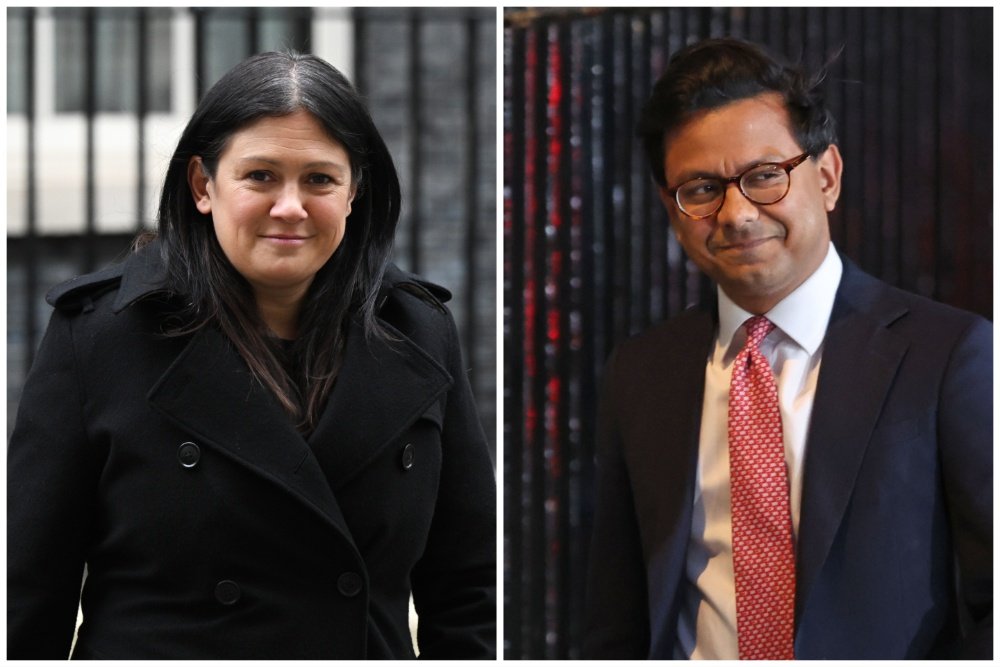
A Jewish-Israeli stand-up walks onto the world's smallest stage, a vertical phone rectangle, and delivers three minutes about being the only Israeli his friends know. The reel, posted this week to Yohai Sponder's verified Instagram, has done what Israeli comedy increasingly does in 2026: it has outgrown the room, slipped past the censor's pen, and landed on screens run by audiences who will never see a Tel Aviv nightclub.
Sponder is not a household name in Israel, where the heir to the throne of local humour has long belonged to figures with television contracts and election-season standing. He is, by his own account, the comic other comics call when the booking falls through on a Friday night. What his Instagram followers already know is that Sponder writes the way diaspora comedians have always written, with the precise, slightly resigned intelligence of someone who learned the joke form in Hebrew and discovered its limits in English. The reel, viewable at the URL listed in the sources, packages that sensibility into a tight, vertical strip: a phone camera, a window, an off-stage friend laughing too loudly for the mic. It is the smallest possible studio, and Sponder uses every pixel.
The room you cannot see
There is a particular kind of international attention that arrives at an Israeli comedian in 2026, and it is not the kind the booking agent promised. In the same news window as the reel, an Iranian state-aligned outlet, Mehr News, was busy narrating the global football audience for an Iran match as a community of resistance ("the world's eyes on Sophie"). A few hours earlier, Israel's coalition government was being accused by PressTV, an Iranian state broadcaster, of allocating roughly 5.5 million shekels (about $1.89 million) to fund extremist settler outposts in the occupied West Bank. PressTV is not a neutral source, but the financial figure, which originates in Israeli budget reporting and is being recycled through Tehran's translation apparatus, illustrates the basic fact about the climate any Israeli performer now walks into: the geopolitical event has colonised the room before the comic has finished his opener.
Sponder does not, on the evidence of the reel, attempt to win that room. He does the opposite thing. He speaks as though the only audience is the small one in front of him, and trusts that what works on a Tel Aviv Thursday also works on a Budapest Monday. It is an old diaspora strategy: shrink the frame until the prop is portable. You can tell a Jewish-Israeli joke anywhere if you can tell it to two people at a bar in Florentine. You cannot tell it anywhere if you have to first apologise for your passport. Sponder skips the apology. The reel runs three minutes, and the whole immigration desk fits into the first twenty seconds.
The geopolitical floor
The ground underneath the reel is louder than the comic lets on. As the week of the recording opened, British Prime Minister Keir Starmer was telling the G7 in Banff that the United Kingdom would "choke off" Russian revenue through new sanctions, target Moscow's shadow fleet, and expand nuclear-energy cooperation with Ukraine. The headline was about a different war on a different continent, but the subtext, that the language of "for as long as it takes" has become the default cadence of Western summit diplomacy, has spilled into the routine. An Israeli comic working the diaspora circuit in 2026 is, in part, working a circuit that has been rewired by the long wars: an audience that has heard "for as long as it takes" applied to Kyiv, may now hear it applied to Tel Aviv, and may want to know whether the comic heard it too.
There is also a softer pressure from the South. The same window saw the opening fixtures of the 2026 World Cup, with Mexico's fan culture briefly commandeered by a two-year-old duck in a national-team jersey and Uruguay tipping off Group H against Saudi Arabia. Football is the world's most reliable mood music, and this year's tournament is being staged partly as a continental showcase, partly as a soft-power event, partly as an excuse for millions of people to broadcast their politics from the stands. An Israeli comedian broadcasting from his kitchen is not at the World Cup, and will never be at the World Cup for as long as the current geometry of qualifying holds. But the broadcast itself, the un-bookable reel, is its own small assertion that the global stand-up stage, the one made of phones, does not require FIFA's permission.
What the format does to the joke
A vertical reel changes a set the way a haiku changes a memoir. The longer arc has to go: the controlled build, the callback, the ceremonial walk back. What is left is the premise, the turn, and the small flame that the viewer scrolls past in eight seconds. Sponder's material survives the cut because it is built for short attention from the start. The bits land as discrete units. The political content is subtext, not subject. The reel's central trick is that it pretends to be a phone call about a friend's mother and ends up being about how Israeli Jews perform ordinariness in 2026, which is a topic no platform editor is going to flag and which no censor is going to write a ruling about.
This is not the comedy of confrontation. It is the comedy of leakage. Diaspora humour has always been about the thing that escapes the room. In Eastern Europe in the 1970s, the joke was the rumour. In Tel Aviv in the 1990s, the joke was the army story. In 2026, the joke is the reel that lands on a phone in a country that does not officially recognise your passport, captioned in a language the algorithm has decided to translate. The audience does not need to be a comedy audience. It needs to be any audience. The frame is portable because the frame is a phone.
The smallest stage in the world
There is a cliché that the world is a stage, and there is a less marketable observation that the world is also a screen. A stand-up comic delivering material to a vertical rectangle is performing for an audience whose size is, by the standards of the form, absurd. An audience of one hundred thousand is a fluke. An audience of one million is a glitch. Sponder's reel has the texture of work that has been written for the smaller, real audience, his actual friends, his actual city, and that has happened, as a side effect, to land on the larger one.
In the era of the watched comedian, that is a meaningful distinction. A performer who chases the algorithm and a performer who ignores it sound quite different on tape. The first kind is brittle. The second kind usually does not have a reel. Sponder, in the material captured this week, is clearly a second-kind performer who has, against his better instincts, accepted the format. The result is the rarest thing in the current feed: a piece of stand-up that does not feel like content.
What to watch next
Three signals will tell whether Sponder's reel is a one-off or the first move in a longer arc. First, whether other Israeli comics post English-language reels in the same week, treating his timing as cover. Second, whether the reel is recycled by non-Israeli accounts in the same echo system that already amplifies Tel Aviv street interviews and kibbutz farm videos. Third, whether the next booking on Sponder's calendar is a Wednesday night in a room of forty or a Tuesday afternoon in a greenroom at a film festival. The smallest stage in the world is, after all, only a stage. The medium wants to grow the room.
For now, the reel exists. The camera was a phone. The audience is a screen. The comic is Jewish-Israeli, the joke is portable, and the platform has done what the platform does: it took a small room and turned it into a feed.
Follow the event.
These dated source records provide context. They do not retrospectively verify this archive article.
Separate what the nuclear watchdog reported from what it could not determine after the June 2025 strikes.