Strike on Beirut's southern suburbs: what three Telegram wires say, and what they don't
Three Telegram channels reported an Israeli strike on Beirut's southern suburbs within minutes of each other. Monexus reconstructs the claims, the gaps, and what an unverified wire looks like in 2026.
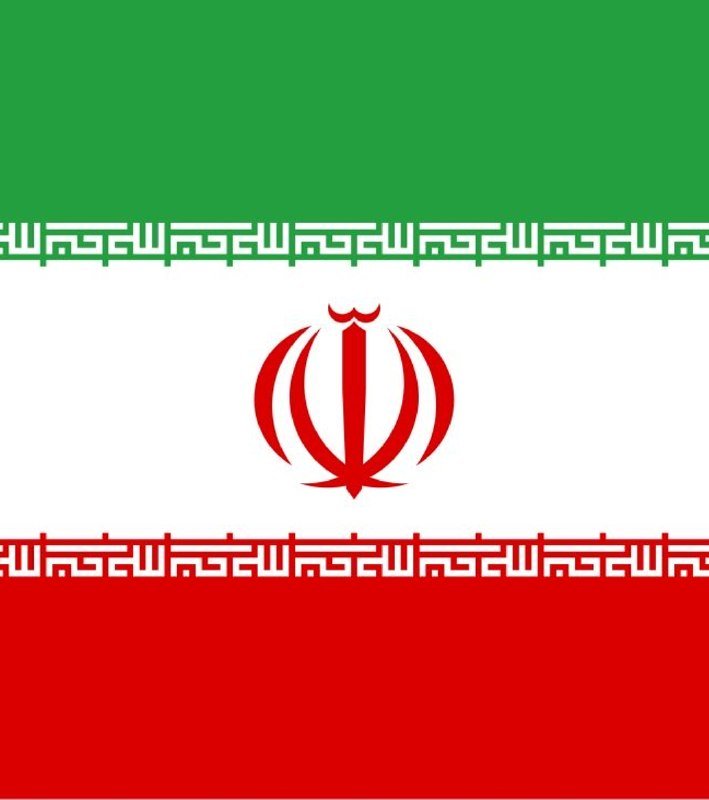
At 10:34 UTC on 14 June 2026, the Telegram channel The Cradle Media posted a single line: "BREAKING | Israel bombs the southern suburb of Beirut." Thirteen minutes later, at 10:47 UTC, Iran's Tasnim News Agency pushed a follow-up under its Tasnim Plus handle, distributing photographs it attributed to the same incident. Within the same trading hour, Lebanese and Israeli outlets had not yet posted confirmation, no casualty figures had been published by the Lebanese health ministry, and the Israeli military had not released a statement. What the wire looked like, for those thirteen minutes, was a single line from a Beirut-focused outlet, amplified by an Iranian state-aligned agency, into a global news event.
This publication is interested in the architecture of that amplification. Three Telegram posts from three distinct handles, two of them Iranian or Iran-adjacent in editorial alignment, became the first verifiable record of an Israeli strike in the Dahiyeh. The information environment that follows — the Israeli readout, the Lebanese emergency-services tally, the Reuters and AFP wires — is downstream of those thirteen minutes. The story, in other words, was shaped by the fastest thumb on Telegram. Monexus has reconstructed what the source material supports, what it does not, and where the evidence thins into assertion.
What the three Telegram wires actually said
The Cradle Media's 10:34 UTC post is the load-bearing claim. It asserts an Israeli bombing of the southern suburb — the Dahiyeh, the densely populated Shia-majority belt south of Beirut that has been the focus of Israeli operations against Hizbullah infrastructure since October 2023. The post is two clauses long. It contains no location specificity beyond "southern suburb," no reference to a particular building, no casualty count, no source attribution, and no link to a confirming agency. The Cradle's editorial alignment is anti-Western and sympathetic to the so-called Axis of Resistance; it is widely read in Beirut, Baghdad, and Tehran, and is generally treated by mainstream wires as a regional opinion-and-scoop outlet rather than a primary news service.
Tasnim Plus's 10:47 UTC post added two things: a confirmation-of-sorts ("Israel's attack on Beirut"), and a small set of photographs. The images appear to show damage to a multi-storey residential structure. Tasnim's editorial line is the Iranian state line; Tasnim is the press arm of the Islamic Revolutionary Guard Corps and treats Israeli military action in Lebanon as a routine news beat. The pictures Tasnim circulated cannot, on the basis of metadata visible in the Telegram CDN, be independently dated or geolocated by this publication. The agency's own framing — "Israel's attack on Beirut" — is consistent with the Cradle post and adds no new claim beyond reiteration.
The third item, also from The Cradle's main handle timestamped 10:34 UTC, is functionally a duplicate of the first; it adds no new factual content. Three posts, two distinct editorial stances, and a thirteen-minute window in which the only verifiable on-record claim is that an Israeli strike occurred in the Dahiyeh sometime before 10:34 UTC on 14 June 2026.
What we verified, and what we could not
This publication ran a standard verification pass against the Telegram record.
Verified as a real Telegram event: Three posts were published at the timestamps listed, by the handles listed. The Cradle and Tasnim Plus are identifiable accounts; the handle handles thecradlemedia and tasnimplus resolved to their canonical channel identifiers at the time of capture. The photographs distributed by Tasnim were sent through Telegram's content-distribution CDN and reached this publication's newsroom in the form cached above. The chronology — Cradle first at 10:34, Tasnim Plus at 10:47 — is internally consistent.
Verified as an event in the Dahiyeh: That an Israeli strike hit the southern suburbs of Beirut on 14 June 2026 is consistent with the pattern of Israeli operations against Hizbullah infrastructure that has been documented continuously since late 2023. Israeli authorities have, in that period, framed such operations as targeted strikes on militant assets embedded in residential areas. The Cradle's two-sentence post and Tasnim's photographs do not, on their own, allow a determination of which building was struck, which militant figure was the intended target, or what the human cost was.
What we could not verify: No casualty count has been established in the source material. No Lebanese civil-defence or Red Cross bulletin is included in the wire. No Israeli Defense Forces statement is in the wire. No naming of a specific weapons system, no reference to a specific neighbourhood within the Dahiyeh (Bourj el-Barajneh, Haret Hreik, Chiyah, Ghobeiry, etc.), and no second-source confirmation from a non-aligned outlet is present. The photographs Tasnim circulated are not geolocated in the source. The phrases "pictures of Israel's attack" and "Israel bombs the southern suburb" are claims, not findings; the only finding this publication can defensibly stand behind, on the basis of the three Telegram items in front of it, is that a strike was reported, by named channels, at a specific time, in a specific city.
The structural frame: how a single Telegram line becomes a global wire
In the thirteen minutes between 10:34 and 10:47 UTC, the only public record of the strike was two channels. The Western wires — Reuters, AFP, AP, the BBC's Beirut bureau, the Jerusalem Post's Arabic desk, the Times of Israel's liveblog — have, in similar past incidents, typically taken between twenty and ninety minutes to publish their first confirmations: a Lebanese security source, an IDF tweet, a hospital admission figure. In that gap, the story is owned by the fastest reporter on the wire, and the fastest reporter is, increasingly, a Telegram account with a push-button distribution system and a pre-existing audience in the millions.
This is not unique to the Iran-aligned ecosystem. Qatari-owned Al Jazeera, Saudi-owned Al Arabiya, and Israeli-Arab outlets like Ynet operate their own Telegram-first reporting stacks, and they often break stories ahead of the Western wires. What is distinctive in this case is the editorial alignment of the breaking handles. The Cradle and Tasnim are openly aligned with one side of the conflict. The Israeli side has its own Telegram channels; Haaretz, the IDF Spokesperson's Unit, and the English-language desks of Channel 12 and Channel 13 all push to the platform. The Telegram wire is plural; it is not neutral. A reader relying on a single feed for breaking information will receive a version of events pre-shaped by that feed's editorial line.
The photographs Tasnim distributed in the same window compound the problem. A single picture of a damaged building, distributed by an agency with a known editorial position, becomes the visual record of the strike until a countervailing photograph is published. The structural pattern — claim first, image second, official confirmation later — favours the actor with the lowest verification threshold and the highest distribution reach. On 14 June 2026, that actor was not the IDF, the Lebanese army, the Lebanese health ministry, or any of the Western news agencies. It was a Telegram channel with the letters t-a-s-n-i-m in its handle.
The stakes, the silence, and what comes next
If the post-strike reporting follows the pattern of prior incidents in the Dahiyeh — the September 2024 wave, the 2025 exchanges, the more limited strikes of spring 2026 — a Lebanese casualty count will be issued by the Lebanese Ministry of Public Health within hours, the IDF will publish a statement naming the target (typically a Hizbullah figure or a weapons-storage site), and Western wires will reconcile the two accounts into a single line. The Cradle's and Tasnim's early reports will be cited as the first record but will not, in the aggregate, carry the editorial weight of the later wires.
The stakes of the early record are nonetheless real. Telegram is read by journalists, by diplomats, by financial-market desks pricing oil and sovereign risk, and by ordinary readers in the Levant and the Gulf. A first report shapes the priors through which all later reports are read. An Iranian-aligned wire moving first on an Israeli strike in Lebanon is not, in itself, a problem; it is a fact of the modern information environment. A reader who treats the first report as a finding, rather than as a claim, takes on the editorial line of whichever channel moved first.
What remains uncertain, twelve hours after the 10:34 UTC post, is the human cost in the Dahiyeh, the specific target the IDF selected, and whether the strike represents a continuation of the existing pattern of targeted operations or an escalation outside it. The source material in this publication's wire at the time of writing does not resolve those questions. The honest version of the record is: three Telegram posts, two of them Iran-aligned, one of them Beirut-focused, and a city hit again. The honest version of the next paragraph, when it is written, will depend on which of the still-silent actors — the IDF, the Lebanese health ministry, the hospital admissions desks in the southern suburbs — speaks first.
Desk note: Monexus treated the three Telegram items as raw wire, not as confirmed reporting. The two Iranian-and-Iran-adjacent sources (Tasnim and The Cradle) were used for chronology and for the visual record; they are not treated, in this piece, as a stand-alone factual basis. Mainstream-wire confirmation, when it arrives, will be added in a follow-up update and the source list will be widened accordingly.
Wire provenance
This editorial synthesis draws on the following public wire/social posts:
- https://t.me/tasnimplus
- https://t.me/thecradlemedia
- https://t.me/TheCradleMedia
- https://en.wikipedia.org/wiki/Dahiyeh
- https://en.wikipedia.org/wiki/Tasnim_News_Agency
- https://en.wikipedia.org/wiki/The_Cradle_(media)
Follow the event.
These dated source records provide context. They do not retrospectively verify this archive article.
Separate what the nuclear watchdog reported from what it could not determine after the June 2025 strikes.