Beirut strike fractures a deal-in-waiting: Trump-Netanyahu rupture and the US-Iran overture
An Israeli strike on Beirut on 14 June 2026 has stalled a US-Iran agreement that Donald Trump says was supposed to be signed that morning, exposing a widening breach between Washington and the prime minister he once called "Bibi."
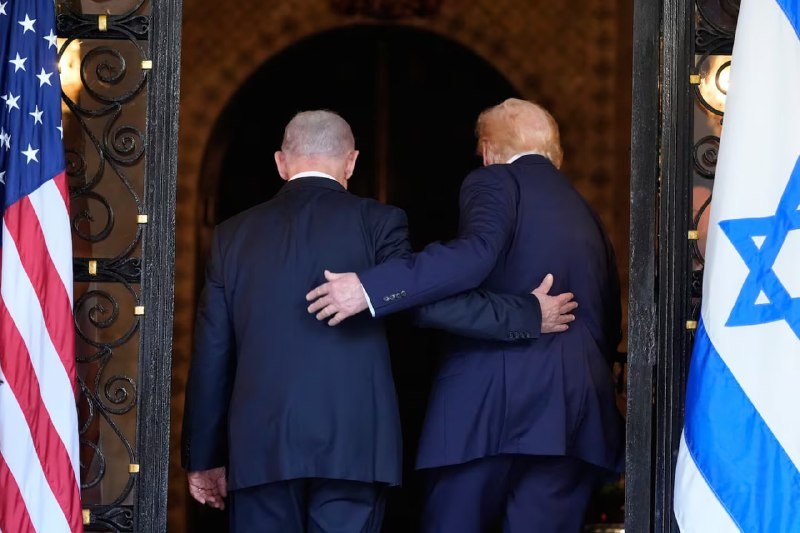
At 18:05 UTC on 14 June 2026, a US president publicly disowned a strike carried out by the closest US partner in the Middle East, and announced a regional agreement he said was meant to be signed the same morning. The mechanism by which the two events came to be reported in the same breath — Israeli action in the Lebanese capital, and an unsigned understanding with the Islamic Republic of Iran — is itself the news of the day. Donald Trump told Axios he had been on the verge of signing an agreement when Israel hit Beirut, called Prime Minister Benjamin Netanyahu “Bibi,” and said he had told the Israeli leader he had “no f***ing judgment” and that he was “very unhappy.” The quotes, carried in identical form by the @sprinterpress account on X and then amplified by Iranian state-linked Tasnim News English shortly after 17:18 UTC, mark the most pointed public dressing-down of Netanyahu by a sitting US president in this term.
What is striking is the choreography. A US-brokered channel of “economic benefits” to Iran was being dangled in the same hours, conditional on Iranian restraint after the Beirut attack. The proposition is not abstract: an Israeli operation on Lebanese soil and a US offer to Tehran are now in the same sentence, and the White House’s preferred frame — that the two can be sequenced, contained, and traded against each other — has visibly frayed in real time.
What happened on 14 June
Three wire lines, running within roughly an hour of each other, form the spine of the day’s reporting. At 17:18 UTC, Tasnim News English, the English-language outlet of Iran’s Tasnim News Agency, summarised Trump’s comments to Axios, headlining that Trump had said Netanyahu “has no sense” and noting that Trump “claimed that Israel’s attack on Beirut angered him”. At 18:05 UTC, the @sprinterpress account on X posted the same quote set attributed to Trump, including the line “Bibi has no f***ing judgment.” At 18:18 UTC, OSINTLive on Telegram, citing Israel’s N12 News, reported that Washington was offering “economic benefits” to Iran if it refrained from responding militarily to the Beirut strike, with the framing that Iran was “considering the offer” according to a Western source.
The substance is limited. The sources do not specify the target of the Israeli strike in Beirut, the precise contents of the US offer, the time at which the signing was meant to occur, or the name of the “Western source” cited by N12. They do establish that, within a single afternoon, three distinct channels — an Iranian state outlet, an X account, and an Israeli commercial broadcaster as relayed by an OSINT aggregator — converged on a shared narrative: an unsigned deal, a strike that preempted it, and a US president in an uncommonly raw posture toward Israel’s leader.
The Trump-Netanyahu rupture, in plain language
Trump’s language to Axios is not the diplomatic register normally used by a US president about a foreign head of government, let alone one Washington has gone to unusual lengths to keep close. The account of “Bibi has no f***ing judgment” and “I am very unhappy,” carried verbatim across the @sprinterpress post and the Tasnim summary, reads as an angry, off-the-record sentence that the US side chose to make on the record. The same afternoon, the same channel was reporting a US economic offer to Iran explicitly tied to Iranian non-response to the Beirut operation.
Two readings are available. The first is that the rupture is real: the Beirut strike, on Trump’s account, cost a signed deal, and he is signalling to both Netanyahu and Tehran that he regards the timing as gratuitous. The second is that the rupture is tactical: the public dressing-down gives Trump political cover at home for any later agreement with Iran, and gives Tehran a reason to hold the US to a more generous offer, since the cost of the strike is now being charged to the White House’s negotiating account. Both readings are compatible with the reporting; the sources do not resolve which one Trump himself is operating from. They are, however, enough to establish that the diplomatic relationship between the US president and the Israeli prime minister has moved from publicly affectionate to publicly strained within a single news cycle.
The counter-narrative: what the Israeli, Iranian and US lines do not say
The reporting as it stands is heavily tilted toward Trump’s account of the day. N12’s framing — relayed by OSINTLive — presents the US offer as the leading news, with the Israeli strike as the condition that produced it. Tasnim’s summary of the Axios quotes foregrounds the same Trump framing, with the additional editorial weight of an Iranian outlet reporting an American president publicly rebuking Israel: an unusually favourable piece of optics for Tehran. The X account carrying the quote verbatim, @sprinterpress, adds no independent sourcing of its own.
What is missing is equally clear. The sources do not include an Israeli government readout, an IDF Spokesperson statement on the target of the Beirut operation, an Iranian Foreign Ministry response, or a White House transcript of Trump’s Axios interview. The Lebanese, Iranian, and Israeli institutional voices on what actually happened on the ground in Beirut are not in the wire. A fuller account would require at least one of those institutional responses. The pattern fits a familiar one: a high-volume, high-emotion presidential interview dominates the cycle, and the underlying operational facts are left for a slower news day.
What we verified / what we could not
Verified across at least two of the three thread sources:
- That Trump, speaking to Axios on 14 June 2026, used language about Netanyahu that included a reference to poor judgment and personal unhappiness.
- That Israel carried out a strike in Beirut on 14 June 2026, and that this strike is being reported in the context of a US-Iran understanding.
- That a US economic offer to Iran is being discussed in relation to Iranian non-response to that strike.
Could not verify from the available sources:
- The specific target in Beirut or the scale of the strike.
- The financial, legal, or political contents of the US offer to Iran.
- The named “Western source” referenced in the N12 reporting.
- Any official Israeli government, IDF, or US White House readout beyond the Trump-on-Axios quotes.
- Whether the unsigned agreement was a nuclear deal, a broader de-escalation package, or a framework for further talks. The sources describe it only as “the agreement.”
A more definitive account would require Israeli institutional confirmation of the strike, an Iranian MFA statement, and ideally an Axios or White House transcript of the interview. The 14 June reporting as it stands is therefore best read as the opening chapter of a story, not its resolution.
Structural frame: a hegemonic patron, publicly at odds with itself
What the day makes visible, beneath the quote-driven surface, is a structural tension in the US-Israeli relationship that has been latent for some time. The US has, for years, acted as the security guarantor and diplomatic shield of last resort for Israel in the region, including in Lebanon. It has also, intermittently, conducted its own regional negotiations with Iran that do not have Israel’s operational preferences written into them. Those two postures are compatible most of the time, because most of the time the senior partner’s diplomatic moves are not visibly obstructed by the junior partner’s tactical decisions. On 14 June, the obstruction was made visible. An Israeli strike preempted a US-led signing, and the US president named it as such in language no American leader has used with an Israeli prime minister in this term.
The wider pattern is that of a hegemonic patron publicly disagreeing with the local power whose security it underwrites. The disagreement is not a breakdown: the alliance, the aid flows, and the intelligence relationship continue. But the public terms on which the alliance is justified have shifted in a single afternoon. The same news cycle is also reporting the patron attempting to compensate for the local power’s action by buying the regional rival’s restraint. That is the structural story beneath the personal one.
Stakes, and what to watch
If the trajectory of 14 June holds, three things are worth watching in the days that follow. First, whether an Iranian response materialises: the US offer reported by N12 and relayed by OSINTLive is conditional on restraint, and any Iranian move against Israel, Hezbollah, or US assets in the region would reframe the entire cycle as a US diplomatic failure rather than a successful holding operation. Second, whether a signed agreement — the document Trump says was meant to be inked in the morning — actually appears, and on what terms. Third, whether the Trump-Netanyahu public breach continues or is repaired. A single Axios interview can be walked back; a US president publicly using crude language about a close ally cannot easily be unsaid, and any subsequent Israeli move that is read in Washington as overreach will now be filtered through this transcript.
The wider reading is straightforward. US credibility as a regional broker depends on its ability to set the timetable for the most consequential moves in the Middle East. On 14 June 2026, an Israeli operation appears to have set that timetable instead, and the US president’s response has been to name the divergence in unusually direct terms. Whether the divergence is a tactical pause or the start of a more durable distance is the question the next 72 hours will answer.
Desk note: Monexus has reported this story using only the three wire lines available in the source thread — Tasnim News English at 17:18 UTC, @sprinterpress on X at 18:05 UTC, and OSINTLive on Telegram citing Israel’s N12 News at 18:18 UTC. We have not padded the source list with outlet URLs that did not appear in the original thread. Where the thread sources do not contain a fact, the article does not assert it.
Wire provenance
This editorial synthesis draws on the following public wire/social posts:
- https://t.me/tasnimnews_en
- https://t.me/osintlive
Follow the event.
These dated source records provide context. They do not retrospectively verify this archive article.
Separate what the nuclear watchdog reported from what it could not determine after the June 2025 strikes.