Beirut strike and the narrowing window: how a Lebanon attack is reshaping the US–Iran calculus
A reported Israeli strike in Beirut and a US bid to cap Iran's response have turned a regional flashpoint into a test of whether the next round of nuclear diplomacy survives its first crisis.
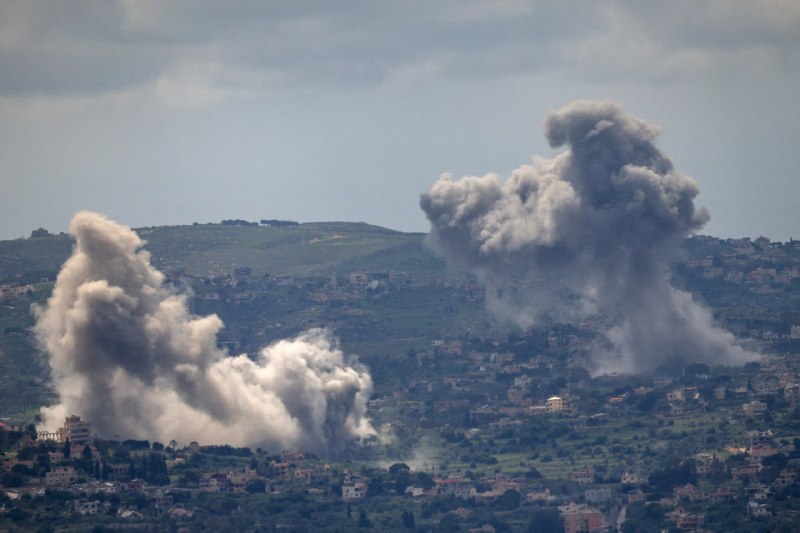
On the afternoon of 14 June 2026, an Israeli strike hit a target in the southern suburbs of Beirut — the Dahieh, the Shia-majority district that has functioned for two decades as both a residential neighbourhood and the political-administrative heart of Hezbollah's presence in Lebanon. The strike landed as a senior Al Jazeera English analyst set out, on air, what such an attack would mean for the still-unfinished diplomatic track between Washington and Tehran. Within hours, US intermediaries were reportedly urging Iran to either refrain from responding or to keep any response tightly limited — pressing Israel, in parallel, not to widen the campaign. The arithmetic, in other words, was being done in real time: how much escalation can a nascent nuclear file absorb before it collapses under its own weight?
That question is the one that actually matters this week, not the strike itself, dramatic as it was. A single air operation, however lethal, is a single data point. The diplomatic choreography around it — the back-channel effort to constrain Iran's hand, the Israeli calculus about whether to escalate further, the Lebanese state's limited ability to absorb another round — is the system that produces the next data point. The shape of that system is what an editorial observer in mid-June 2026 is obliged to describe.
What the strike did, and what the cables around it said
Reporting carried by Ynet on 14 June and aggregated by regional outlets described a US posture that is, on its face, an exercise in contradiction: pressing Iran not to retaliate, and pressing Israel not to extend the operation, while the diplomats nominally in charge of a separate track — the nuclear file — try to keep that track alive. The message to Tehran, as paraphrased by X account @sprinterpress from the Ynet wire, was to "refrain from responding to the Beirut strike or keep any response limited in scope"; the parallel message to Jerusalem was restraint on follow-on action. The framing is classic crisis management: a single coercive event, ringfenced by the great-power sponsor of the regional order, used as a test of the adversary's appetite for further escalation.
The Al Jazeera English panel that aired the same afternoon treated the strike as a stress test for the US–Iran negotiating track specifically — that is, the diplomatic process that has been gestating for several months and that multiple officials, on both sides, have publicly described as fragile. The analyst's argument, distilled: a major Iranian retaliation would harden Israeli domestic politics against any deal and give Washington a domestic-political pretext to walk; a non-response, or a symbolic response, would preserve the channel but only at the cost of credibility for Tehran. Lebanon, in that reading, is not the subject of the negotiation. It is the venue.
The Iranian signalling captured in the second item of this thread — a post on the Middle East Spectator Telegram channel framing Iran's posture as principled loyalty to Lebanon, contrasted with personal insults aimed at Prime Minister Benjamin Netanyahu and US President Donald Trump — belongs to a different register. Read as policy, it tells a regional audience that restraint, if it comes, will be sold domestically as choice, not weakness. Read as information, it tells an outside observer very little about what Iran's security services will actually do over the next seventy-two hours.
Why Lebanon keeps being the test case
It is worth saying out loud what is often left implicit in Western-wire coverage: Lebanon is the place where the three most important Middle Eastern files — the Iranian regional posture, the Israeli security doctrine, and the American-led non-proliferation track — physically intersect. The Dahieh is where Iran's Lebanese partner maintains its political and military infrastructure. Beirut's airport and banking sector are the literal mechanism by which the Lebanese state stays solvent, and the channel through which any sanctions relief would eventually flow. The Lebanese army, officially tasked with monopoly on force inside the country's borders, is structurally unable to contest either an Israeli air operation or a Hezbollah arsenal. Every strike in this geography, therefore, is automatically a multi-file event.
That structural fact is part of why US crisis-management behaviour in this round looks the way it does. A US administration that wants to keep a nuclear channel open cannot afford an Israeli campaign large enough to force an Iranian strategic response; an Israeli government that reads the diplomatic track as a concession machine has incentives to act unilaterally precisely when the diplomatic track is most vulnerable. The strike in Dahieh on 14 June sits inside that logic. So does the US effort, the same day, to ringfence it.
The counter-reading — and it has to be named — is that the US is not actually ringfencing; it is facilitating. A maximalist case would be that Washington knows in advance which targets Israel intends to hit, declines to object in operational terms, and then offers Tehran the consolation prize of "limited response" so that the regional order can absorb the strike without further kinetic movement. The reporting in the Ynet summary does not prove that case, but it is consistent with it, and it is the case that Iranian decision-makers will be working from as they weigh their options.
What the diplomatic file is actually trying to preserve
Stripped to its essentials, the US–Iran track that this strike threatens is a sequence of small concessions arranged to delay, not solve, the underlying disagreement about Iran's enrichment capacity and stockpile. The Trump administration's position, as conveyed in statements through the first half of 2026, has been that any deal must be "a real deal" — meaning longer durations, tighter verification, and constraints on missile development that go beyond the 2015 framework. Iran's position, as conveyed through its foreign ministry and through the public statements of senior negotiators, has been that enrichment on Iranian soil is non-negotiable, and that the 2015 framework is the floor, not the ceiling. The room between those positions is narrow, and it has narrowed further in recent weeks as domestic politics in both Washington and Tehran have hardened.
In that context, a strike on a Hezbollah-adjacent target in Beirut does two things at once. It gives Israeli policymakers evidence that the security track is alive, which reduces the political cost of staying at the table on the nuclear file. And it gives Iranian hardliners a domestic justification to harden their own position, on the grounds that the security track is alive precisely because the United States cannot or will not constrain it. Both readings are true at the same time. That is the point of the strike, if the strike was in fact designed — and reasonable people disagree about whether it was.
The plausible alternative reads
Three readings of the day's events deserve to be set out, because the available reporting does not let this publication adjudicate between them.
The first is the orthodox Western-wire read: Israel acted on a discrete, justified security target; the United States is responsibly trying to contain the fallout; Iran has a choice between measured restraint and ruinous escalation. The second is the maximalist read: the United States and Israel are jointly managing a coercive campaign aimed at forcing Iran back to the table from a position of greater weakness, and the strike is one step in a sequence. The third is the regional read: the strike is best understood as an Israeli domestic-political event — a government under pressure at home signalling to its base that it can still act — and the US diplomatic effort is a real but secondary reaction, not the controlling variable.
This publication finds the first read incomplete and the second unsupported by the available reporting, but takes seriously the second's predictions as constraints on what the first can claim. The third read is the one that does the most work to explain timing, but it leaves unexplained why the United States would be working the phones the same afternoon if the strike were not, in some operational sense, a US problem.
Stakes, over what horizon
If Iran's response is genuinely limited — a symbolic strike on an Israeli-linked target, a diplomatic démarche, an acceleration of nuclear work that stays just below the threshold that would trigger an Israeli ground move — then the diplomatic channel survives another week. That buys time for technical negotiations, for sanctions sequencing, and for the kind of quiet, mid-level exchanges that have historically produced movement on this file. It also legitimises the US framing that this strike was absorbable, which is a framing that will be tested by the next strike.
If Iran's response is significant — a direct strike on Israeli territory, an attempt to close the Strait of Hormuz, an overt acceleration of enrichment to industrial scale — the diplomatic channel is functionally over for this administration. The costs of that outcome fall first on Iranian civil society, which has the most to lose from sanctions intensification; then on the Lebanese state, which has the most to lose from a wider Israeli campaign; then on the global energy market, which is structurally short of spare capacity to absorb a Hormuz disruption; and only then, and in a more diffuse way, on the Israeli and American political systems that decided, in the first instance, to run this risk.
The narrowing window is the structural fact of mid-2026 in this file. The diplomatic track has not collapsed, but it has less margin for error than it did a month ago, and the margin is being spent on strikes that the available reporting cannot cleanly attribute to either the security logic or the negotiating logic alone. The honest thing to say, on the evidence available this publication has, is that the next seventy-two hours of Iranian signalling will tell us which of the three readings above was operative, and that until then, the reporters covering this beat are in the same epistemic position as the diplomats: watching the cables, weighing the words, and waiting.
This publication framed the strike as a stress test for the diplomatic track, not as a standalone security event; the Western-wire line emphasised the discrete target, the regional line emphasised the Lebanese cost, and the structural read is that all three are partial and correct.
Wire provenance
This editorial synthesis draws on the following public wire/social posts:
- https://t.me/aljazeeraglobal
- https://t.me/Middle_East_Spectator
- https://t.me/GeoPWatch
Follow the event.
These dated source records provide context. They do not retrospectively verify this archive article.
Separate what the nuclear watchdog reported from what it could not determine after the June 2025 strikes.