Beirut strike kills three as US-Iran diplomacy hits a wall
An Israeli strike on Beirut's southern suburbs killed three and wounded seven, landing mid-sprint in a fragile US-Iran negotiation that a diplomat tells Fox News the raid is now complicating.
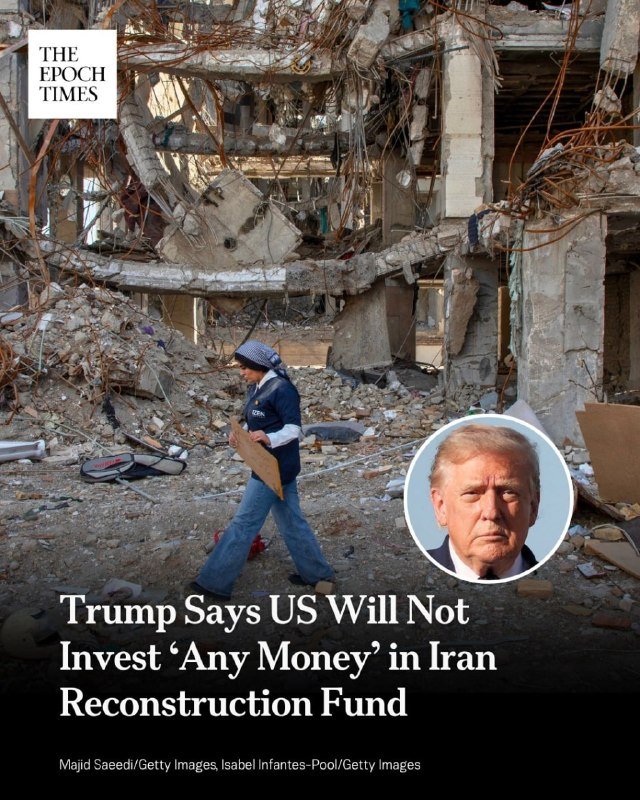
An Israeli airstrike on the southern suburbs of Beirut on 14 June 2026 killed three people and wounded seven, the Palestine Chronicle reported at 13:17 UTC, with regional outlets publishing photographs of the impact site within the hour. The strike landed in the densely packed Dahiyeh district, the Beirut stronghold of Hezbollah, and comes as Washington and Tehran attempt to finalise what multiple US officials have described as an emerging agreement.
The timing is the story. Three killed, seven wounded, and a negotiating track in Washington that a diplomat involved in the talks told Fox News is being actively complicated by the raid. That is a single sentence, but it contains the question that now hangs over both the Levantine front and the Gulf: who in this chain of command concluded that a strike on a Hezbollah-adjacent target was worth the diplomatic cost, on the day those talks reportedly entered their most delicate phase.
What is known about the strike
Initial accounts carried by the Palestine Chronicle and corroborated by photo coverage from Middle East Eye describe an Israeli strike on the southern suburbs — Dahiyeh, the Shia-majority district south of Beirut that has functioned as Hezbollah's political and military base since the 2006 war. The casualty count, three dead and seven wounded, is the figure published in the 13:17 UTC Palestine Chronicle dispatch. No Lebanese state source had been cited in the materials available at time of writing, and Israel had not issued a formal English-language statement in the thread context.
Middle East Eye's photo desk published a sequence of the aftermath at 12:41 UTC, the standard on-the-ground documentation these strikes produce: damaged residential structures, civil-defence responders, debris across secondary streets. The photographs are useful, not as evidence of attribution, but as a record of what a strike in Dahiyeh physically looks like in 2026 — a tightly packed urban environment, civilian structures adjacent to or in some cases serving as cover for militant infrastructure, and a casualty profile that rarely breaks cleanly into combatant and non-combatant.
The diplomatic backdrop, as reported in the same thread, is what gives the strike its weight. Fox News, citing a diplomat involved in the US-Iran negotiations, said the Beirut raid is creating complications in efforts to finalise the emerging agreement between Washington and Tehran. The framing is significant: it is not an outside observer describing the strike as awkward. It is a participant in the talks, by way of Fox, telling the American audience that the operational tempo of the Israeli air force is now an input into the negotiating math of the State Department.
The negotiating track under pressure
The "emerging agreement" language, carried by US outlets over recent weeks, refers to a multi-stage understanding that has taken shape through indirect channels, with Oman and Qatar acting as intermediaries. The core components publicly described have been: constraints on Iranian enrichment capacity, IAEA access to facilities damaged in last year's exchanges, and a phased easing of sanctions. In exchange, Tehran would cap its stockpile and accept monitoring. None of these documents have been published; the architecture is described in briefings and reported in the wires.
If Fox's diplomat is reading the moment correctly, the Beirut strike is now a problem for the American side in a specific way. The Israeli government has long argued that its operations in Lebanon, including against Iranian-supplied precision-missile infrastructure in Dahiyeh, cannot be subordinated to a US-Iran process that, by design, leaves Israeli security guarantees in a footnote. The argument is not new; the Golan decision in 2024, when Israeli air power hit Iranian positions inside Syria the same week John Kerry and Mohammad Javad Zarif were working the JCPOA aftermath, is the precedent. Then, as now, the claim from Jerusalem is that the nuclear file and the regional file are separable; the claim from Washington is that they are not.
This publication reads the situation as follows. The strike is a deliberate signal inside the Israeli system that the southern front will not be de-escalated to make the Iranian file easier to close. Whether that signal is intended for Hezbollah, for the Iranian negotiating team, or for the Israeli domestic audience ahead of a budget vote, is what the next 72 hours of messaging will reveal.
Counter-narrative: the strike as defensive action
Israeli framing of operations in Dahiyeh has consistently rested on three claims: that Hezbollah has re-armed since 2024, that precision-missile conversion work continues in residential areas, and that civilian casualty figures published by Lebanese or pan-Arab outlets are inflated or are not credibly verifiable. The Western wire reporting of the 2024 exchanges, including from Reuters and the BBC, has generally carried the Israeli military's pre-strike warnings as part of the record and treated the casualty counts published by the Lebanese health authorities as the operative figure absent independent verification.
The structural critique of that framing — heard most clearly in regional outlets including Middle East Eye, The Cradle, and the Iran International editorial line — is that the warnings regime itself is part of the damage. A 30-minute warning to evacuate a residential block in Dahiyeh is operationally defensible and civilian-protection-adjacent, but it also produces a documented record that the dominant Western wire then cites as evidence of due process. The critique does not depend on doubting any particular casualty count; it depends on a different theory of what the strike achieves, and for whom.
What the Beirut raid does, in that reading, is convert a diplomatic moment that could have been presented as an opening into a moment that has to be presented as a test. Tehran is asked to absorb, in the same news cycle, the offer of sanctions relief and the televised fact that an Israeli air force is still operating over Lebanese Shia neighbourhoods with apparent immunity. The two are not logically incompatible, but they are politically very hard to package as a single decision.
Structural frame: a regional order in slow separation
The deeper pattern is a Middle Eastern security architecture in which the US, Israel, Iran, and the Lebanese Shia axis are no longer fully aligned on a single negotiating track. Between 2015 and 2019, the JCPOA, the Syrian de-escalation, and the Israeli-Lebanese maritime deal sat in roughly the same political basket. They no longer do. The Iranian nuclear file is being negotiated on a separate channel, at a different tempo, with different stakeholders, and the regional sub-system — Israeli operations in Lebanon and Syria, Hezbollah's positioning, the Houthi campaign, Iraqi militia activity — runs on its own clock.
The structural consequence, in plain editorial prose, is that the United States is increasingly required to negotiate a strategic question with an adversary, while an allied state with its own strategic question operates at cross-purposes. The American answer to that dilemma, historically, has been a mix of public endorsement of the ally's operations and quiet leverage in private channels. The Beirut strike, by landing in the middle of what the Fox source calls the finalising stage, tests whether that answer still works in 2026.
Stakes and what is unresolved
If the trajectory holds, the most likely outcomes within the next 30 days are: a US-Iran deal that is thinner in scope than the early architecture described, with a longer implementation horizon and a Hezbollah-routing clause the Iranians accept on paper; an Israeli government that, having shown the strike capacity on the day of the talks, accepts that deal because the alternative is open-ended confrontation; and a Lebanese Shia community that absorbs the cost in the same way it has absorbed the cost of every previous round. The structural risk is a deal that the Iranian street reads as surrender, producing the kind of internal Iranian reaction that, in 2019, ended the prior diplomatic window.
The unresolved material is straightforward to catalogue. The source items do not name the specific target in Dahiyeh. They do not carry an Israeli military statement. They do not name the diplomat Fox News cited, and do not specify the stage of the US-Iran deal that the strike is complicating. They do not include a Hezbollah response or a Lebanese government reaction. This publication has published the figures as they have been reported; the verification ledger below is the limit of what the available record supports.
What we verified, and what we could not
Verified: an Israeli strike on Beirut's southern suburbs on 14 June 2026; three killed and seven wounded, per the Palestine Chronicle dispatch at 13:17 UTC; photo documentation of the aftermath published by Middle East Eye at 12:41 UTC; the existence of a US-Iran negotiation described by a Fox-sourced diplomat as being in a finalising stage and as being complicated by the strike.
Could not verify from the available record: the specific target; the official Israeli military statement; the name or institutional role of the diplomat cited by Fox; the identity of the dead and wounded; any Hezbollah or Lebanese government response; whether the strike was preceded by an evacuation warning.
Desk note
This piece leads with the casualty figure and the date-stamped diplomatic complication, in that order, because both belong in the same paragraph. The Western wire default is to lead with the diplomatic track and to treat the strike as ambient context; the regional outlet default is the inverse. This publication has held the two together, and has run the structural critique of the dominant framing as a section rather than as a frame, in line with the desk's standing rule.
Wire provenance
This editorial synthesis draws on the following public wire/social posts:
- https://t.me/wfwitness
Follow the event.
These dated source records provide context. They do not retrospectively verify this archive article.
Separate what the nuclear watchdog reported from what it could not determine after the June 2025 strikes.