European quartet signals readiness to lift Iran sanctions after US deal, putting EU unity to the test
Britain, France, Germany and Italy jointly declared readiness to lift Iran sanctions in response to Tehran's nuclear steps, exposing a widening European willingness to follow Washington's lead.
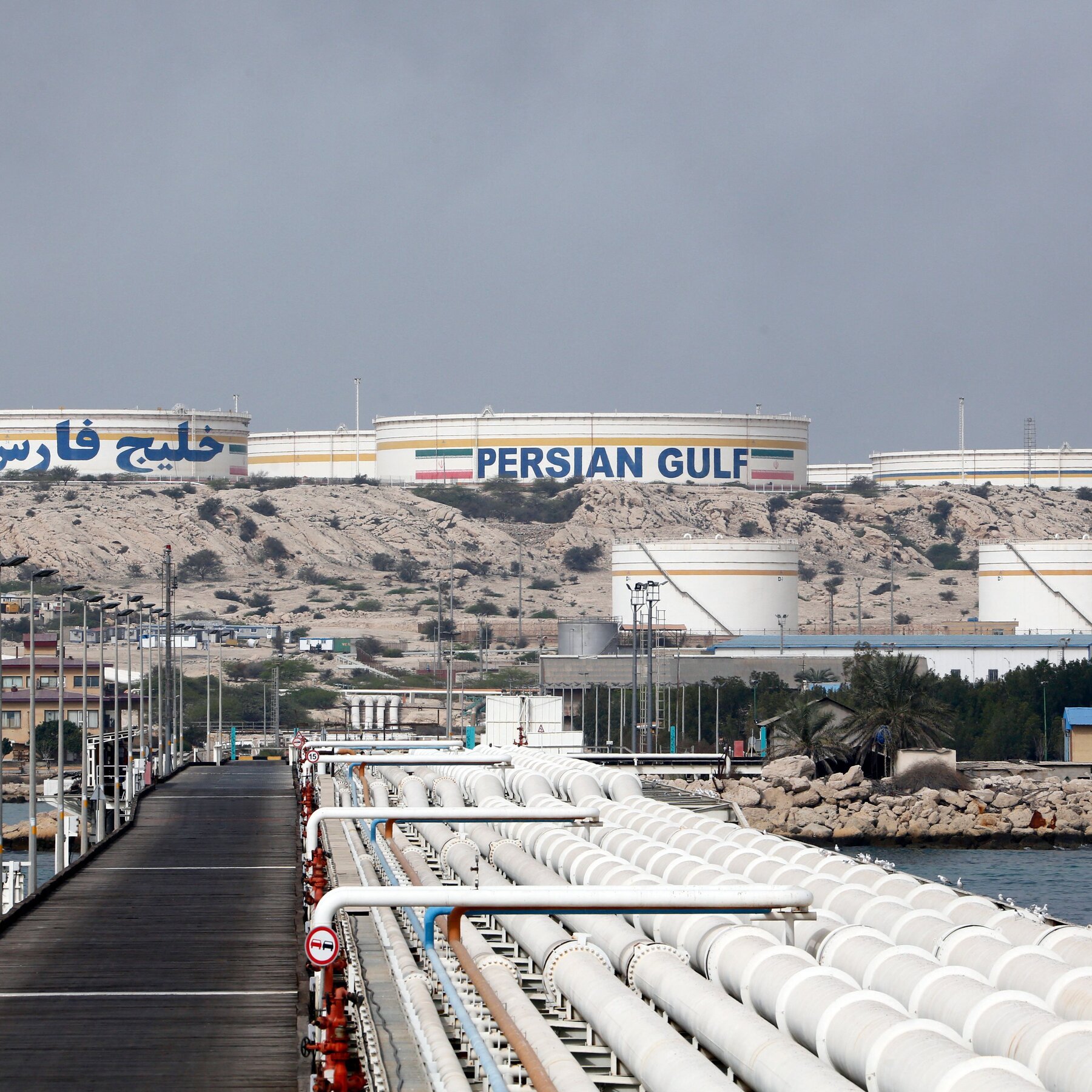
At 23:10 UTC on 14 June 2026, Reuters reported that the United Kingdom, France, Germany and Italy have jointly declared themselves ready to lift sanctions on Iran in response to what they described as clear steps by Tehran on the nuclear file. The four-power statement, circulated through European and Middle Eastern channels within minutes of the Reuters wire, frames the move as a coordinated European response to a memorandum of understanding reached between Washington and Tehran, and credits Qatar and Pakistan for mediating the arrangement (Reuters, 14 June 2026; Middle East Eye live blog, 14 June 2026; Fars News International via Telegram, 14 June 2026).
The development amounts to a diplomatic realignment on a scale not seen in European Iran policy since the original 2015 Joint Comprehensive Plan of Action. For the first time since the United States withdrew from that accord in 2018, four of the European Union's most consequential member states have chosen to bind themselves to a US-led nuclear arrangement and to condition sanctions relief on Iranian compliance steps that have not yet been fully disclosed. The decision is as much a statement about the European political centre of gravity as it is about non-proliferation.
What the four powers actually said
The joint statement, as relayed by Iran's Fars News International on Telegram, is a single paragraph of diplomatic calibration. The leaders of the United Kingdom, France, Germany and Italy "welcome the memorandum of understanding between Washington and Tehran," "congratulate all mediators, including Qatar and Pakistan," and commit themselves to lifting sanctions in response to "clear steps by Iran in the nuclear issue" (Fars News International via Telegram, 14 June 2026). The phrasing is significant on two counts.
First, the language is conditional. The four governments are not announcing the lifting itself; they are announcing readiness to lift, contingent on verifiable Iranian action. That distinction gives Tehran an incentive to perform compliance and gives the European capitals an off-ramp should the deal collapse. Second, the explicit naming of Qatar and Pakistan as mediators is a quiet piece of diplomatic choreography. By foregrounding two Muslim-majority regional mediators alongside the United States, the statement repositions the negotiation as a multilateral achievement rather than a bilateral American concession, which makes the arrangement easier for European parliaments — and for Iran's domestic audience — to accept.
The Reuters report on 14 June 2026, published at 23:10 UTC, frames the European commitment as a logical extension of a US-Iran understanding whose substance has not been made public. The Middle East Eye live blog, updated at 23:05 UTC the same day, carries the same core announcement and adds regional context around the wider Israel-Lebanon front, indicating that the sanctions decision is being read in the Gulf and in Beirut as part of a broader de-escalation package rather than a stand-alone nuclear concession.
Why the E3-plus-Italy configuration matters
European Iran policy for the last decade has been conducted in the name of the E3 — the United Kingdom, France and Germany. Italy is not normally a member of that grouping on nuclear diplomacy, and its inclusion here is a tell. Rome under the current government has positioned itself as a Mediterranean bridge to both the Maghreb and the Gulf, and it has consistently argued that European Iran policy should not be held hostage to a narrow Franco-German-UK consensus that excluded southern Europe. Adding Italy to the statement broadens the political base inside the EU and signals to Tehran that the relief it is being offered enjoys wider continental support.
The E3 grouping also matters institutionally. Sanctions imposed by the European Union are enacted through the Council of the EU, where all 27 member states have a voice. A statement of readiness from the four most politically weighty capitals does not bind the Council, but it sets the political centre of gravity. The expectation in European chancelleries, according to the framing in the Reuters wire, is that the formal Council process will follow quickly if Iran delivers on the steps the joint statement anticipates.
The counter-narrative in Tehran and in Washington
The Iranian reporting of the same event, as carried by Fars News International on Telegram, is striking for its restraint. Iranian state-aligned outlets could have framed the European statement as a Western concession wrung from a position of weakness. Instead, Fars's English-language account emphasises the role of Qatari and Pakistani mediation and the willingness of the European powers to "respond" to Iranian steps, language that preserves Tehran's preferred narrative of diplomatic parity rather than capitulation (Fars News International via Telegram, 14 June 2026).
In Washington, the political geometry is more complicated. The memorandum of understanding between the United States and Iran has been the subject of intense intra-administration debate. Supporters argue that bringing the Europeans along is the only durable way to lock in any nuclear constraint on Tehran; critics argue that premature sanctions relief rewards non-compliance and weakens the leverage that produced the deal in the first place. The Reuters wire does not resolve that debate, but it makes clear that the European commitment is now part of the American record and cannot easily be unwound without an explicit US-European confrontation.
What remains uncertain
The joint statement says nothing about the specific sanctions to be lifted, the timetable for lifting, or the verification mechanism that will confirm Iranian steps. The phrase "clear steps by Iran in the nuclear issue" is a placeholder rather than a definition, and the Reuters report on 14 June 2026 acknowledges that the underlying memorandum of understanding between Washington and Tehran has not been published. Until the operative text is in the public domain, both the European commitment and the Iranian compliance claim rest on trust between governments that have historically distrusted each other on this file.
The arrangement also faces a test that the four-power statement does not address: the position of the rest of the European Union, including member states that have historically been more sceptical of accommodation with Tehran, and the position of the Israeli government, which has been the most vocal external opponent of any US-Iran nuclear arrangement. The Reuters wire notes that the European move follows a US-Iran deal, but does not report any Israeli response to the European commitment as of 23:10 UTC on 14 June 2026.
Stakes
If the memorandum of understanding holds and the European Council follows through, Iran gains access to frozen assets and oil markets at a moment when its economy is under severe strain, and the four European powers gain a seat at the table in any future negotiation. If the deal collapses, the political cost will fall disproportionately on the governments that pre-committed — London, Paris, Berlin and Rome will have spent credibility they cannot easily rebuild, and the European standing that was supposed to anchor transatlantic Iran policy for a generation will be exposed as more fragile than the joint statement suggests.
The next forty-eight hours will tell whether the readiness declared on the evening of 14 June 2026 translates into the formal architecture of sanctions relief, or whether it remains a piece of political choreography performed for audiences in Washington, Tehran, Doha and Islamabad.
This publication framed the statement as a coordinated European act rather than a passive alignment with Washington, and foregrounded the Qatari and Pakistani mediation that the joint statement itself highlighted, to give the reader a more complete picture of the diplomatic geometry than a single-wire summary allows.
Wire provenance
This editorial synthesis draws on the following public wire/social posts:
- http://reut.rs/4eotd2T
- https://t.me/FarsNewsInt
- https://t.me/alalamarabic
Follow the event.
These dated source records provide context. They do not retrospectively verify this archive article.
Separate what the nuclear watchdog reported from what it could not determine after the June 2025 strikes.