Three projectiles and a claim of 'kill zone': what a single morning on the Israel–Lebanon border tells us about the war's information geometry
Within ninety minutes on the morning of 14 June 2026, the Israeli military, an Iran-aligned channel and a Beirut-aligned outlet gave three incompatible accounts of the same stretch of frontier. The pattern, not the salvo, is the story.
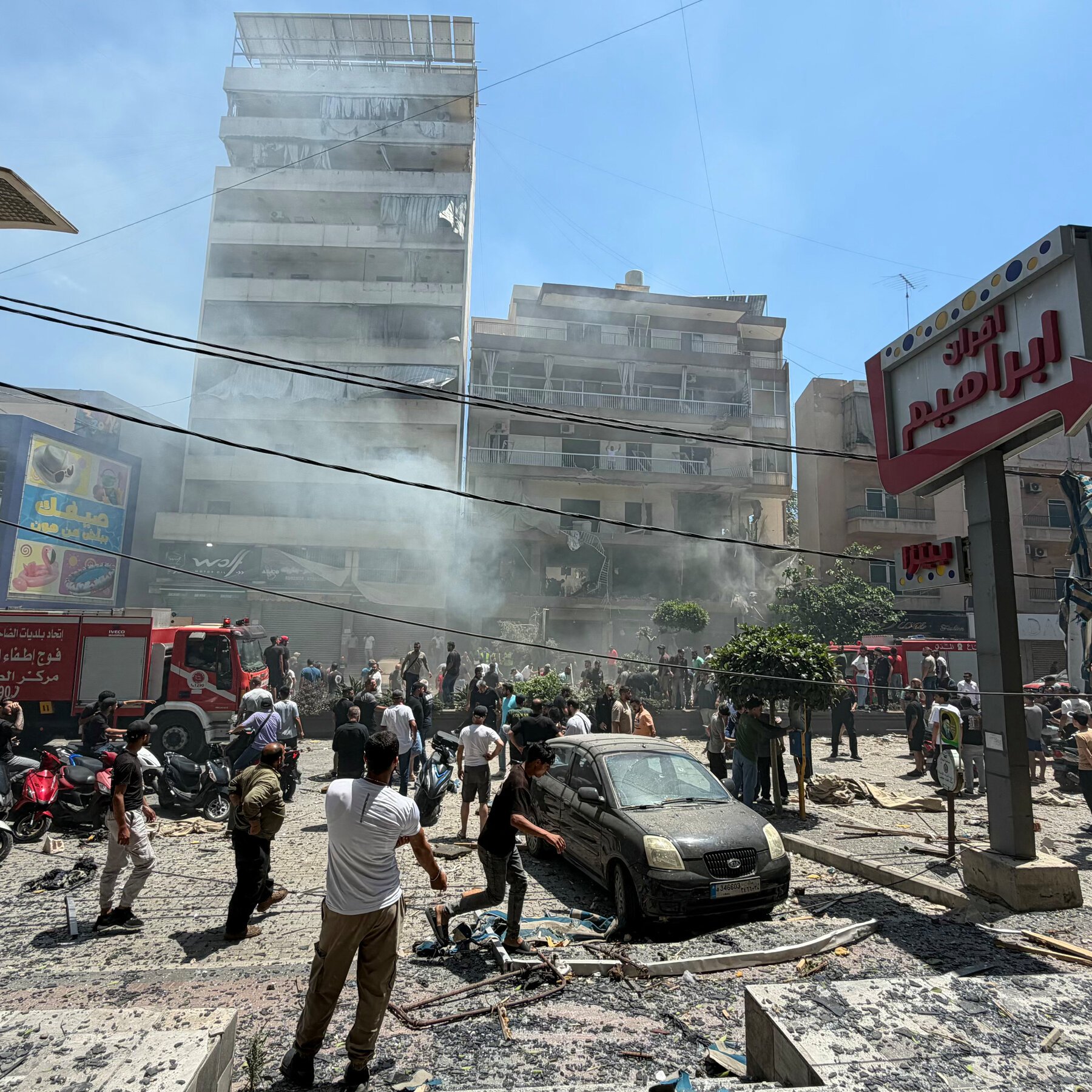
At 08:34 UTC on 14 June 2026, a Beirut-area Telegram channel run by the Palestine Chronicle relayed a Hezbollah statement claiming the group's fighters had confronted Israeli "infiltration attempts" in southern Lebanon, repelling them with ambushes, rocket barrages and drone strikes under the heading of a self-declared "kill zone." Roughly seventy-five minutes later, Reuters reported from Tel Aviv that the Israeli military said Hezbollah had launched three projectiles toward northern Israel. At 09:53 UTC, the Iran-aligned outlet Al-Alam amplified a separate Hezbollah claim, asserting that the group had hit a "newly created artillery position" belonging to the Israeli army in the town of Al-Adissa with a heavy missile. Three statements, three sets of actors, one stretch of frontier — and no shared set of facts.
The pattern, more than the salvo, is the story. For nearly two years the northern front has been fought in two registers at once: in munitions across the Blue Line, and in incompatible communiqués aimed at domestic, regional and diasporic audiences. A single morning's worth of traffic is enough to show the geometry — what each side is willing to assert, what each side is willing to leave vague, and the cost of reading only one feed.
What each side actually said, line by line
The Reuters brief, timestamped 10:10 UTC, is the most parsimonious of the three. It reports the Israeli military's account only: three projectiles launched by Hezbollah toward northern Israel. The report does not specify where the projectiles landed, whether they were intercepted, or whether there were casualties on either side. Reuters does not carry a Hezbollah claim of responsibility or denial; the report's load-bearing word is "says," and the load-bearing actor is the Israeli military, named as the source.
The Al-Alam message, posted on Telegram at 09:53 UTC, is a Hezbollah claim of an offensive action: a heavy missile strike on a "newly created artillery position" in Al-Adissa, which the message attributes to the Israeli army. The claim is one-sided by design — it is what the group's media operation wants its base to read, and it does not invite cross-checking.
The Palestine Chronicle relay, which appears to be republishing or paraphrasing a longer Hezbollah framing, goes furthest. It positions the exchanges as a response to Israeli "infiltration attempts" rather than as an unprompted barrage, and explicitly tags the southern Lebanese theatre a "kill zone" — a term of art implying prepared ambush positions, layered fires and a deliberate denial of safe ground to anyone crossing the line. Palestine Chronicle is not a wire service; it is a Beirut-based outlet sympathetic to the broader resistance-axis framing, and it carries the Hezbollah statement in the group's preferred register.
The three accounts are not necessarily contradictory in the strict sense — Hezbollah could simultaneously be repelling an infiltration attempt and firing off a missile and a few projectiles. But they are not commensurable either. The Israeli account is silent on what triggered the projectiles. The Hezbollah-aligned accounts are silent on the unguided rockets the Israeli side says it intercepted or absorbed. Each statement treats the other's version of the morning as if it did not exist.
The information geometry of a one-day escalation
What the wire gap reveals is structural. Hezbollah's media operation is built to release claims of successful strikes on Israeli military positions — Al-Adissa, artillery emplacements, "infiltration attempts" repelled — in a way that optimises for in-group morale and for the wider Arab and Iranian-aligned information ecosystem. Israeli military communications, by contrast, are built to minimise political cost in Tel Aviv and Jerusalem: count incoming projectiles, name the sector, omit context that would invite political questions about how the projectiles got through.
The result is a feed in which the same physical event is rendered as "three projectiles" in one register and as a deliberate ambush-and-counterstrike operation in another. Neither side is lying, in the narrow sense. Each is telling the truth its institution is built to tell. The reader who consumes only Reuters will conclude that northern Israel absorbed a small barrage and that the system held. The reader who consumes only the resistance-axis channels will conclude that Hezbollah successfully targeted a new Israeli artillery site and forced a wider Israeli ground effort to withdraw under fire. Both readers are, in a meaningful sense, correctly informed about the morning — and both are missing the picture the other side has.
This is the deeper story of the northern front in 2026. It is not that either side is fabricating events. It is that the two information systems are now so calibrated to their own audiences that they have stopped sharing an event horizon. The Reuters brief and the Al-Alam message do not, in practice, address the same morning.
What remains uncertain
The sources do not specify several first-order facts. We do not know how many of the three reported projectiles were intercepted by Israeli air defence, where they landed, or whether anyone on either side of the line was injured or killed. The Hezbollah claim of a hit on an artillery position in Al-Adissa is unverified; the group has previously claimed strikes that were not corroborated by independent footage, and it has also claimed strikes that were. Reuters, the wire of record in this cluster, does not address the Hezbollah claim at all. The Palestine Chronicle's "kill zone" framing is Hezbollah's own preferred description, not an independent assessment.
It is also worth saying plainly that, while the Israeli security concern — projectiles, drones, infiltration attempts on a civilian border — is a real and legitimate first-order fact, the human cost of the exchange is borne on both sides of the line. The sources do not give us a casualty count; readers should treat any single-feed casualty figure with the caution that the present state of disclosure warrants.
Why a single morning's gap matters
For most of the last two years, this kind of single-day information divergence was treated by Western editors as a quirk of regional media. As the front has ground on, it has become the operating environment. Diplomatic reporting, ceasefire negotiation tracks, even humanitarian access negotiations along the Blue Line are downstream of which version of the morning a given set of officials is reading.
The cleanest read of 14 June 2026 is therefore not "Hezbollah fired three rockets" or "Hezbollah destroyed an Israeli artillery site." It is that two institutional information systems produced two non-overlapping accounts within ninety minutes of each other, and that the gap between them is itself the story. Until the front's information geometry is treated as part of the war, not a side effect of it, every wire brief will continue to read like a partial eclipse — a true picture of one slice, with the rest of the disc missing.
Desk note: Monexus's editorial compass treats Israeli security claims with full weight and reports Palestinian and Lebanese civilian harm as a first-order fact wherever evidence warrants. This brief is a structural reading of the day's information geometry, not a casualty assessment; the source materials available at the time of writing did not carry verified figures on either side.
Wire provenance
This editorial synthesis draws on the following public wire/social posts:
- http://reut.rs/4ooDLUc
- https://t.me/alalamarabic
- https://t.me/PalestineChronicle
- https://t.me/s/alalamarabic
Follow the event.
These dated source records provide context. They do not retrospectively verify this archive article.
Separate what the nuclear watchdog reported from what it could not determine after the June 2025 strikes.