Iran halts strike on Israel after US concedes full Lebanon withdrawal, Fars reports
Fars News says Iran cancelled a strike on Israel on the evening of 14 June 2026 after Washington agreed to a full Israeli pullout from Lebanon and an immediate end to the blockade.
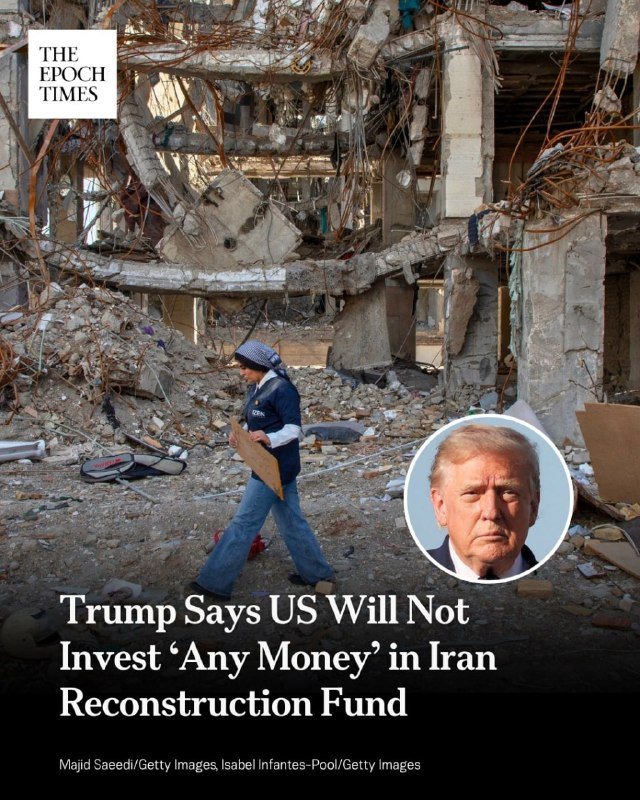
On the evening of 14 June 2026, Iran's state-aligned Fars News Agency reported that Tehran had stood down a planned strike against Israel in exchange for a written US guarantee of a full Israeli withdrawal from Lebanon and the immediate lifting of the blockade. Telegram channels citing Fars carried the claim within minutes of each other, the first wave of alerts hitting Middle East-focused channels between 21:53 and 22:23 UTC, with a parallel claim that Iran had wanted those terms added to a draft agreement the previous night.
The accounts differ in tone and in attribution, but they converge on a single proposition: a strike was being readied, a deal was offered, and the strike was called off. The question for the next 48 hours is whether the deal holds, and whether what Fars is calling a concession is, in Washington and Jerusalem, being described in the same words.
What Fars, and the channels quoting it, actually said
The earliest of the four alerts, posted to the rnintel channel at 21:53 UTC, attributes the story to Fars directly: "President Trump has offered the full Israeli withdrawal of Lebanon and immediate lifting of the blockade, which led Iran to halt its planned strike." A minute later, the Middle East Spectator channel amplified a Fars dispatch framed as a US concession forced by Iran — "Iran forced the U.S. to accept a complete withdrawal of Israeli forces from Lebanon as a last minute concession."
By 21:55 UTC, ClashReport added sequencing: "Iran had canceled negotiations and was preparing a strike against Israel after the attack on Beirut's southern suburbs. However, after last-minute U.S. concessions — including guarantees for Lebanon's [withdrawal] — Iran called off the attack." At 22:05 UTC, Middle East Spectator returned with a longer, editorialised claim that Iran had wanted the Lebanon terms added to the deal "last night," and questioned why the same withdrawal is now being read as an additional concession.
The OSINTtechnicalIran channel, summarising at 22:23 UTC, restated the Fars line in a third-person frame: that Iran cancelled its attack after the US promised an Israeli withdrawal from Lebanon. The substantive content is the same across all four posts. The vocabulary is not. "Forced," "offered," "promised," and "conceded" are not synonyms, and the choice between them is itself a piece of news.
Why the Fars version is the version that landed first
Fars News is Iranian state-aligned, editorially loyal to the Islamic Republic's security establishment, and operates as a primary English-language signal channel for Iranian official positioning. When Fars publishes a claim about a strike being called off, two things are usually true at once: a strike was being prepared (or at least signalled), and Tehran wants the world to read the cancellation as a result of Iranian leverage rather than Iranian restraint.
That reading is consistent with the ClashReport sequencing — the strike came after Iran walked away from a negotiation, and the walk-back came after a US offer, not after an Iranian offer of its own. It is also consistent with the Fars framing in the Middle East Spectator post, which casts the US as the party that moved. The subtext for an Iranian audience is that Tehran extracted a price, and the price was paid in Lebanese sovereignty and in the blockade's suspension.
The counter-reading is straightforward. US-aligned outlets, when they pick the story up, are likely to cast the same events in the opposite causal direction: Iran stood down because the diplomatic track was still open, and the Lebanon package was already in motion. That framing treats the withdrawal as something Israel and the US were prepared to give, not something Iran forced. The news over the next 24 hours will turn on which framing the White House, the IDF spokesperson, and the Lebanese government adopt in their first on-the-record statements.
What the four alerts do not, and cannot, tell us
None of the channels posting in the 21:53–22:23 UTC window is a primary source for any of the following: the specific text of the alleged US guarantee, the Israeli cabinet's response, the status of any written agreement, the identity of the Iranian decision-maker who called off the strike, or the operational status of the forces that were reportedly being readied. The channels are reporting what Fars reported, and Fars is reporting a claim attributed, by the channels, to "the US" without naming an official, a department, or a document.
The "attack on Beirut's southern suburbs" referenced by ClashReport is also unsourced within the four alerts. Its placement in the sequence — strike, walk-away, US offer, stand-down — implies a causal link. Whether that link is established is a separate question. The geographic specificity of the suburbs is itself a piece of information: southern Beirut is the Dahieh, the Shia-majority district that has been the focus of Israeli operations in past cycles. If a strike on the Dahieh is what triggered Iran's walk-away, the claim is not just about Lebanon; it is about an Israeli operation that, on this telling, restarted the escalation clock.
The Lebanon withdrawal claim, similarly, has no scale attached. "Full withdrawal" can mean a staged pullout over months, a redeployment of a few kilometres from the border, or an evacuation of every IDF position. The Fars framing, carried by the channels, does not distinguish between these. The Middle East Spectator post at 22:05 UTC gestures at the ambiguity when it notes that Iran had already wanted the withdrawal terms added — implying that, from Tehran's perspective, the concession was already conceded and the dispute is now over framing.
The structural shape of the moment
Even with the sources in hand only as a Telegram wave, the pattern is recognisable. Two regional militaries, neither of which wants a hot exchange in the next 48 hours, are negotiating through escalatory signals. A strike is announced (or implied, or readied) by one side. The other side offers terms. The first side calls off the strike and claims credit. The terms — in this case, a southern Lebanon pullout and a blockade suspension — become the working basis for a wider deal that may or may not be announced.
This is the rhythm of managed escalation: the strike is the price of admission to a negotiation, and the cancellation is the price of admission to a settlement. The question is whether the settlement holds, and whether the public framing matches the operational reality. On the Iranian side, the Fars version is the official version by default. On the US side, the version will be set by the White House and the State Department. On the Israeli side, the IDF spokesperson and the prime minister's office will be the first authoritative voice. None of those voices had weighed in on the record in the Telegram wave between 21:53 and 22:23 UTC on 14 June 2026.
Lebanon is the variable the framing contest will turn on. If the Israeli cabinet confirms a withdrawal timetable, the Fars claim is substantively correct even if the causal language ("forced") is rejected. If the Israeli cabinet rejects the framing and re-frames the withdrawal as something already planned, the Fars claim is substantively correct in its outcome but politically contested in its origin. If the deal collapses in the next 24 hours, the four Telegram posts of 14 June 2026 become a record of a near-miss rather than the opening of a new phase.
What Monexus verified, and what we could not
Verified from the four-channel wave of 21:53–22:23 UTC on 14 June 2026: a Fars-sourced claim circulated across at least four Telegram channels that Iran cancelled a planned strike on Israel after a US offer of full Israeli withdrawal from Lebanon and immediate lifting of the blockade; that the same Fars dispatch framed the US offer as an Iranian-forced concession; that a "last-minute" US offer was sequenced by ClashReport as the trigger for the stand-down; and that Middle East Spectator, in a follow-up post, contested the novelty of the Lebanon terms, claiming Iran had wanted them added the previous night.
Not verified, and not in the source material: the existence, text, or signatories of any US guarantee; the operational status of any Iranian force that was readied for a strike; the identity of the Iranian decision-maker; the Israeli government's response; the Lebanese government's response; the scale, timeline, or modality of any withdrawal; the status of the blockade; and the specific nature of the "attack on Beirut's southern suburbs" referenced by ClashReport. The framing contest between "forced" and "offered" is also not resolved by the source material — it is, in fact, the live dispute.
The wire that the next 24 hours will produce — White House readout, State Department briefing, IDF spokesperson statement, Israeli cabinet communiqué, Lebanese prime ministerial response, and any second-pass Fars or IRNA dispatch — will be the first material from which a fuller picture can be drawn. Until then, the four alerts of 14 June 2026 stand as a record of a claim, not a record of a deal.
Desk note: Monexus is running this story off the Fars-sourced Telegram wave because the wire has not yet caught up, and the operational risk of a strike on Israel within 24 hours is the news. We have not editorialised the causal language — "forced" versus "offered" versus "promised" — because that is the live dispute. The next pass, when Reuters, AP, and the Israeli and US official channels weigh in, will be where the framing settles.
Wire provenance
This editorial synthesis draws on the following public wire/social posts:
- https://t.me/Middle_East_Spectator
- https://t.me/rnintel
- https://t.me/ClashReport
- https://t.me/Middle_East_Spectator
- https://t.me/osintlive
- https://en.wikipedia.org/wiki/Fars_News_Agency
Follow the event.
These dated source records provide context. They do not retrospectively verify this archive article.
Separate what the nuclear watchdog reported from what it could not determine after the June 2025 strikes.