Live Wire
23:00ZALALAMARABMacron says restoring Strait of Hormuz maritime passage without restrictions vital for regional stability, gl…22:59ZINTELSLAVARussian Strike on Kyiv Leaves 140,000 Residents Without Electricity22:59ZCLASHREPORIran’s lead negotiator, Mohammad Bagher Ghalibaf, and Foreign Minister Abbas Araghchi will travel to Geneva t…22:59ZJAHANTASNIIran, Trump administration agreement leads to reopening of Hormuz strait blockade22:58ZINTELSLAVARussian Forces Launch Attack on Kyiv22:58ZCLASHREPORRussia launches missile and drone attack on Kyiv22:58ZDDGEOPOLITFire breaks out on roof of Dormition Cathedral at Pechersk Lavra in Kyiv22:58ZTASNIMNEWSIran reports naval blockade reopened following Trump's renewed pressure
Markets
S&P 500741.75 0.54%Nasdaq25,889 0.31%Nasdaq 10029,636 0.64%Dow513.06 0.73%Nikkei92.71 0.57%China 5035.29 1.09%Europe89.62 0.18%DAX42.31 0.09%BTC$65,345 1.43%ETH$1,720 2.38%BNB$613.62 0.80%XRP$1.17 2.04%SOL$70.38 2.19%TRX$0.3196 0.84%HYPE$63.09 4.73%DOGE$0.0883 0.55%LEO$9.8 0.62%RAIN$0.0131 0.64%QQQ$721.34 0.59%VOO$681.95 0.55%VTI$366.36 0.57%IWM$292.95 0.87%ARKK$75.65 0.25%HYG$79.94 0.00%Gold$386.54 0.06%Silver$61.29 0.77%WTI Crude$125.43 2.64%Brent$47.82 2.67%Nat Gas$11.35 1.70%Copper$39.55 1.57%EUR/USD1.1567 0.00%GBP/USD1.3402 0.00%USD/JPY160.20 0.00%USD/CNY6.7623 0.00%
CLOSEDNYSEopens in 14h 26m
The Monexus
Vol. I · No. 165
Sunday, 14 June 2026
Saturday Ed.
Updated 23:03 UTC
  • UTC23:03
  • EDT19:03
  • GMT00:03
  • CET01:03
  • JST08:03
  • HKT07:03
← The MonexusGeopolitics

Iran weighs missile response after Israeli strike on Beirut's Dahiyeh; Trump urges 'stand down'

As Israel raises alert levels and the IRGC signals a pre-dawn response, President Trump publicly rebukes the Beirut strike and asks all sides to 'stand down.'

@mehrnews · Telegram

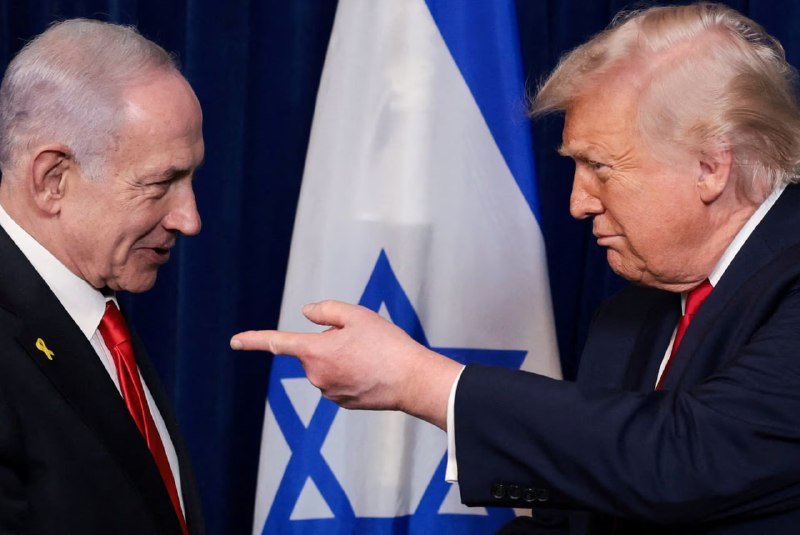
At 14:51 UTC on 14 June 2026, with Iranian and Israeli forces visibly preparing for a direct exchange, United States President Donald Trump publicly broke with Israel over a strike on Beirut's Dahiyeh, saying it "should not have happened" and urging all sides to "stand down" (Middle East Spectator, via Telegram, 14 June 2026, 14:51 UTC). The remarks — broadcast as the Islamic Revolutionary Guard Corps telegraphed a pre-dawn missile launch and Israel raised its national alert level — placed the Trump administration in open, public tension with the government of Prime Minister Benjamin Netanyahu at the moment Washington has been trying to lock in a nuclear arrangement with Tehran.

The Dahiyeh strike is the proximate trigger. The southern suburbs of the Lebanese capital, controlled by Hezbollah, are a familiar target set for the Israel Defense Forces; previous rounds of fighting have produced mass civilian displacement. The strike that prompted Trump's rebuke, and the Iranian reaction it has set off, occurred against a backdrop in which Israeli officials had already publicly assessed that Iran would answer with a missile launch from its own territory (Channel 14, via @rnintel on Telegram, 14 June 2026, 14:06 UTC) and the IDF Spokesperson had begun preparatory instructions (Channel 14, via @GeoPWatch on Telegram, 14 June 2026, 14:08 UTC).

What is known, hour by hour

Reporting from the Lebanese-Israeli frontier in the early afternoon UTC compressed the timeline. At 14:05 UTC, i24 (Israeli Channel 15) reported that Israel had raised its alert level over fears of incoming Iranian ballistic launches, and that Israeli assessments expected a missile attack on Israeli territory in response to the Beirut operation (i24, via @rnintel on Telegram, 14 June 2026, 14:05 UTC). By 14:08 UTC, Channel 14 carried the same assessment in slightly stronger form — that Iran would launch from its own territory toward Israel — and the IDF Spokesperson issued preparatory guidance, an unusual public step short of an active attack (Channel 14, via @GeoPWatch on Telegram, 14 June 2026, 14:08 UTC). Aggregator accounts (@intelslava on Telegram, 14 June 2026, 14:09 UTC) framed the situation as Iran "currently preparing for a retaliatory strike." By 14:22 UTC, the same account reported the IRGC stating that the response to the Beirut strike "will come before dawn" (@intelslava on Telegram, 14 June 2026, 14:22 UTC). At 14:51 UTC, Trump's statement landed (Middle East Spectator, via Telegram, 14 June 2026, 14:51 UTC).

The order matters. Israeli intelligence assessments came first; the operational preparations — alert levels, IDF Spokesperson guidance — followed; the IRGC's pre-dawn framing came next; the US public rebuke came last. The wire of events is consistent with a sequence in which Israeli planners believed an Iranian response was probable before the strike, and chose to proceed anyway. The sources do not record the content of the IDF Spokesperson's guidance, and the thread material does not provide Israeli government confirmation of the strike's target set inside Dahiyeh.

The counter-narratives

Two readings of the last 24 hours are live. The first, dominant in Israeli public-facing outlets, frames the Dahiyeh operation as a legitimate strike against Hezbollah infrastructure embedded in a civilian district — a posture Israeli spokespeople have used in prior rounds — and treats any Iranian response as escalatory and indefensible (Channel 14, via @GeoPWatch on Telegram, 14 June 2026, 14:08 UTC). The second reading, surfacing in Tehran-aligned channels and the IRGC's pre-dawn framing, treats the Beirut strike as a deliberate Israeli sabotage of a diplomatic track with Washington that Iran had been willing to pursue. The Telegram account @intelslava put the point directly on 14 June 2026 at 13:59 UTC: "Israel again sabotaged the agreement" with the United States (@intelslava on Telegram, 14 June 2026, 13:59 UTC).

Both frames have weight. The Israeli security concern — that Hezbollah's Dahiyeh footprint is a launch architecture, not a neighbourhood — has been a consistent and credible basis for prior operations, and Iranian retaliation from Iranian territory is, by the established international-law reading, an attack on a third country. The Iranian counter-frame is also structurally credible: a US administration negotiating a nuclear file has limited tolerance for operations that foreclose its diplomacy, and a public US presidential rebuke during an alert cycle is a rare and costly signal for the Israeli government.

What Trump's intervention actually does

A US president publicly disavowing an Israeli strike while Israeli cities are inside an active missile-threat window is not a routine press-cycle moment. It does three things at once. It raises the political cost inside Israel of any further escalation without prior coordination with Washington. It signals to Tehran that the diplomatic channel is still alive on American terms — that there remains a US principal willing to be seen breaking publicly with the Israeli government. And it forces Tehran to price in the risk that, if it fires on Israel and hits a target the US reads as defensive, Washington may treat an Iranian first strike from Iranian territory as a casus belli rather than a proportionate response to a Beirut strike Trump has just repudiated.

The structural pattern is familiar: an Israeli operational decision, a public US riposte, and an Iranian calculus that must now weigh whether the diplomatic window is wider or narrower than it was 24 hours ago. The thread material does not include Iranian Foreign Ministry text, an Iranian MFA briefing, or an Iranian ambassador's X account statement on the Dahiyeh strike; the visible Iranian posture in the sources is the IRGC's "before dawn" framing and the wider Telegram-channel commentary. That is not nothing, but it is also not the full Iranian state position.

The hour ahead

The sources narrow the next window to a pre-dawn Iranian launch from Iranian territory, with Israel already in a heightened alert posture and the IDF Spokesperson having issued preparatory public guidance. What the sources do not contain is any confirmation of an actual launch, any casualty figures from the Dahiyeh strike, any Iranian foreign-ministry statement, any White House readout beyond Trump's three-sentence rebuke, or any Hezbollah statement on the operation. The thread material also does not specify whether the IRGC's "before dawn" framing refers to Iranian local time, Lebanese local time, or UTC, and the sources do not name the specific Hezbollah figure or facility reportedly struck in the southern suburbs.

What can be said cleanly: at the time of writing, Israel and Iran are openly posturing for a direct exchange, the United States has chosen to break publicly with Israel rather than back the operation, and a diplomatic track that Washington has invested political capital in is now visibly fragile. Who fires first, and from which direction, is the question the next several hours will answer. The sources disagree on tone more than on fact; they agree on the operational sequence; and they leave the diplomatic outcome genuinely open.


Desk note: Monexus led on Israeli and Western-wire assessments of the alert posture (Channel 14, i24, IDF Spokesperson) while giving the Iranian counter-frame structural weight as primary reporting rather than as counter-claim material, given the explicit IRGC framing in the public record. Trump's rebuke is reported as a substantive US policy signal, not as commentary.

Wire provenance

This editorial synthesis draws on the following public wire/social posts:

  • https://t.me/Middle_East_Spectator
  • https://t.me/intelslava
  • https://t.me/intelslava
  • https://t.me/GeoPWatch
  • https://t.me/ClashReport
  • https://t.me/rnintel
  • https://t.me/rnintel
  • https://t.me/intelslava
  • https://t.me/rnintel
  • https://t.me/intelslava
© 2026 Monexus Media · reported from the wire