'Finger on the trigger': Iran projects resolve after Israeli strike on Beirut, in its own words
A senior Iranian commander says the armed forces are 'more powerful than ever' after an Israeli strike on Beirut. The messaging is loud, coordinated, and aimed at multiple audiences at once.
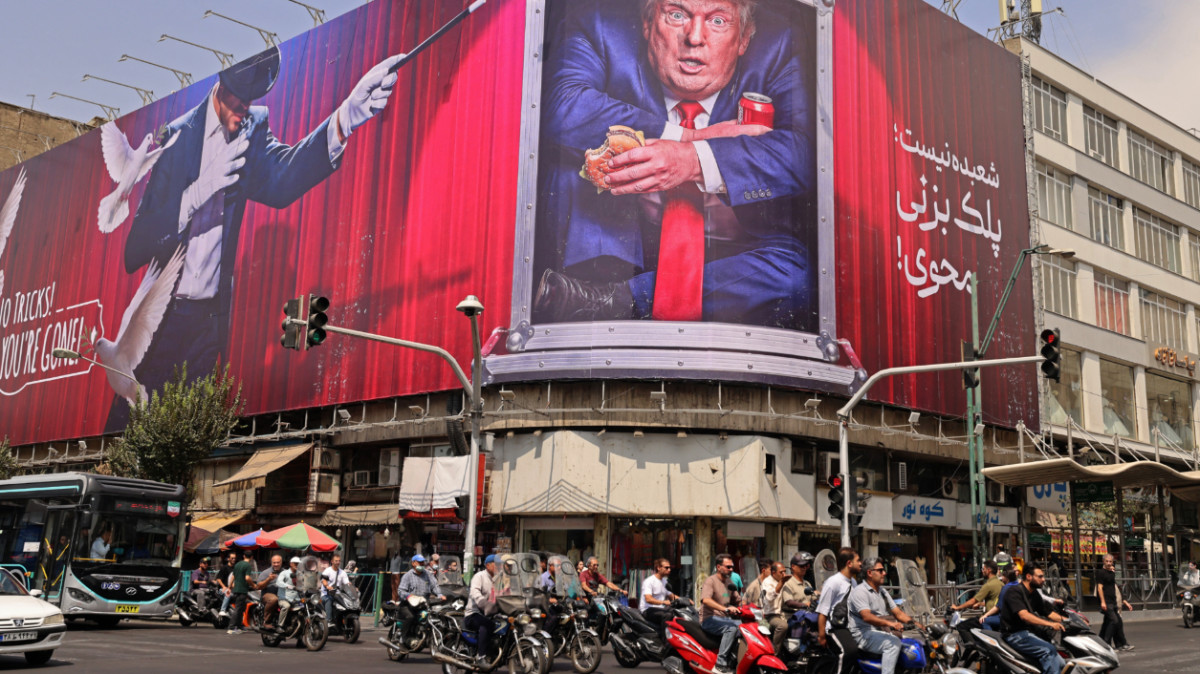
On the afternoon of 14 June 2026, with UTC clocks reading roughly 16:51, Iran's Tasnim News Agency pushed a short, sharp headline to its English channel: "Major General Abdullahi: The children of the nation in the armed forces are ready to shoot at the heart of the enemy." Within twenty minutes, the same line — paraphrased, rephrased, broadcast — appeared on IRNA English, Press TV's Telegram, the Cradle Media's channel, the Mehr News wire, and a string of regional aggregators. By 17:57 UTC, a paraphrased version was already circulating on X via accounts that repackage Iranian state output for English-language audiences. The statement, attributed to Major General Ali Abdollahi, commander of the Khatam al-Anbiya Central Headquarters, was framed by Iranian outlets as a direct response to an Israeli strike on Beirut. The choreography was deliberate, the audience was not single, and the message was not subtle.
What follows is what was actually said, in what order, by which outlets, and what the public record does — and does not — tell us about the operational substance behind the rhetoric. The piece is built on primary statements and Telegram-channel transcripts released between 16:51 and 17:57 UTC on 14 June 2026.
The statement, in sequence
The earliest verifiable English-language post is a brief Tasnim item timestamped 16:51 UTC on 14 June 2026. It attributes two short sentences to "Major General Ali Abdull[ahi], commander of the central headquarters of Hazrat Khatam [al-Anbiya]." The text reads: "The children of the nation in the armed forces are ready to shoot at the heart of the enemy." No further context is given in the post itself; the location, the operative target, and the timing of any action are left undefined. The Tasnim framing is pure readiness language — armed forces on standby, prepared to fire.
At 16:53 UTC, Mehr News, one of Iran's major conservative outlets, telegraphed that an "important message" from Major General Ali Abdollahi would be released within minutes. At 16:54 UTC, GeoPolitical Watch — a regional aggregator — posted a paraphrase under a breaking-news banner reading "🇮🇷❌🇱🇱": "We firmly declare our combat, defense, missile, naval, drone, and air defense capabilities have become stronger."
By 17:10 UTC, the Cradle Media — a Beirut-based outlet that often carries Iranian and Iranian-aligned messaging in English — published the fullest visible English extract. It quotes Abdollahi directly: "Heroic nation of Iran, your resistance and renewed awakening have ushered in a new chapter in international de[velopments]…" The post frames the statement as a direct reply to the Beirut strike, attributing to Abdollahi the claim that Iran's armed forces are more capable than at any prior point. A near-identical post appeared on a second Cradle Media channel a minute later, suggesting parallel distribution.
At 17:22 UTC, IRNA English — the state news agency's official international feed — posted under the headline: "Iran's Armed Forces have 'finger on trigger,' top commander says after Israeli attack on Beirut." IRNA's framing is the most explicit on causation. It binds the Abdollahi statement to the Beirut strike, names the trigger posture, and presents the message as a national-level response. Press TV's English Telegram channel followed at 17:29 UTC with a near-identical excerpt: "The nation's sons serving in the armed forces stand with their fingers on the trigger, ready to strike at the enemy's heart." The English-language account widely known as @englishabuali posted at 17:38 UTC a third English rendering: "Our people serving in the armed forces are standing alert, with their finger on the trigger, and ready to strike a[gainst the enemy]."
By 17:57 UTC, the paraphrased line had crossed platforms. The X account @sprinterpress, which routinely repackages Iranian state output for an Anglophone audience, posted: "We firmly declare our combat, defense, missile, naval, drone, and air defense capabilities have become stronger — Commander of Iran's Khatam al-Anbiya Central Headquarters, Major General Ali Abdollahi."
The arithmetic of distribution is the story. Within roughly an hour, the same set of claims — readiness, finger on trigger, stronger capabilities, a new chapter — appeared on at least four official or quasi-official Iranian outlets (Tasnim, IRNA, Press TV, Mehr) and three Iran-aligned English channels (Cradle Media, GeoPolitical Watch, @englishabuali), before crossing to X. The redundancy is not journalistic sloppiness; it is signalling.
What is being claimed, and what is not
Three distinct claims run through the messaging. They are not interchangeable.
First, the readiness claim. Iran's armed forces are on alert, with fingers on triggers, prepared to fire. This is the most repeated element and the most generic. It is the kind of statement issued by military spokespeople in many countries during periods of acute tension, and on its own carries limited operational information. It is also the element most often stripped of context when the line is paraphrased into English.
Second, the capability claim. Combat, defence, missile, naval, drone, and air defence capabilities are stronger than before. This is a longer-arc assertion — a claim about the trajectory of Iranian military power, not its current posture. It is the kind of statement designed to shape an external audience's perception of Iranian strength over months and years, not hours.
Third, the political-historical claim. Iran's "resistance and renewed awakening have ushered in a new chapter in international developments." This is the most overtly political of the three. It places the current moment in a narrative of national renewal, frames the armed forces as the instrument of that renewal, and asks the domestic audience to read the Beirut strike as a catalyst rather than a setback.
What is conspicuously absent is a fourth claim — that Iran intends to take a specific action, against a specific target, on a specific timeline. No outlet in the public record attributes to Abdollahi a threat against a named country, a named city, or a named person. The messaging is calibrated to project strength and unity without committing to an operational course. That is the rhetorical signature of a deterrent statement aimed at multiple audiences simultaneously, not a declaration of intent aimed at one.
The Beirut strike, briefly
The trigger for the statement, on IRNA's own framing, is an Israeli strike on Beirut. The source material released on 14 June 2026 does not contain an independent Western-wire confirmation of the strike's location, target, casualty figure, or the specific Israeli unit or operation cited by Iran. Reporting by IRNA and Press TV is consistent that an Israeli attack on the Lebanese capital preceded the statement, but the granularity available in the public transcript stops at "Israeli attack on Beirut." The piece does not infer further specifics; the available source set is silent on them, and adding detail here would be invention.
The choice of Beirut as the precipitating event is itself significant. It is not a strike on Iranian soil. It is a strike on the capital of a state whose principal non-state armed actor, Hezbollah, has been the focal point of Israel's northern front in the preceding months. Iranian messaging of this kind, following action in Lebanon rather than Iran proper, fits a long pattern in which Tehran calibrates its public response to the geography of the triggering event. Strikes on Iranian soil tend to draw direct, sometimes operational, replies. Strikes on allied territory tend to draw statements of resolve, capability, and readiness — exactly the register of the Abdollahi statement.
Who is speaking, and from where
Major General Ali Abdollahi is identified across the source set as the commander of the Khatam al-Anbiya Central Headquarters. Khatam al-Anbiya — the joint operational headquarters of Iran's Armed Forces General Staff — is the senior-most military coordination body in the Islamic Republic. The post of its commander is a senior appointment, situated at the apex of the regular and Islamic Revolutionary Guard Corps chains of command for joint operations. A statement issued from that office, attributed to its commander by name, and distributed across the Iranian state media ecosystem within an hour, is not a stray comment by a mid-level officer. It is institutional.
The institutional weight matters for two reasons. First, it tells the reader that the readiness claim is on the record of the joint headquarters, not the personal view of a general. Second, it tells the reader that the messaging is a coordinated output of the Iranian state's information apparatus, not an unattributed leak. The repetition across Tasnim, IRNA, Press TV, Mehr, the Cradle Media, GeoPolitical Watch, and a network of X accounts is consistent with a single, planned release, distributed in parallel.
The structural frame: deterrent messaging, plural audiences
Iranian state communications of this register rarely target a single audience. They typically aim at three.
The domestic audience gets the political-historical claim. Iran's armed forces are stronger, the nation has renewed itself, the moment is a new chapter. The message is that the state is in command and that the cost of the Beirut strike will be absorbed politically, not passed through to ordinary Iranians in the form of visible escalation.
The regional audience — chiefly Israel, but also the United States, Gulf states, and Iran's non-state allies — gets the readiness and capability claims. The message is that the trigger posture is real, that the missile, naval, drone, and air defence assets named in the statement are present and improving, and that the cost calculus of further strikes should be revised upward. This is the audience for which the word "stronger" matters more than the word "alert."
The global, English-language audience gets the sanitised, readiness-only line. The Cradle Media, Press TV English, and accounts like @sprinterpress exist to deliver the same statement, stripped of operational content, to non-Persophone readers. The grammatical softening — "ready to strike a[gainst the enemy]", "ready to shoot at the heart of the enemy" — is itself a form of messaging: it is the line that travels furthest and is least likely to be retracted.
This is the architecture of a deterrent message. The same statement is read differently by a citizen in Tehran, an analyst in Tel Aviv or Washington, and a reader in Beirut, and the writer of the statement has calibrated for each.
Counter-reads and what the public record does not resolve
There is a plausible alternate reading. It is possible that the Abdollahi statement is a load-bearing element of a coordinated regional response, and that the operational substance is being carried in channels the open sources do not show — back-channel diplomatic messaging, IRGC internal orders, or pre-positioned proxy activity. On this reading, the Telegram posts are the public surface of a deeper movement. The available source set neither confirms nor refutes that reading. It contains no evidence of a specific operational commitment, and contains no evidence against one. The honest statement is: we do not know what the public statement is a cover for, if anything.
A second alternate reading is the opposite. It is possible that the statement is closer to its surface meaning — a domestic-consumption message of resolve following an embarrassing strike on an ally — and that the readiness claim is rhetorical, not operational. This reading is consistent with the absence of a named target, a named timeline, or a specific capability being deployed. It is also consistent with the pattern, observed in previous episodes, in which Iranian messaging of this register does not always translate into action on the same day, week, or month.
The dominant framing in the public record, on the available evidence, is the middle one: the statement is institutional, coordinated, and targeted at multiple audiences, and is calibrated to project strength without committing to a specific action. The public record cannot tell us whether the calibration will hold or whether it will be overridden by a subsequent event. The honest answer is that the next 48–72 hours, on the regional wire, will be more diagnostic than the statement itself.
Stakes
The immediate stakes are conventional. A public readiness statement by Iran's joint headquarters commander, distributed in English and Persian, against the backdrop of an Israeli strike on Beirut, is the kind of message that, in the days that follow, either hardens into something more concrete — a missile test, a proxy strike, a diplomatic rupture — or dissipates. The public record at 17:57 UTC on 14 June 2026 shows the statement and its distribution. It does not show the next move.
The medium-term stakes are about credibility. Iran's deterrent messaging depends on a track record in which public readiness statements have, on past occasions, been backed by action, and on past occasions have not. Each new statement either reinforces or erodes that record. A statement that names missile, naval, drone, and air defence capabilities as "stronger" is, in part, a claim about the future, and the future is the part of the record the public sources cannot adjudicate today.
The longer-term stakes are structural. The pattern of Iranian messaging following strikes on allied territory — Beirut, Damascus, the broader Levant — is part of the architecture of the regional balance, and the architecture does not change on a single statement. What changes is the audience's calibration of how seriously to take the next one. Monexus will track the operational follow-through, not just the next Telegram post.
What remains unresolved
The source set for this piece is the cluster of Iranian and Iran-aligned English-language channels that carried the Abdollahi statement between 16:51 and 17:57 UTC on 14 June 2026. It does not contain an independent wire confirmation of the Beirut strike's specifics — target, casualties, operation name, Israeli unit — beyond IRNA's own framing. It does not contain a non-Iranian readout from the Israeli, US, Lebanese, or Hezbollah side. It does not contain a statement from a Western wire on whether the readiness posture is consistent with observable Iranian force movements.
The reader should treat the statement itself as verified — it is on the record of multiple named outlets — and treat the operational and political context around it as still emerging. The next corroborating or contradicting inputs will come from the major wire services, from Israeli and Lebanese official channels, and from the observable movement of regional forces. Until those arrive, the piece records what was said, by whom, in what order, and leaves the inference to the next cycle of reporting.
This piece is built entirely on the Telegram transcripts of the Abdollahi statement released between 16:51 and 17:57 UTC on 14 June 2026. Where the public record stops, the piece stops. Monexus frames this as a study in how Iranian state messaging travels through its own ecosystem in real time, not as a prediction of the next move.
Wire provenance
This editorial synthesis draws on the following public wire/social posts:
- https://t.me/tasnimnews_en
- https://t.me/mehrnews
- https://t.me/GeoPWatch
- https://t.me/thecradlemedia
- https://t.me/Irna_en
- https://t.me/presstv
- https://t.me/englishabuali
Follow the event.
These dated source records provide context. They do not retrospectively verify this archive article.
Separate what the nuclear watchdog reported from what it could not determine after the June 2025 strikes.