Iran's Supreme Leader Tells Domestic Media to Soften Self-Criticism — and the Implications Travel Further
In remarks carried by Tasnim on 14 June 2026, Ayatollah Khamenei urged Iranian outlets to 'refrain from addressing the weaknesses' too directly — a directive that says as much about Tehran's information control at home as about how its messaging is now read abroad.
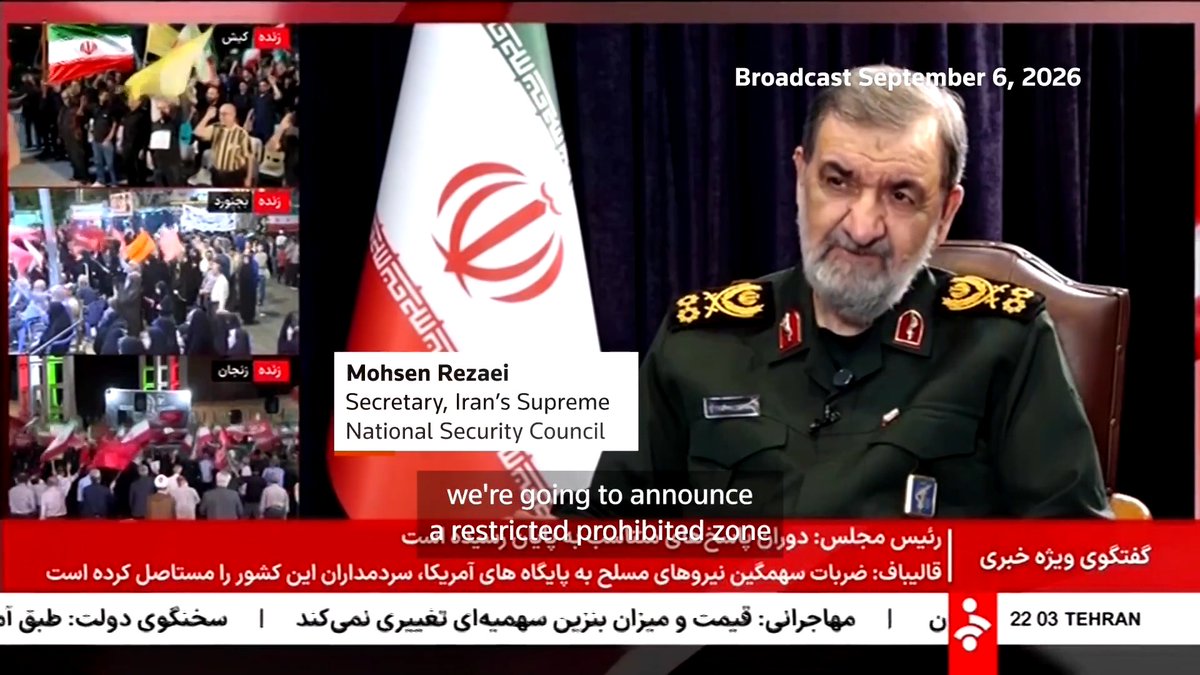
On 14 June 2026, Iran's Supreme Leader Ayatollah Ali Khamenei delivered a piece of advice to the country's domestic press that, on its face, sounds like a routine lecture on professionalism. The message, carried in English by the state-affiliated Tasnim News Agency, ran in abbreviated form as: "The media should refrain from addressing the weaknesses seriously — Supreme Leader of the Revolution: My advice to the domestic media of our country…" Read in full, the remarks urged Iranian outlets to handle criticism of state institutions with greater caution, framing blanket self-flagellation as a disservice to the Islamic Republic. The directive is not new — Iranian leaders have long complained that domestic coverage tilts toward opposition-leaning narratives — but the timing and the venue matter. It lands in the middle of an economic moment in which inflation, currency volatility and water stress have made even sympathetic outlets more willing to publish critical reporting.
What the remarks actually said
According to Tasnim's English wire, Khamenei's address to the domestic press framed the instruction as a question of national interest: Iranian media, he argued, should avoid amplifying what he described as the country's weaknesses, even when those weaknesses are real, because doing so hands ammunition to foreign adversaries. The line "The media should refrain from addressing the weaknesses seriously" appeared as the lead summary in Tasnim's English-language distribution on 14 June 2026. The Supreme Leader's broader posture — that an internal critic who repeats enemy talking points is, in effect, an instrument of that enemy — is consistent with messaging he has used in previous speeches to editors and news officials. The novelty is the explicit instruction not to take the country's problems "seriously" in coverage, a phrasing that gives Iran's press regulators a clearer doctrinal anchor when they intervene against individual outlets or journalists.
The counter-current inside the Iranian press
The directive lands against a domestic media environment that is more plural than the English-language framing allows. Iranian outlets span a spectrum from hardline-aligned papers to reformist titles that, within carefully drawn limits, have spent the past two years publishing granular reporting on rial depreciation, water rationing in Isfahan and Khuzestan, and the cost-of-living crisis. Some of that reporting has been tolerated; some of it has resulted in summons, suspensions and the blocking of websites. Reformist journalists have long argued that honest coverage of structural problems is what insulates a country from a worse crisis later — a position that, in the Iranian context, has cost careers. The Supreme Leader's remarks, read against that backdrop, function less as a free-press debate and more as a reminder of where the line is drawn: the regime will accept criticism that builds capacity, and reject coverage that frames the system itself as the problem.
Why outside observers are reading the remarks closely
The Khamenei directive matters well beyond the Tehran newsroom. Iran's information environment is, for better or worse, a key input into how the country's external posture is read — by Gulf states monitoring the nuclear file, by European negotiators parsing whether the domestic political space allows for a deal, and by foreign-policy analysts trying to gauge the regime's confidence. A press that is told not to take the country's problems "seriously" produces a thinner public record of those problems, which in turn makes outside analysis of Iran's internal trajectory harder. It also tightens the space for the kind of policy entrepreneurship — currency reform, water policy, subsidy restructuring — that requires an honest diagnostic to succeed. State-aligned outlets such as Tasnim, IRNA and Press TV will continue to amplify the official line; the harder question is what happens to the reformist titles that have been the most reliable source of granular economic reporting.
The structural frame — information control as statecraft
Read structurally, the Khamenei remarks are a routine instance of a wider pattern: governments under strain using media guidance as a substitute for institutional reform. The argument the Supreme Leader is making — that public airing of weaknesses is a strategic liability — is the same argument made in different vocabularies by governments from Cairo to Caracas to capitals in Central Asia. The Iranian version is distinctive only in that it is articulated by a cleric with unchallenged doctrinal authority, distributed through a state-aligned wire that also serves as the country's English-language voice to the world, and aimed at an audience that has, in recent years, begun to receive more unfiltered economic information through Telegram channels and diaspora outlets. The directive is, in effect, an attempt to close that gap from the supply side. Whether it succeeds depends less on the press itself and more on the appetite of Iranian readers, who have become skilled at reading between the lines of their own country's coverage.
Stakes and what to watch next
If the directive is enforced strictly, the visible consequence will be a quieter reformist press over the next several months and a heavier reliance on diaspora outlets and opposition channels for granular reporting on Iran's economy. If it is enforced loosely, the remarks will read in hindsight as a warning shot — significant as theatre, less so in practice. The intermediate indicators to watch are specific: the fate of individual reformist columnists, the licensing decisions affecting online outlets, and the volume of state-aligned English-language coverage of economic stress in the run-up to any new nuclear negotiating round. The Khamenei remarks do not by themselves change Iran's information environment. They do, however, redraw the boundary of what is publishable in it — and that boundary is the variable that determines how much of the country's actual condition makes it into the public record.
Desk note: Monexus is treating the Tasnim-distributed summary as the primary input for this piece, given the limited sourcing in the underlying thread. Where claims cannot be traced beyond the Tasnim summary, the framing is correspondingly narrow — this is a press-discipline story first, a foreign-policy story second.
Wire provenance
This editorial synthesis draws on the following public wire/social posts:
- https://t.me/s/tasnimnews_en