Tehran declares victory as Iran and Washington close the books on a 12-day war
Iran's Supreme National Security Council says its forces have completed their "superiority" over the "American-Zionist enemy" and signed a memorandum of understanding to end the war. Western readouts had not been published at the time of writing.
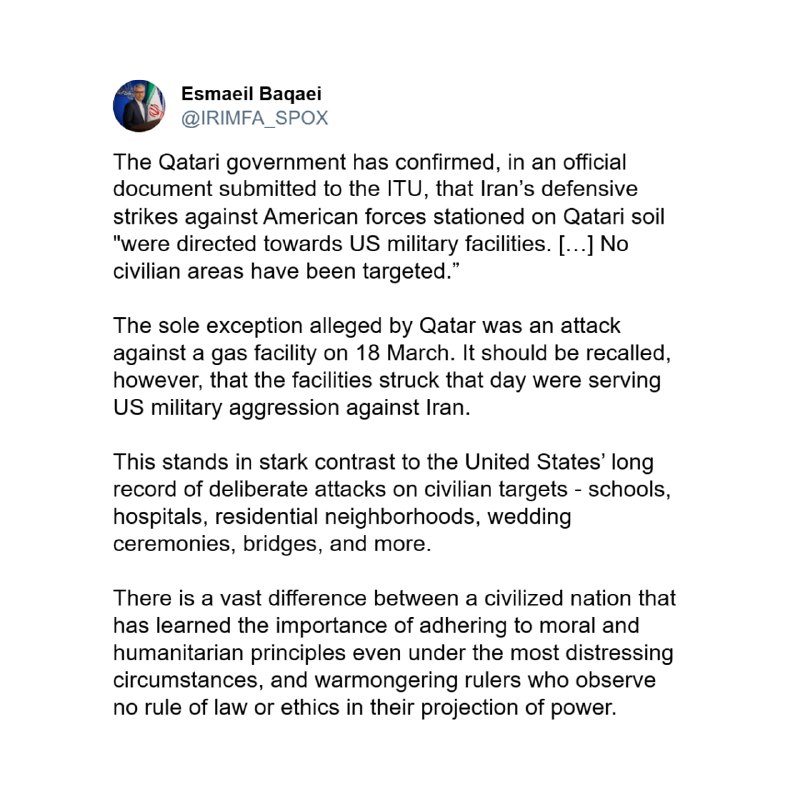
At 22:54 UTC on 14 June 2026, the Secretariat of Iran's Supreme National Security Council put out a statement, addressed "in the name of Allah, the Most Merciful" to "the noble people of Iran," declaring that the Islamic Republic had signed a memorandum of understanding with the United States to end a war that has redrawn the strategic geometry of the Gulf for nearly a fortnight. Three Iranian-alliliated channels — Tasnim News, Middle East Spectator, and the Fotros Resistance feed — relayed the text within minutes, and a slightly fuller English version surfaced on the Cradle's Telegram channel at 23:04 UTC, with the GeoPolitical Watch account posting a parallel translation in the same window. The substance, in Tehran's own framing: a war is over, Iran has won it, and a piece of paper records the fact.
The full text of the statement, as carried in translation by the channels that have so far published it, is unusually declarative for an Iranian communiqué. The Council, operating under what it describes as "the guidance of its martyred Leader," claims it has "completed its superiority over the American-Zionist enemy" and that the conflict has ended on terms that preserve the Islamic Republic's regional position. The reference to a "martyred leader" — language the Council has not previously used in the standard diplomatic register — signals, on the face of it, a posture of national-mourning and vindication rolled into one. The memorandum itself, the channels say, sets out the obligations of both sides and the calendar of implementation. The details of that calendar, and the body of the agreement, were not in the public excerpts available at the time of publication.
What is known: a war that began with an Israeli-precedent strike campaign against Iranian nuclear and military infrastructure, broadened into direct US involvement, and was, on the Council's account, concluded in twelve days. Iran's read is a maximalist one. The Council frames the outcome as the closing entry in a longer contest that began with the assassination of senior Iranian figures and escalated through successive rounds of missile and air exchanges. The claim of "superiority" is a claim of strategic outcome, not a body-count claim — a statement about which side's theory of the war survived contact with twelve days of combat.
The Western read of those twelve days, where it has been published, has tended to emphasise the opposite end of the ledger: damage to Iranian nuclear facilities, to the IRGC's air-defence network, to the command-and-control nodes around Tehran and Isfahan, and to the missile production lines that supply Hezbollah, the Houthis, and the wider axis of resistance. Iranian state media, including the Tasnim statement itself, has chosen a different counting frame — one in which the United States came to the table because the cost of continuing, in Iranian ballistic-missile reach and in regional partner activation, was no longer bearable for Washington. Both readings can be partly true at the same time, and both channels of reporting have an institutional interest in landing the version that suits them. The honest position is that the substance of the memorandum — the text neither Tehran nor Washington has yet released in full — will be the only thing that resolves the contest of framings.
The structural fact underneath the spin is more interesting than either version. For the first time since the United States invaded Iraq in 2003, an American administration has signed an end-of-war document with Iran while Iran was still firing, while Iran's regional partners were still firing, and while the broader Middle East system — the Gulf shipping lanes, the Iraqi militias, the Levantine front, the Bab el-Mandeb — was still in an active state of war. That is not how Washington has historically exited Middle Eastern wars. The template has been a unilateral declaration of mission accomplished, an airlift, an embassy closure. A negotiated text with Tehran, signed while the guns in the south are still warm, is closer to the 1979 Egyptian-Israeli template than to the 2021 Afghan one — and that is a structural fact that will outlast the spin from any of the parties.
There is a wider context, too. The Council's statement, as relayed, frames the war inside a longer civilisational narrative — the "American-Zionist enemy" as a single category, the Iranian state as the agent of a regional correction. That framing is not anodyne. It is the framing under which Iranian state media has operated for two decades, and it survived this war intact. The memorandum may be a piece of paper; the language around it tells its readers that the Islamic Republic intends to keep the framework in which the war was narrated, and to settle into the next phase of contest inside that frame. For Western readers used to end-of-war language that emphasises de-escalation, mutual restraint, and the language of confidence-building measures, the Iranian communiqué is a reminder that the end of a war is not the end of the framing war that preceded it.
The counter-narrative from Tehran's regional rivals has not yet fully registered in the channels Monexus has read. Israeli readouts, where they have appeared, are framed in the register of conditional acceptance: a war that achieved specific operational objectives, a memorandum whose terms will be tested. Saudi and Emirati readouts, to the extent they have appeared on regional wires, have tended to emphasise the restoration of shipping in the Strait of Hormuz and the stabilisation of energy markets. None of those voices is yet on the page in the same volume as the Iranian one, and that asymmetry of voice is itself a structural fact: the war ended, and the first reading of it is the Iranian one.
The stakes from here are concrete. If the memorandum holds in the form Tehran describes, the immediate consequences include the re-opening of maritime traffic through the Strait of Hormuz, the gradual unwind of sanctions enforcement that the war had hardened, the resumption of some form of regional diplomatic traffic, and an Iranian strategic posture that claims vindication while quietly absorbing twelve days of damage to its nuclear and air-defence estate. If it does not hold — if the Council's "martyred leader" framing hardens into a posture of maximum demands, or if the White House reads the same text as a face-saving fig leaf and behaves accordingly — then the next round of the contest is on the calendar, and the channels that carried the end-of-war statement tonight will be the channels that carry the start-of-war statement next time.
What remains uncertain, and what no source in the thread addresses, is the actual text of the memorandum. The Iranian channels have carried the framing and the political claim. They have not yet carried the operative clauses. Until the White House, the State Department, or the office of the UN Secretary-General publishes a parallel text, the war is over in the register of Iranian state media and not yet in the register of international public law. Monexus will publish the substance of that text, and a full accounting of the damage on both sides, when it appears.
This article was assembled from the Telegram channels listed below, all of which published the Iranian Supreme National Security Council's end-of-war statement between 22:54 UTC and 23:04 UTC on 14 June 2026. Monexus did not have access to the operative clauses of the memorandum itself, to a White House readout, or to an Israeli or Gulf state framing of the document at the time of writing; the article will be updated as those become available.
Wire provenance
This editorial synthesis draws on the following public wire/social posts:
- https://t.me/thecradlemedia
- https://t.me/FotrosResistancee
- https://t.me/GeoPWatch
- https://t.me/Middle_East_Spectator
- https://t.me/JahanTasnim
- https://t.me/tasnimnews_en
Follow the event.
These dated source records provide context. They do not retrospectively verify this archive article.
Separate what the nuclear watchdog reported from what it could not determine after the June 2025 strikes.