Tehran turns to culture as a front-line weapon: the IRGC ceremony putting American and Israeli militaries in the crosshairs
At a Tehran ceremony honouring a commander killed in last month's war, a senior IRGC cultural adviser framed music, film and poetry as instruments for fracturing American and Israeli military cohesion — a posture Tehran's critics call propaganda and its defenders call asymmetric deterrence.
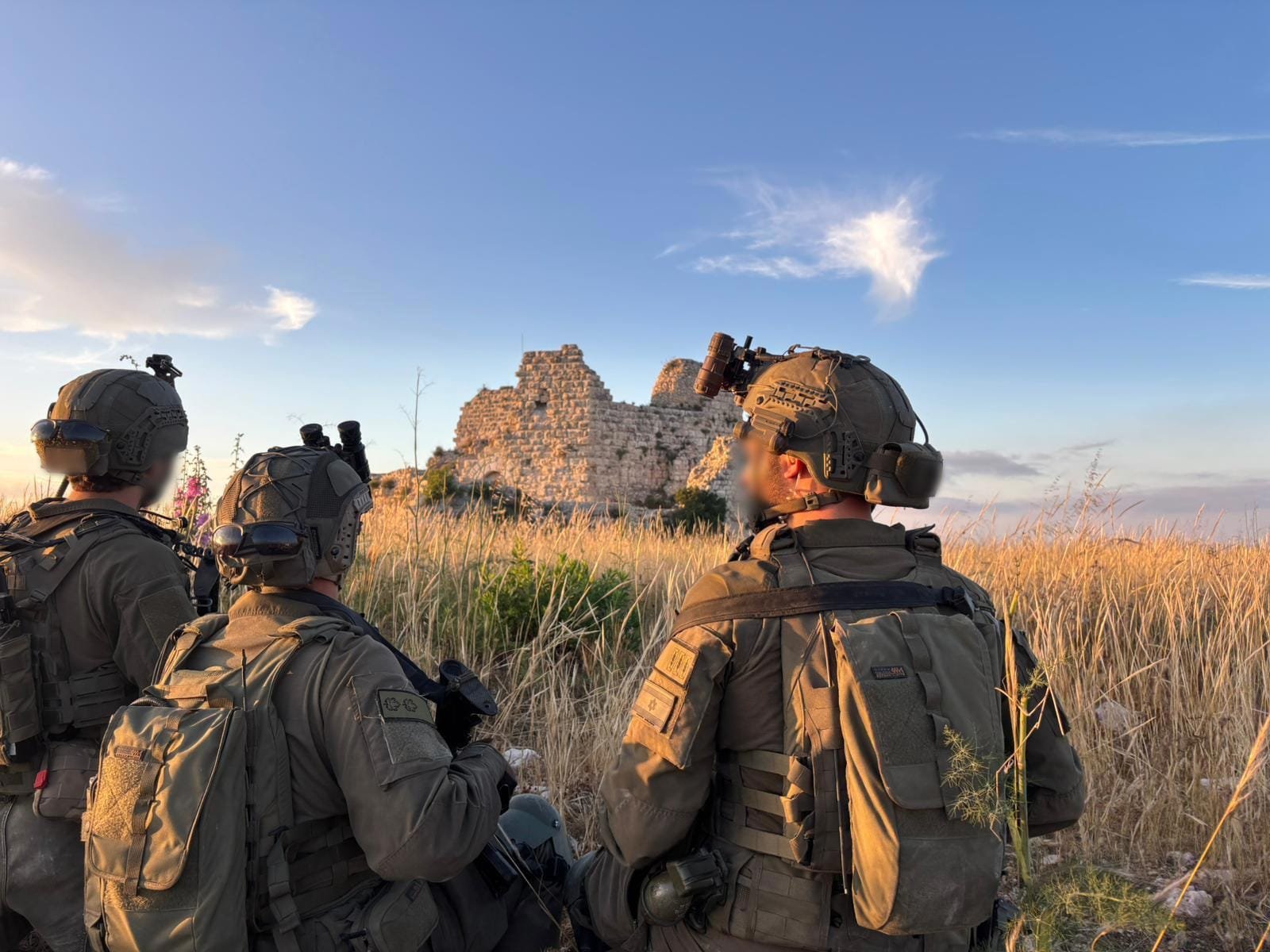
On the afternoon of 14 June 2026, in a Tehran hall hung with the portrait of a fallen commander, a senior cultural official of Iran's Islamic Revolutionary Guard Corps made a claim that doubled as a programme: that artists, poets and musicians can be deployed to "disturb the cohesion and unity" of the American and Israeli military communities. The remarks, delivered at a ceremony honouring the late Alireza Bagherian, were carried by Tasnim News, the IRGC's own outlet, in an English-language dispatch filed at 18:07 UTC. Read literally, they are a confession of intent: culture, in this telling, is not adjacent to warfare but a weapon inside it.
What is striking is not that Iran says such things — its leaders have long argued that Western publics can be bent by information and sentiment. What is striking is that the argument is being made by the cultural adviser to the IRGC's commander-in-chief, at a state-linked mourning ceremony, and that the target is named: not Israeli society at large, but the discipline of two specific fighting forces.
A ceremony, and what was actually said
Tasnim's wire frames the event as a tribute to a military figure whose death Iran has previously attributed to operations tied to the wider war that erupted in June 2025. The cultural adviser's intervention, as relayed by the outlet, treats the occasion as an opportunity to set a strategic frame: that the United States and Israel are not monolithic, and that their armed forces — particularly the conscript and reserve components that sit inside their societies — have seams that a patient cultural offensive can prise open. Tasnim's report does not specify which artists, which works, or which platforms the IRGC intends to use. It does something more useful for an outside reader: it states the theory of victory.
The framing matters because it tells a Western audience what kind of threat it is looking at. The most aggressive reading is that this is a coordination problem — a request, dressed in the language of culture, for sympathisers abroad to harass soldiers, veterans and their families. The most charitable reading inside the Iranian system is that cultural export is a soft-power continuation of asymmetric deterrence: a way to weaken an adversary's will to fight without crossing the threshold of escalation that would draw a direct kinetic response.
The counter-narrative Tehran does not hear
Western coverage of the IRGC routinely reads the Corps as a unitary propaganda machine, and Tasnim's English service is openly a propaganda outlet — that fact is not in dispute. But two structural caveats are worth recording. First, Iran's wider cultural diplomacy, run through the Ministry of Culture and the Visual Arts organisation, has for decades operated on professional networks that are not formally subordinate to the IRGC, and the boundaries between civilian and military cultural policy inside the Islamic Republic are fuzzier than outside commentary often allows. Second, the claim that art can dent military cohesion is not a uniquely Iranian idea. The United States funded abstract-expressionist touring and jazz diplomacy during the Cold War precisely because it believed culture could shift the internal politics of a hostile state. The debate is not whether culture can do this; it is who gets to define the cost.
Israeli media in recent years has reported on attempts to target soldiers and their families on social platforms, and Western governments have publicly attributed a number of influence operations to Iran-aligned actors. Tasnim's dispatch is useful precisely because it places a theory of psychological pressure on the record, in the words of a named adviser, in an outlet that is not pretending to be neutral. That is rarer than it sounds, and it should narrow the gap between speculation and evidence in the public debate.
The structural picture, in plain terms
The pattern the ceremony sits inside is older than the current war. When a great power believes it can win a conflict through industrial output, it builds factories; when it believes the fight is over the politics of adversary societies, it builds narratives. The Islamic Republic has spent four decades investing in the latter, partly because the former was denied to it by sanctions, partly because the regime's founders came to power in large part through cultural and religious mobilisation. What the Bagherian ceremony adds is a sharpening of target: not the Israeli or American public as consumers, but the armed forces as institutions. That is a different kind of operation, and a different kind of problem for the people tasked with defending those institutions.
It also reframes the standard Western debate about Iranian "information warfare". That debate tends to focus on elections, on diaspora communities, and on the integrity of public discourse. The IRGC's adviser is pointing at a different object: the morale of uniformed personnel and, by implication, their willingness to deploy on operations that are politically unpopular at home. The implication for Western defence planners is uncomfortable: the same recruiting-and-retention systems that have been quietly hollowed out in peacetime become vulnerabilities in a sustained psychological campaign.
Stakes, and what is still genuinely unknown
If the IRGC's cultural arm is in fact being pointed at American and Israeli military communities, the immediate stakes are operational: a small but persistent degradation of cohesion, recruitment difficulty, and pressure on the political leadership of both states to limit deployments that expose the seams. Over a longer horizon, the stakes are doctrinal: how Western armed forces defend themselves against a threat that does not arrive in uniform, on a battlefield, or in a language their doctrine is built to parse.
The honest caveats are real. Tasnim is not an independent outlet, and the ceremony's English-language framing is itself a piece of the campaign. We do not yet have an external accounting of which artists, which platforms, or which budgets are being activated under the banner the adviser invoked. We do not know whether the cultural work is centralised in the IRGC, distributed through allied foundations, or — as is often the case in Iran — a hybrid of the two. And we do not have a public ledger of effect: how many service members, in which units, have been approached, harassed, or successfully turned. What we have, for now, is a senior adviser stating, on the record, that the institution intends to try. That is more than Western commentary usually gets, and it is the reason the ceremony is worth taking seriously.
How Monexus framed this: the wire services carried the ceremony as a routine tribute. We treated the cultural adviser's remarks as the lede, because they convert a mourning event into a stated programme — and a stated programme is something policy can be built to answer.
Wire provenance
This editorial synthesis draws on the following public wire/social posts:
- https://t.me/tasnimnews_en/
Follow the event.
These dated source records provide context. They do not retrospectively verify this archive article.
Separate what the nuclear watchdog reported from what it could not determine after the June 2025 strikes.