Israel Raises Alert as Iran Readies Retaliation: Anatomy of a Countdown
Israeli media reported on 14 June 2026 that Iran is preparing a missile strike on Israeli territory, prompting an IDF alert-level upgrade. The escalation follows a strike in Beirut's southern suburbs and a collapsed US-Iran window.
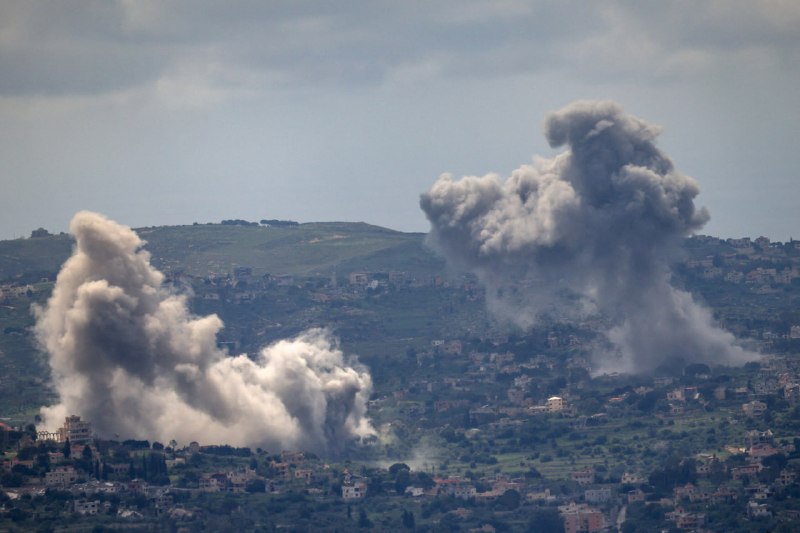
At 14:05 UTC on 14 June 2026, Israeli Channel 15 (i24) reported that the country's alert level had been raised in anticipation of ballistic-missile launches from Iran. Within minutes, Israeli Channel 14 carried the assessment that a launch from Iranian territory toward Israel was now the working assumption inside the Israeli system, and the IDF Spokesperson confirmed that the military was pre-positioning for the scenario. By 14:10 UTC, the headline had hardened across Yediot Ahronoth and Channel 12's Amit Segal: Israel was preparing for fire from Iran.
The sequence matters. It was unusually fast, unusually public, and unusually aligned across Israeli outlets that often diverge on the politics of escalation. That convergence is itself the news — Israeli outlets rarely speak with one voice unless the operational picture has become difficult to deny.
What the Israeli reporting actually says
The framing inside the Israeli press on the afternoon of 14 June 2026 was consistent on the operational facts, even where the political read remained unsettled. Channel 15 (i24) said alert levels had been raised over fears of Iranian ballistic launches. Channel 14 went further, reporting that the assessment in Israel was that Iran would carry out a missile launch from its territory toward Israel. Yediot Ahronoth and Channel 12's Amit Segal confirmed that preparations for the possibility of fire from Iran were underway. The IDF Spokesperson added the institutional voice: the IDF was pre-positioning for the scenario.
The trigger identified by Channel 14 was the strike in the southern suburbs of Beirut. Reporting on the Intelslava and RNIntel wires, both carrying the same underlying Israeli sourcing, ties the Israeli alert posture to a specific Hezbollah-linked target struck in Dahieh — the heavily Shia southern suburb that has functioned as Hezbollah's political and military command district since the early 1990s. Israeli framing treats the Beirut strike as the catalyst; Iranian framing, to the extent it surfaces in regional channels, treats it as a renewed casus belli.
What the Israeli outlets do not yet say is the size, timing, or vector of the anticipated Iranian response. The reporting is uniformly framed as preparation, not prediction — language of readiness rather than certainty.
The diplomatic track that the wire says collapsed
The Intelslava channel, citing regional sources, argued on 14 June 2026 that there was no realistic prospect of a US–Iran agreement within 24 hours, and that Israel had, in the channel's framing, "again sabotaged" the negotiating track. That characterisation sits in tension with the Israeli press's own framing, which treats the alert posture as a defensive response to an imminent Iranian move rather than a coordinating hand on the diplomatic scale.
Both reads deserve weight. The Israeli outlets are operationally focused — they are asking what the IDF is doing in the next hours, not who is to blame for the next hours. The Intelslava line, by contrast, is interested in the political economy of the crisis: who benefits from a posture of imminent attack, and whether diplomacy was a live option until quite recently. The truth is likely some combination: a diplomatic track that was narrow and time-limited, and a military track that was the fallback by design.
The Washington-led track, when it surfaces in regional coverage, is treated as conditional on a set of Iranian steps — limits on enrichment, curbs on proxy transfer, constraints on missile programmes — that have looked successively more difficult for Tehran to deliver without a political cost at home.
The structural frame: a regional posture, not a bilateral quarrel
What is unfolding in the Levant on 14 June 2026 is not a two-state dispute. It is a regional posture contest conducted through proxies, with Israel and Iran as the senior principals and a constellation of armed non-state actors doing the work on the ground. Hezbollah in Lebanon, the Houthis in Yemen, the network of Shia militias in Iraq and Syria — these are the load-bearing elements of the Iranian deterrent, and they are also the targets most exposed to Israeli reach.
The Beirut strike on the southern suburbs is therefore not a side note. It is the first-order fact that the Israeli press itself is citing as the trigger for the alert upgrade. A direct hit on Dahieh is a direct statement by Israel that it is willing to operate at the command-and-control level of its principal adversary's most important forward ally. Iran, by the same logic, faces a choice between absorbing that signal and escalating across the geography it can reach — Lebanon, the Israeli home front, possibly the maritime corridor, possibly the Iraqi theatre.
The Israeli alert posture is a function of that calculation. A missile launch from Iranian soil toward Israel is the option with the highest visibility and the highest risk of drawing a sustained response; a reactivation of the northern front through Hezbollah, by contrast, can be staged, attributed with difficulty, and managed inside an existing operating tempo. Israeli planners have to defend against the whole menu, not just the most dramatic item on it.
The counter-reads that should be in the room
The dominant Israeli frame on 14 June 2026 is preparation for an Iranian strike. The counter-reads deserve explicit airtime.
First, the alert posture is a posture. Public-facing channels in Israel, including Channel 14 and i24, sometimes amplify a sense of imminent attack in periods when the political leadership wants to harden the domestic audience against concessions in a negotiating window. This is not cynicism; it is the standard operating procedure of crisis communication in a security-saturated media market. The reader should hold the working assumption and the meta-comment on the working assumption at the same time.
Second, the Iranian side, as represented in regional channels such as Intelslava, treats the Israeli posture as the provocation, not the response. On this read, the strike in Dahieh was the move, and the public Israeli framing of imminent Iranian retaliation is the diplomatic cover for further escalation under the rubric of self-defence. That is a coherent reading of the same evidence; the difference is the assignment of agency at the front of the sequence.
Third, the US–Iran track, where it exists, is being squeezed from both ends — by Israeli strikes that reduce Iranian incentives to compromise, and by Iranian signalling that raises the cost of compromise for Tehran's regional allies. A negotiating process that survives both pressures may yet emerge; a negotiating process that survives neither will not.
Stakes and what is not yet known
If the Israeli working assumption holds — a missile launch from Iran toward Israel within hours or days — the regional consequences are severe and immediate. Air-defence systems will be tested under load, civilian infrastructure will be exposed, and a second round of strikes from Israel against Iranian targets on Iranian soil becomes a live option. Oil markets, which have already priced some of this risk in the preceding weeks, will reprice quickly. The diplomatic track, narrow as it was, closes for the duration of the exchange.
If the working assumption does not hold — if the alert posture was precautionary, if the Iranian response takes a different shape, if a back-channel produces a pause — the regional system recalibrates around a narrower set of facts and a more legible negotiating lane. The Hezbollah question, the enrichment question, the question of Iranian forward presence in Syria and Iraq, all become bargaining items again rather than casus belli.
What the wire on 14 June 2026 does not yet say is the size of the Iranian force being prepared, the timing of the launch, the target set inside Israel, or the response plan the IDF has authorised. Israeli outlets on the public record are at pains to describe preparation, not prediction. The Intelslava line, more politically loaded, asserts sabotage of a deal. The honest summary is that the next twelve to seventy-two hours will settle which of the two frames was right, and that the regional system will pay either way.
Desk note: Monexus led with Israeli operational sources — i24 (Channel 15), Channel 14, Yediot Ahronoth, Channel 12, and the IDF Spokesperson — and treated the Intelslava line on the collapsed US–Iran track as a regional counter-read, weighted but not dominant. The piece is a reading of a moving situation on 14 June 2026, not a prediction; the source list below names the wires that fed the analysis, and the next Monexus update will follow the operational facts as they harden.
Wire provenance
This editorial synthesis draws on the following public wire/social posts:
- https://t.me/intelslava/118451
- https://t.me/rnintel/22044
- https://t.me/GeoPWatch/3081
- https://t.me/rnintel/22042
- https://t.me/rnintel/22041
- https://t.me/intelslava/118450
- https://t.me/intelslava/118448
- https://en.wikipedia.org/wiki/Dahiyeh
Follow the event.
These dated source records provide context. They do not retrospectively verify this archive article.
Separate what the nuclear watchdog reported from what it could not determine after the June 2025 strikes.