Ceasefire Math: Israel, Iran, and the Narrowing Window Between a Beirut Strike and a Signed Truce
An Israeli strike on Beirut and an Iranian vow to respond collided on 14 June 2026 with a US-mediated ceasefire that President Trump said was still within reach — exposing how fragile the formula has become.
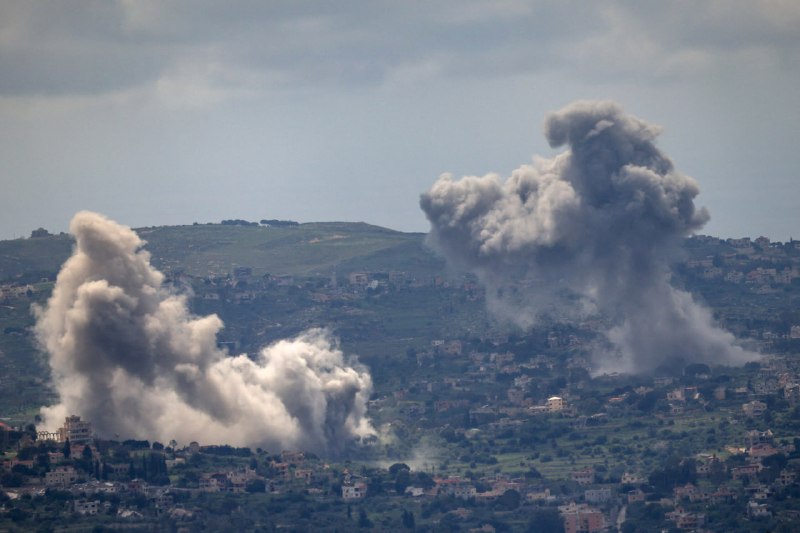
At 19:57 UTC on 14 June 2026, Al Jazeera English reported that Donald Trump had condemned Israel's strike on Beirut earlier the same day, while adding that a deal with Iran remained "still close." Within an hour, an Israeli cabinet convened in an underground shelter in Kiryat had, according to a widely circulated account of a senior Israeli official's read-out, settled on a one-line position: if Iran responds, Israel will respond again. By 21:26 UTC, Middle East Spectator was posing the question hanging over every negotiating channel from Doha to Muscat: does an immediate ceasefire begin now, or only after the ink dries on an agreement no one has yet seen? The arithmetic of de-escalation, in other words, has become hostage to the difference between a stoppage of fire and a signed political settlement, and the gap between them is now measured in lives.
The contradiction at the centre of 14 June is not new, but it is unusually compressed. A US president publicly denounces a strike by a close ally while insisting a deal with the country the strike was meant to deter is within reach. A government in Jerusalem holds a cabinet meeting in a hardened shelter because the retaliation it expects from Tehran is treated as a near-certainty, not a risk. And a regional channel, summarising the framing on Iranian social media, reports that Tehran has vowed to respond. The structure is familiar from earlier rounds of this fight, in 2024 and again in 2025: a discrete act, a vow of symmetry, a diplomatic track that insists it can absorb the shock. What is different this time is the timing. The Beirut strike landed on the same day the framework under negotiation was, by the US president's own account, close.
The strike, the read-out, the rhetoric
The Israeli strike on Beirut, the target and the casualty count of which the three source items do not detail, drew two distinct public reactions in quick succession. Trump, in remarks carried by Al Jazeera English at 19:57 UTC on 14 June, condemned the attack and yet framed the underlying negotiation as salvageable — "close," in his word, to a deal. Israel's posture, as described in a 20:02 UTC post attributed to the account sprinterpress on X and framed as a read-out of the cabinet's deliberations, is binary: a reciprocal response to any Iranian action. The Iranian side, as summarised by the Telegram channel Middle East Spectator at 21:26 UTC, has vowed to respond to the Beirut attack. None of the three items specifies timing, location or means. What they do specify, taken together, is that each principal has, in writing or in channel-attributed words, committed publicly to a next move that, by its own logic, makes the next move of the other principal necessary.
This is the well-known dilemma of deterrence signalling in compressed time. Each statement is designed for a domestic audience and for a regional one; each is meant to raise the cost of the next strike to the other side. The cumulative effect, however, is to convert a negotiating track into a contest of who fires last before the framework is signed. The political space between "the strike was wrong" and "the deal is close" is the space in which the ceasefire has to be locked in, and it is narrowing.
The American mediation, and the credibility cost
Washington's public position is that the two tracks — pressure on Iran over its nuclear programme and de-escalation between Iran and Israel — are separable in principle and manageable in practice. The events of 14 June suggest they are not. A presidential condemnation of an Israeli strike, delivered in real time, is a notable public marker: it tells Israeli decision-makers that the political cost of the strike has been registered in the White House. It tells Iranian decision-makers that the US is not, for the moment, ratifying the strike. And it tells every observer in the Gulf, in Ankara and in Moscow that the US still believes it can mediate.
The credibility cost is what the three source items only partially illuminate. If Iran does respond, and Israel responds to that response as it has publicly committed to do, the question the mediators will face is whether the US can continue to insist that a deal is "close." If Iran does not respond, the question becomes whether Tehran's declared posture — a vow of retaliation — has been quietly bought off by concessions not yet disclosed. Neither outcome is, in the language the source items use, fully consistent with the framing that the deal is intact. The story, in other words, is no longer only about Beirut. It is about the gap between what the principals say and what they have been willing to sign.
The Lebanese theatre, again
Beirut's southern suburbs have, since 2024, functioned as the principal Lebanese venue for the Iran–Israel exchange — a proxy for the wider contest, carried out on the territory of a state that is not a principal to the negotiation. The source items do not name a target, a sub-district, or a casualty figure. They do not specify whether the strike hit a Hezbollah-linked site, a residential block, or a weapons cache. They name only the event. What can be said, on the basis of the available material, is that an Israeli strike on Beirut on 14 June is, by itself, not a discontinuity: the pattern of strikes and counter-strikes has continued in fits and starts since 2024. What is a discontinuity is the strike landing on a day when the US president has gone on the record, in Al Jazeera English's framing, as saying a deal is close.
Lebanon's government, which is not a principal to the negotiation and is not quoted in the three source items, is the absent fourth actor. Its absence is itself part of the story. A ceasefire that is mediated by Washington, signed (in some form) between Israel and a US-led framework with Iran, and enforced, in so far as it is enforced, on Lebanese soil without Lebanese signature is the structural form the prospective deal has taken. That form has costs. It narrows Beirut's room for manoeuvre on its own internal Hezbollah debate. It treats Lebanese territory as a venue for the de-escalation of a fight the Lebanese state did not start.
What remains uncertain
Three things, on the basis of the three source items, are not specified and would change the analysis if established. First, the target and the casualty count of the Beirut strike — whether the strike hit a clearly military target, what the immediate humanitarian picture is in the hours after 21:26 UTC on 14 June, and whether the Lebanese authorities have issued a casualty figure. Second, the operational meaning of the Iranian "vow to respond" — whether Tehran means a strike in the next hours, a strike in the next days, or a signalling move at a forum such as the UN Security Council. Third, the content of the "close" deal that Trump referenced — what the US has offered on enrichment, on sanctions sequencing, on the disposition of stockpiles, and on the linkage to the wider regional file.
What the three source items do establish is the configuration on the night of 14 June 2026: a US president publicly distancing himself from an Israeli strike while keeping the negotiating track open; an Israeli cabinet that has publicly committed to a reciprocal response; and an Iranian channel that has framed a vow of retaliation. The ceasefire, in the form the principals have each publicly described, is at once imminent and unreachable. It is imminent in the sense that all three actors continue to use the word. It is unreachable in the sense that none of them has been willing, on the public record of 14 June, to make the next move the others would need in order to sign. The arithmetic of de-escalation is now a question of who gives first, and on which channel, and at what price. The window the mediators describe as "close" is, on the evidence of these three items, narrower than the word suggests.
This article has been written from a three-source wire cluster dated 14 June 2026. Monexus has not been able to independently verify the target, the casualty count or the operational status of the alleged Iranian vow of retaliation; the Israeli cabinet's read-out is sourced to a single X account and not to an official Israeli government channel; and the substance of the US-mediated deal is referenced by the US president in general terms only. Where the wire and the regional channels diverge on framing — Al Jazeera English foregrounds the US condemnation, the Iranian-aligned channel Middle East Spectator foregrounds the vow of response — both have been given equal weight.
Wire provenance
This editorial synthesis draws on the following public wire/social posts:
- https://t.me/middle_east_spectator/
- https://t.me/aljazeera_english_global/
Follow the event.
These dated source records provide context. They do not retrospectively verify this archive article.
Separate what the nuclear watchdog reported from what it could not determine after the June 2025 strikes.