Knicks' playoff win sparks celebration — and a burning bus — on the streets of Manhattan
A euphoric night in New York ended with a FIFA World Cup tour bus set ablaze in Manhattan, putting a spotlight on how cities police post-victory crowds.
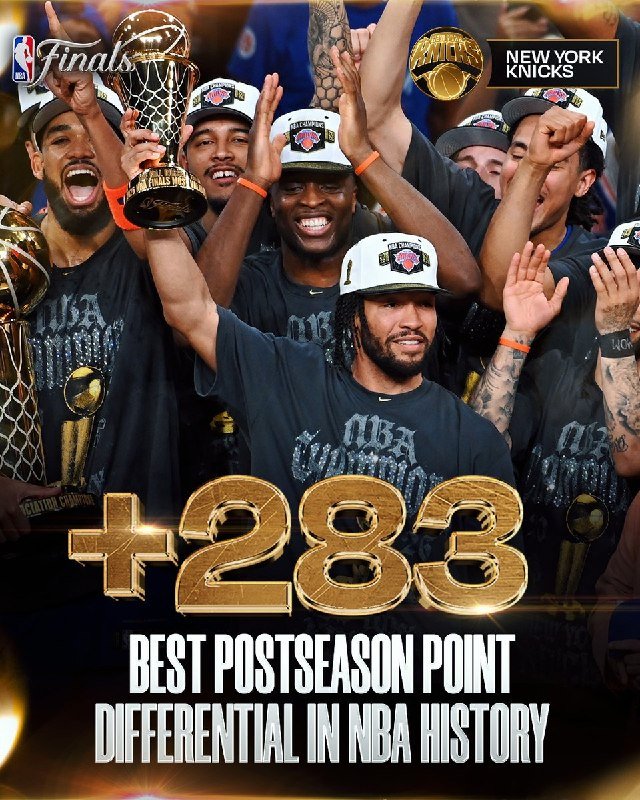
New York woke up on 14 June 2026 to the same split-screen that has followed its most euphoric sports nights for decades: fans still buzzing about a Knicks playoff victory, and a Manhattan street cordoned off around a charred FIFA World Cup tour bus. The two scenes, separated by a few blocks and a few hours, captured both the scale of the city's joy and the recurring cost of letting celebration tip into confrontation.
The pattern is now familiar. A deep Knicks run draws tens of thousands into the streets around Madison Square Garden and out toward Lower Manhattan. Most of the gathering is catharsis, an answering roar from a fanbase that has waited a generation for a sustained playoff push. But the same density that produces the roar also produces the friction — bottles, flares, vehicles, and, in the early hours of Sunday morning, a tour bus associated with the upcoming 2026 FIFA World Cup set alight in Midtown, according to initial reporting from The Epoch Times.
What is confirmed, and by whom
The Epoch Times reported on 14 June 2026 that the Knicks' historic win was followed by violent incidents, including a World Cup bus being set alight in Manhattan. The outlet cited no casualty figures and no arrests in the initial dispatch, and the New York Police Department had not, as of the report's filing, released a public incident tally. That is the verifiable spine of the story: a championship-adjacent victory, a celebratory crowd, and a vehicle torched in plain view of Midtown's residential and commercial blocks.
Beyond that, the public record is thin. Police sources typically publish a count of arrests, injuries, and property damage in the days after a major celebration. As of the report's publication on 14 June 2026 at 18:01 UTC, the available reporting did not specify how the bus was ignited, whether anyone was inside at the time, or whether the incident is being treated as a targeted act or a chaotic spillover from the surrounding crowd. The Epoch Times is a U.S.-based outlet with a known editorial perspective; mainstream New York outlets, including the New York Times, New York Post, and Gothamist, are likely to carry fuller detail as the day progresses.
A familiar pattern, a different stage
The scene is not new. Philadelphia, Los Angeles, Denver and Boston have all grappled with the after-life of championship or deep-playoff celebrations that have turned violent, including a shooting in Denver after the Nuggets' 2023 title run and a spate of vandalism in Philadelphia following Eagles playoff wins. New York's challenge is structural: the Knicks play at Madison Square Garden, a 20,000-seat arena plumb into the middle of Midtown's commercial and residential grid, and the streets around Penn Station, the Port Authority bus terminal, and the Lincoln Tunnel funnel crowd out into tight corridors where crowd-control margins are small.
City officials have spent two years planning for the 2026 FIFA World Cup, which will be hosted in part at MetLife Stadium in East Rutherford, New Jersey, with viewings and fan events scheduled across Manhattan. The presence of a World Cup tour bus in Midtown on a Knicks-celebration night is therefore not incidental. The two events were scheduled to share the same audience and the same streets, and the bus fire raises a question the city's planners will need to answer before July: how to keep a global-tournament promotional schedule intact when the local team gives the city a reason to flood its own avenues.
The stakes — for the team, the tournament, and the city
For the Knicks, the post-season is the franchise's most valuable marketing asset of the decade and the most credible argument for sustained fan engagement. Player development and front-office moves will be judged against the run they just finished, and the games themselves are the only part of that asset the team controls directly. The off-court ledger — how many arrests, how much property damage, how the city talks about the crowd in the days that follow — is harder to manage and tends to crowd out the on-court narrative in the 48-hour news cycle after a big win.
For FIFA and the local organising committee, the bus fire is the first visual collision between the tournament's promotional machine and the city's existing sports culture. FIFA's U.S. operation has been careful to present the 2026 World Cup as a normal civic event, not a security operation, in part to defuse public anxiety about policing, immigration enforcement, and crowd control at scale. The image of a torched bus on Manhattan streets complicates that framing and is likely to be cited by critics of the tournament's footprint, including local advocacy groups that have raised concerns about policing budgets and surveillance around match-day zones.
For New York, the immediate cost is operational: more police overtime, a public conversation about whether additional restrictions — road closures, fan zones, transit shutdowns — are warranted when the Knicks and Mets, and now the World Cup, are all pulling into the same calendar. The deeper cost is reputational. New York has, over the past two decades, marketed itself as a city that can absorb a marathon, a ticker-tape parade, and a papal visit on the same weekend. The image of a tour bus burning in Midtown is the counter-marketing the city does not need ahead of the most-watched summer of sporting events in the U.S. capital since 1994.
What remains unclear
Three things will become clearer in the coming days. First, the NYPD's own assessment of the crowd size, the sequence of events leading to the fire, and any arrests or injuries. Second, the position of FIFA and the U.S. World Cup organising committee on whether promotional assets in Manhattan will be redrawn, particularly given the proximity of the next Knicks game, which is likely to be in the next 48 to 72 hours. Third, the longer pattern: whether the 2026 calendar — a deep Knicks run, a Mets run, the World Cup, and the U.S. Open across the Hudson — produces a series of one-off flare-ups or a sustained pressure on the city's crowd-control systems.
The Knicks, for their part, can only control what they control. They have, for the first time in a generation, a roster worth protecting and a fan base worth celebrating. The streets are not the team's responsibility in any legal sense, but in a city that runs on imagery, the picture of the bus fire will travel further than any box score from the series that preceded it.
This publication will update the record as the NYPD, FIFA, and New York City officials publish their own accounts of the night of 13–14 June 2026.
Wire provenance
This editorial synthesis draws on the following public wire/social posts:
- https://en.wikipedia.org/wiki/2025%E2%80%9326_New_York_Knicks_season
- https://en.wikipedia.org/wiki/Madison_Square_Garden
- https://en.wikipedia.org/wiki/2026_FIFA_World_Cup