Pakistan announces US-Iran understanding as Tehran rebuffs separate offer on Israel strike
A late-night claim from Islamabad that Washington and Tehran have closed a peace deal lands alongside Tehran's reported refusal of a $12 billion US package to stand down after a Beirut strike.
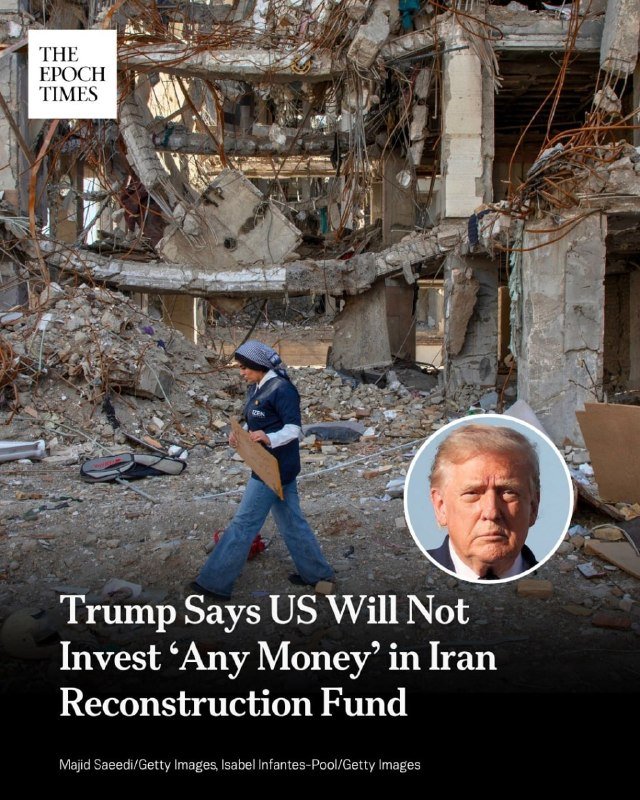
Pakistan's prime minister said late on 14 June 2026 that the United States and Iran had reached a peace deal after a fresh round of talks, according to a Reuters wire picked up at 21:35 UTC. The announcement, framed in Islamabad rather than Washington or Tehran, lands on the same day that two separate channels — the Sprinter Press account on X and the Telegram channel OSINTtechnical — reported that Iran had rejected a multi-billion-dollar US package of economic incentives, including the release of frozen Iranian funds, intended to dissuade Tehran from striking Israel over what the same channels described as "today's Beirut strike." The simultaneity is the story: a declared US-Iran deal, and, in the same news cycle, an Iranian refusal to be bought off on a parallel Israel track.
Read together, the two threads describe a Middle Eastern diplomacy that is being run on more than one channel at once — a state-to-state track between Washington and Tehran, and a coercion track that tries to convert Iranian restraint into a market-priced commodity. Both depend on Iranian cash flow. The question is which one actually binds.
What Pakistan announced
Reuters reported at 21:35 UTC on 14 June 2026 that Pakistan's prime minister, speaking from Islamabad, said the United States and Iran had reached a peace deal after talks. The wire was brief; it did not name a counterpart, specify the venue, list the substantive terms, or say whether Iranian state media had confirmed the claim. Pakistan has positioned itself, in recent years, as a quiet back-channel between Tehran and Gulf capitals, and as a useful interlocutor for Washington on issues where neither side currently has direct lines running through European or Iraqi intermediaries. Announcing a US-Iran deal from Islamabad is consistent with that role. It is not, by itself, confirmation that either of the two named principals considers the matter closed.
The structural read: when a third capital claims a bilateral deal before either principal does, the third capital is also buying itself a seat at the table.
The Israel track, and the $12 billion that wasn't taken
Two independent channels carry the second thread. At 19:06 UTC, an account identifying itself as Sprinter Press posted that Iran had refused $12 billion in exchange for not attacking Israel. At 18:53 UTC, the same account posted that the United States had offered additional economic incentives — including the release of Iranian funds — to prevent an Iranian strike on Israel, and that Iran had rejected the proposal, framing the rejection around "the Beirut attack." At 18:17 UTC, the Telegram channel OSINTtechnical relayed reporting that the US had made the offer, that Iran had refused, and that N12 (an Israeli outlet) assessed Iran would retaliate in any case. The three posts triangulate a single sequence: a US economic offer, an Iranian no, and an Israeli-side expectation that retaliation comes regardless.
The most careful read of the timing is that the $12 billion figure, the offer of released Iranian funds, and the Beirut strike all sit in the same 24-hour news cycle on 14 June 2026. The sources do not name a specific Beirut strike target, casualty count, or attribution; nor do they identify which Iranian funds the US was offering to unlock, or under what sanctions architecture. The reporting is consistent with the established pattern in which Washington pairs a de-escalation track with a financial sweetener timed to specific incidents — but the specifics belong to subsequent reporting, not to these posts.
A dollar architecture as foreign policy
The pairing is the point. A peace deal between the United States and Iran, if real, runs through the same financial plumbing that the $12 billion offer was trying to activate on the Israel track: frozen central-bank reserves, sanctions licences, oil-export exemptions, the SWIFT-adjacent access that determines whether Iranian state revenue is real or paper. In that sense, the two stories are not separate stories about two crises. They are the same story about a sanctions regime being used, in real time, as a bargaining chip in two different bargaining sessions — one with Tehran, one with Tehran-by-proxy-of-Israel.
That this kind of bargaining is happening at all is a measure of how thoroughly financial statecraft has replaced the older architecture of direct great-power negotiation. The incentive is calibrated to Iran's fiscal pain, not to a security calculation about Israel. Whether the carrot works depends on whether Tehran's leadership believes the deal survives an American administration, whether the funds actually clear, and whether the alternative — open conflict — is more expensive than the deal. Sources do not resolve any of those questions.
Stakes and what is not yet verified
If the Pakistani-announced deal holds, the short-term winners are Iran (cash flow), the United States (a non-proliferation line held), and Pakistan (a brokerage fee paid in standing). The short-term losers are Israel, which has been negotiating over its own security through a US channel it does not directly control, and the Gulf states, whose own Iran policy is calibrated to a US-Iran temperature that may now shift under their feet. If the deal does not hold — and the same-day Iranian rejection of the $12 billion package is a reason to suspect it may not — the more volatile of the two tracks is the Israel one, because it carries a kinetic option that the state-to-state track does not.
What the sources do not settle: whether Iran has, in fact, agreed to anything with Washington, beyond what Pakistan claims; what the $12 billion offer consisted of and which Iranian decision-makers declined it; the target and attribution of the Beirut strike referenced in the Iranian rejection language; and the Israeli operational expectation of an Iranian response, which N12's assessment flags but does not detail. A responsible read treats both the deal and the rejection as reported, not as confirmed.
Desk note: Monexus is foregrounding the Pakistani announcement at the same weight as the Iranian rejection, because the wire reporting on the two appeared within hours of each other and the contradiction between them is the day's most consequential fact.
Wire provenance
This editorial synthesis draws on the following public wire/social posts:
- http://reut.rs/43Ezq5R
- https://t.me/s/osintlive
Follow the event.
These dated source records provide context. They do not retrospectively verify this archive article.
Separate what the nuclear watchdog reported from what it could not determine after the June 2025 strikes.