Putin's birthday call to Trump revives the diplomacy track on Ukraine, Iran, and arms control
A nearly hour-long Putin-Trump call on the US president's 80th birthday reopened channels on Ukraine, Iran, and the lapsed New START treaty — but produced no deliverables, and the readouts from Moscow and Washington diverge sharply.
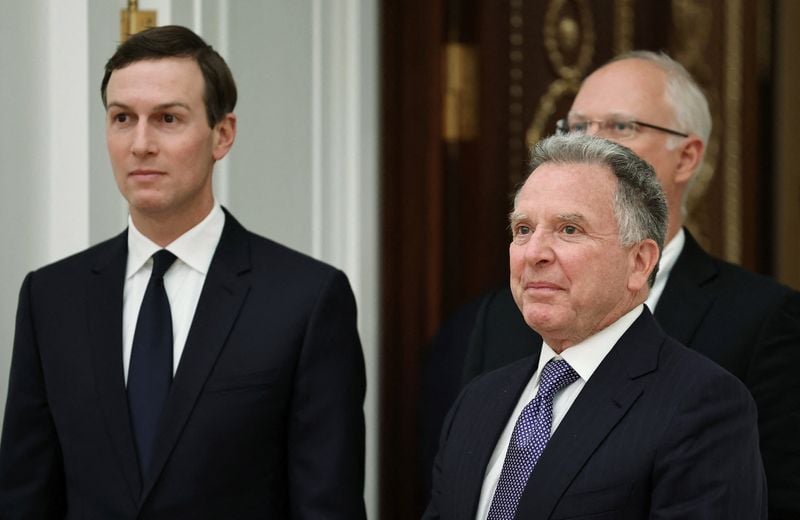
Vladimir Putin telephoned Donald Trump on Sunday 14 June 2026 to mark the US president's 80th birthday, and the two leaders spoke for nearly an hour in a conversation the Kremlin described, in a readout carried by Russian-aligned channels and monitored feeds, as "friendly and candid." The call went well beyond birthday pleasantries: by Moscow's account, the two leaders discussed the war in Ukraine, the Iran nuclear file, and the future of the lapsed New START framework governing the two countries' strategic nuclear arsenals. There were no deliverables, no joint statement, and no agreed next step. What there was, after months of fitful contact, was an extended, scheduled exchange at the head-of-state level — a format the Trump White House has conspicuously preferred over the working-group diplomacy that defined much of the first post-2024 stretch.
The phone call is a small procedural fact with outsized structural weight. It reactivates a direct leader-to-leader channel that the Biden administration had treated as effectively closed after the December 2021 security-proposal episode, and that Trump's second term has used episodically but never institutionalised. It also lands in a week when the New START treaty, the last remaining bilateral cap on deployed US and Russian strategic warheads, is set to expire absent a five-year extension that neither side has publicly committed to. Read together, the call's two most consequential subjects — Ukraine and the bilateral arms-control architecture — are not really separable. The argument Moscow has been making in private for two years, and that Washington has been slow to credit, is that the two files are linked: that an unmanaged nuclear relationship is impossible to sustain while the two largest nuclear powers are engaged in a hot proxy-front war in Europe.
What the readouts say — and what they leave out
The fullest public account of the conversation is the Russian one, distributed through the Kremlin's foreign-policy aide Yuri Ushakov and relayed by Russian state-aligned aggregators and the Cradle's Beirut desk. According to that readout, the two leaders exchanged birthday greetings, then turned to Ukraine, then to Iran, then to what Russian sources describe as the entire complex of bilateral strategic issues. The Cradle's reporting, which appears to be paraphrasing the Kremlin's read-out, frames the discussion of Iran explicitly in the context of the renewed nuclear-file negotiations; it does not name a counterpart mediator or specify whether the call was preparatory to a Trump envoy's travel to Geneva or Muscat. The shorter English-language X thread from the Irish commentator Brian McDonald, summarising Ushakov's account, specifies a duration of "55 minutes" — a figure the Russian-side aggregators round up to "nearly an hour."
What is missing from the public record is as informative as what is in it. There is no confirmed White House readout naming participants from the US side beyond Trump, no confirmation that Secretary of State Marco Rubio or national-security leadership joined the call, and no read-out from the office of Ukrainian president Volodymyr Zelenskyy, who has insisted since 2022 that any negotiation over Ukraine must include Kyiv at the table. The asymmetry is itself the story: Russia can publish a tidy narrative, the United States is constrained by an interagency process and by the political exposure of any framing that resembles a one-on-one concession to Moscow, and Ukraine is not in the room.
The arms-control backdrop — and why New START is back in the conversation
The most procedurally concrete subject on the table is the bilateral nuclear architecture. The New START treaty, signed in 2010 and extended for five years in 2021, caps deployed US and Russian strategic warheads at 1,550 each and limits deployed strategic delivery vehicles. It was always set to expire on 5 February 2026; Russia's formal non-compliance posture since 2023, in which it suspended on-site inspections and stopped publishing aggregate warhead data, had already hollowed out the verification regime well before the calendar ran out. By June 2026, the limits exist on paper and not in fact, and there is no follow-on framework on the table — neither the comprehensive strategic-stability talks that the Biden administration pushed in late 2023, nor the narrower, delivery-vehicle-only framework some US strategists floated as a transitional step.
The Putin-Trump call, on the Russian readout, returned to this question. Russian-aligned framing positions the conversation as part of a process to "restore" a bilateral dialogue on strategic stability, language that conspicuously avoids the word "treaty" and the word "extension." The structural argument in Moscow, articulated in various forms by Ushakov and by Russian foreign-policy commentators, is that the United States cannot credibly demand a strategic ceiling on China's arsenal as long as it is unable even to maintain a ceiling with Russia — and that the absence of a framework makes every other conversation between the two countries more dangerous. The standard US reply, articulated in 2023 and 2024 by successive administrations, has been that Russia is the proximate cause of the framework's erosion through its non-compliance in Ukraine, and that arms control cannot be decoupled from the broader relationship.
Neither side has, in the readouts available on 14 June, shifted that position publicly. What has shifted is the willingness to talk about it. That is a real change, but a small one. The 2010 New START framework did not survive contact with the post-2022 security environment; what is on the table now is not its restoration but the negotiation, perhaps starting later in 2026, of something narrower, later, and less verifiable.
The Ukraine variable — and the question Kyiv is asking
The harder file is Ukraine. The Russian readout says the two leaders discussed the war; it does not say what was proposed, what was rejected, or whether a Trump special envoy — Steve Witkoff, who has run the channel since early 2025 — was on the line. The conversation also lands against the backdrop of an unresolved question about Ukrainian territorial concessions that Kyiv and most European Union governments have publicly ruled out, and that the Trump administration has, in its more candid moments, conceded it cannot deliver Kyiv into accepting.
The structural problem is older than this phone call. Since Trump's first term, the United States has cycled between three positions on Ukraine: maximalist support framed in 2022 Zelenskyy-visit terms; transactional pressure for a quick settlement, peaking around the February 2025 Oval Office meeting; and a quieter, more sustainable middle position that combines military aid, sanctions maintenance, and shuttle diplomacy. The 14 June call sits in the third register — calibrated, low-key, and weighted toward keeping channels warm rather than producing a deal. That is the read the European desks in Berlin, Paris, and Warsaw have been working with for months: the White House is not abandoning Ukraine, but it is not in a hurry, and the diplomatic tempo is set by Washington and Moscow, not by Kyiv.
Kyiv's read is sharper. The absence of a Ukrainian readout, and the conspicuous absence of any Zelenskyy-Trump component to the public reporting, tells the story. The Ukrainian government has spent the past eighteen months institutionalising a counter-veto: bilateral security agreements with France, the United Kingdom, Germany, and a widening group of European partners, each of which commits the signatory to multi-year military aid and, in some formulations, to direct intervention in the event of a renewed major Russian offensive. The architecture is explicitly designed to make a Trump-Moscow deal over Ukrainian heads politically costly to implement. Whether that is enough to shape what the two leaders discuss one-on-one is the open question of the summer.
What the Iran file adds to the mix
The third subject — Iran — is in some ways the most procedurally useful. There is a live negotiation track. The Cradle's reporting on the call frames the Iran discussion in the context of an active nuclear file; the same outlet has, in recent weeks, carried framing suggesting indirect US-Iran contacts mediated by Oman and Qatar. The Trump administration has been more openly transactional on Iran than on Ukraine, willing to separate the nuclear file from missile and proxy questions, and to entertain a tiered enrichment structure that the previous administration treated as a non-starter.
The Russian interest in the Iran file is the part that does not always show up in Western coverage. Moscow has been a party to the Iran nuclear diplomacy since the original Joint Plan of Action in 2013; it is one of the three foreign-ministry signatories (with China) of the 2015 JCPOA framework that Trump withdrew from in 2018. A US-Iran deal negotiated without Russian input is, from Moscow's vantage, a deal that locks Russia out of a file it has shaped for fifteen years. The phone call, in this reading, is partly a courtesy — and partly Moscow reminding Washington that the Iran file is a three-power file, not a bilateral one. Whether that argument holds depends on how the eventual US-Iran deal is structured, and on whether Tehran itself wants a Russian seat at the table.
Counter-reads and what they imply
There are two plausible counter-reads of the same facts. The first, favoured by the more sceptical European and Ukrainian analysts, is that the call is a piece of stage management: a friendly headline, a warm tone, no content, designed to flatter the Russian side and to give the White House a deliverable for its domestic audience on a slow news day. The 80th-birthday framing makes that read easy; the absence of any documented follow-up mechanism makes it hard to dismiss.
The second, favoured by parts of the Russian foreign-policy commentariat and by the Cradle's analytical desk, is more substantive: that the United States is, slowly and without much fanfare, accepting that it cannot run a 21st-century great-power posture without a working channel to Moscow, and that the Ukraine, Iran, and arms-control files will eventually be negotiated as a single package. That read treats the call not as the story but as the visible seam of a longer process whose other edges — Witkoff's travel, possible Witkoff-envoy trips to Kyiv, the slow grinding of sanctions review — are not on the front page.
This publication finds the first read defensible as a description of the day's news and the second read defensible as a description of the underlying trajectory. The two are not mutually exclusive. A leader-to-leader call can be both stage-managed and a marker of a real shift in the diplomatic substrate; in fact, that combination is the modal shape of Trump-era diplomacy. The harder question is the one neither readout answers: whether the call produced an instruction to a working-level channel to meet before the UN General Assembly high-level week in September, or whether it produced nothing operational at all.
What the next sixty days look like
The testable predictions fall out of the readouts. If the call mattered, three things should happen by mid-August: a confirmed Trump-envoy meeting with a Russian counterpart, a published or leaked extension of New START data-sharing, and a US readout of any Iran-related follow-up that names the mediator. If none of those happens, the call belongs in the same category as the other warm-but-empty Trump-Putin exchanges of 2025 — useful as atmosphere, inert as policy.
The bigger stakes are not tactical. A world in which the two largest nuclear powers have no agreed ceiling on deployed warheads, no on-site inspection, and a hot war underwritten by one of them in Europe is a more dangerous world than the one New START was designed to govern. The 14 June call does not, on the evidence available, move us closer to fixing that. It may, at most, have moved us closer to talking about fixing it. That is something. It is not enough.
Desk note: Monexus has framed this story around the asymmetry between the Russian and US readouts, and the conspicuous absence of a Ukrainian one. The wire services will lead on the birthday framing; this publication leads on the gap between what was said in the call and what was not, and on the structural question of whether the three files — Ukraine, Iran, arms control — are converging into a single negotiation or running in parallel.
Wire provenance
This editorial synthesis draws on the following public wire/social posts:
- https://x.com/sprinterpress/status/
- https://t.me/osintlive/
- https://t.me/thecradlemedia/
- https://x.com/brianmcdonaldie/status/
- https://en.wikipedia.org/wiki/New_START
- https://en.wikipedia.org/wiki/Joint_Comprehensive_Plan_of_Action
- https://en.wikipedia.org/wiki/Steve_Witkoff
- https://en.wikipedia.org/wiki/Yuri_Ushakov
Follow the event.
These dated source records provide context. They do not retrospectively verify this archive article.
A dated voting record is evidence of one decision. Use the original UN record before turning it into an alignment label.
Visual explainer · historical vote of 2022-03-02 →- https://x.com/sprinterpress/status/
- https://t.me/osintlive/
- https://t.me/thecradlemedia/
- https://x.com/brianmcdonaldie/status/
- https://en.wikipedia.org/wiki/New_START
- https://en.wikipedia.org/wiki/Joint_Comprehensive_Plan_of_Action
- https://en.wikipedia.org/wiki/Steve_Witkoff
- https://en.wikipedia.org/wiki/Yuri_Ushakov