Russian drone strike near a bus stop kills a civilian as Ukraine's daily toll keeps grinding
A Russian FPV drone struck near a public bus stop in southern Ukraine on 14 June 2026, killing at least one person, according to Ukrainian officials. The incident fits a pattern of strikes on transit points in regions under constant bombardment.
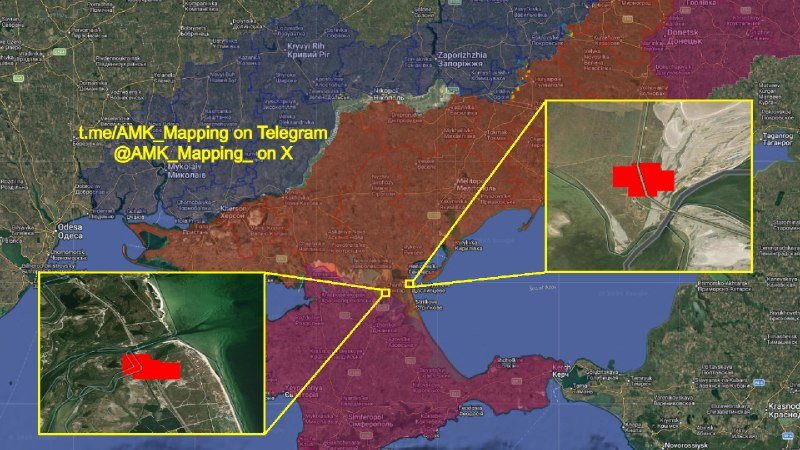
At 16:14 UTC on 14 June 2026, the Ukrainian television channel TSN reported that a Russian drone had struck near a bus stop in southern Ukraine, killing at least one person. The single-sentence dispatch, carried on TSN's Telegram channel, did not name the locality or give a casualty count beyond the one confirmed death, but it fits a pattern of FPV and loitering-munition attacks on civilian transit points in regions bordering the Dnipro and the Black Sea coast. The incident is one of dozens of similar strike reports Ukrainian officials file each week from frontline oblasts.
The strike lands on a day that otherwise generated little international coverage of the war. There were no announced arms packages, no high-level diplomatic moves, and no front-line territorial claims from either side that the available reporting confirms. What the day produced was another data point: a Russian drone, a bus stop, a person waiting for a ride. The arithmetic of the war is built from incidents like this one, recorded in fragments by Ukrainian media and rarely read in full by anyone outside the country.
A pattern, not an anomaly
Russian drone and missile strikes on civilian infrastructure in Ukraine have continued at a sustained tempo throughout 2026, with no clean inflection point visible in the public record. Ukrainian air-defence and railway-restoration crews describe a baseline of nightly attacks on energy substations, grain silos, and transit hubs in the southern and eastern oblasts, punctuated by larger salvos timed to political anniversaries or to coincide with diplomatic pressure points. The 14 June strike on a bus stop is consistent with the smaller end of that distribution: a tactical attack, almost certainly using a first-person-view drone, designed to reach a target on a known schedule rather than a strategic target chosen for symbolic value.
Bus stops and pedestrian crossings have been hit repeatedly in the southern oblasts over the past year because they are predictable. People gather at them; the timing of their use is visible from overhead; the targets are not hardened. The pattern reflects a doctrine of area-denial applied to populated territory, in which the civilian function of a place — waiting for transport, queuing for water — is treated as a legitimate feature of its vulnerability. Western wire reporting has documented the broader pattern; the granular per-incident record is held by Ukrainian regional authorities and outlets like TSN, Suspilne, and the public-broadcasting company.
The TSN dispatch of 14 June contains no footage or independent verification beyond the channel's own reporting. The single-sentence format is typical of fast-moving strike alerts: the outlet confirms the fact of impact and a death, with fuller casualty figures and a named location usually arriving in a follow-up post or a same-day evening bulletin. The Ukrainian national police and the regional military administration are the standard sources for the formal toll; the present article cannot reach them and the source item does not cite them.
The information gap
What is striking about the 14 June bulletin is how little it carries. One death, one location type, no time of day, no name. This is the texture of the war in its fourth year: major strikes are reported globally within hours, while the small strikes — the ones that kill one person, or two, or none — are recorded only by regional outlets and accumulate without synthesis. International news desks treat the war as a story of packages, front lines, and summits; the daily civilian toll is reported in aggregate by agencies like the UN Human Rights Monitoring Mission in Ukraine, but the individual incidents that make up the aggregate often pass below the wire.
The structural problem is familiar. Sustained conflicts generate a high volume of low-salience events, and news organisations must ration attention. Western wire services have largely concentrated on battlefield developments around Pokrovsk, Toretsk, and the Kursk salient, on Ukrainian strikes inside Russia, and on the diplomatic track around Kyiv, Washington, and European capitals. Civilian casualty incidents in the southern oblasts, except when they are large enough to generate a national story, are covered by Ukrainian outlets and re-reported selectively. The result is a public record in which the war's smallest killings are the most undercounted, even as the aggregate toll is well documented.
What the available evidence does and does not say
The sources available for this article consist of the 14 June TSN Telegram post and a separate, unrelated science dispatch from Nikkei Asia. The science item — reporting a record 17,044 new species described in a recent year — does not bear on the strike and is not used as a substantive source. The strike information is therefore single-source: TSN's own report. Nothing in the available material adds the place name, the time of the strike, the type of drone used, the number of wounded, or the institutional response.
This publication therefore treats the 14 June TSN post as the only verifiable basis for the incident described above. We have not identified a wire-service corroboration within the material available to us, and we have not located a second Ukrainian regional report. Where claims would require confirmation beyond that single source, the article has declined to make them. Readers seeking the formal toll, the local investigation, and the names of the victim and any wounded should consult the regional military administration and the Ukrainian national police, which the source item does not cite.
The stakes, plainly
The stakes of incidents at this scale are concrete and local. A person is dead, a community loses a member, and the public transport system of a southern Ukrainian town is one node poorer than it was the day before. The systemic stakes are larger: a war in which bus stops are treated as legitimate targets produces a population that cannot reliably move through its own cities, and the institutions that hold that population together — the municipal authorities, the transport operators, the medical first-responders — wear down in proportion. There is no counter-narrative in the available record that places this incident in a different light. The strike is on the Russian side, the victim is on the Ukrainian side, the war is the invasion that began in February 2022 and continues at the moment of writing.
What remains uncertain
The location, the precise drone type, the casualty count beyond the one confirmed death, and the institutional response are not in the source material reviewed for this article. The number of injured, the time of day, and the name of the victim are also unavailable. Readers should treat the headline fact — a Russian drone strike near a bus stop in southern Ukraine killed at least one person on 14 June 2026 — as established by the TSN report, and the surrounding detail as not established by the materials at hand.
This publication filed the 14 June 2026 strike as a single-source incident pending corroboration from regional Ukrainian authorities or wire services. The article is built on TSN's own Telegram report; no secondary wire report was available in the inputs reviewed.
Wire provenance
This editorial synthesis draws on the following public wire/social posts:
- https://t.me/TSN_ua
- https://t.me/NikkeiAsia
Follow the event.
These dated source records provide context. They do not retrospectively verify this archive article.
A dated voting record is evidence of one decision. Use the original UN record before turning it into an alignment label.
Visual explainer · historical vote of 2022-03-02 →