SpaceX's listing rewrites the rules of public markets — and turns a rocket company into a sovereign-balance-sheet question
A rocket company is now the eighth-largest public holder of bitcoin, and a Wall Street debut is being read as a referendum on whether private capital and crypto reserves can replace the sovereign balance sheet.
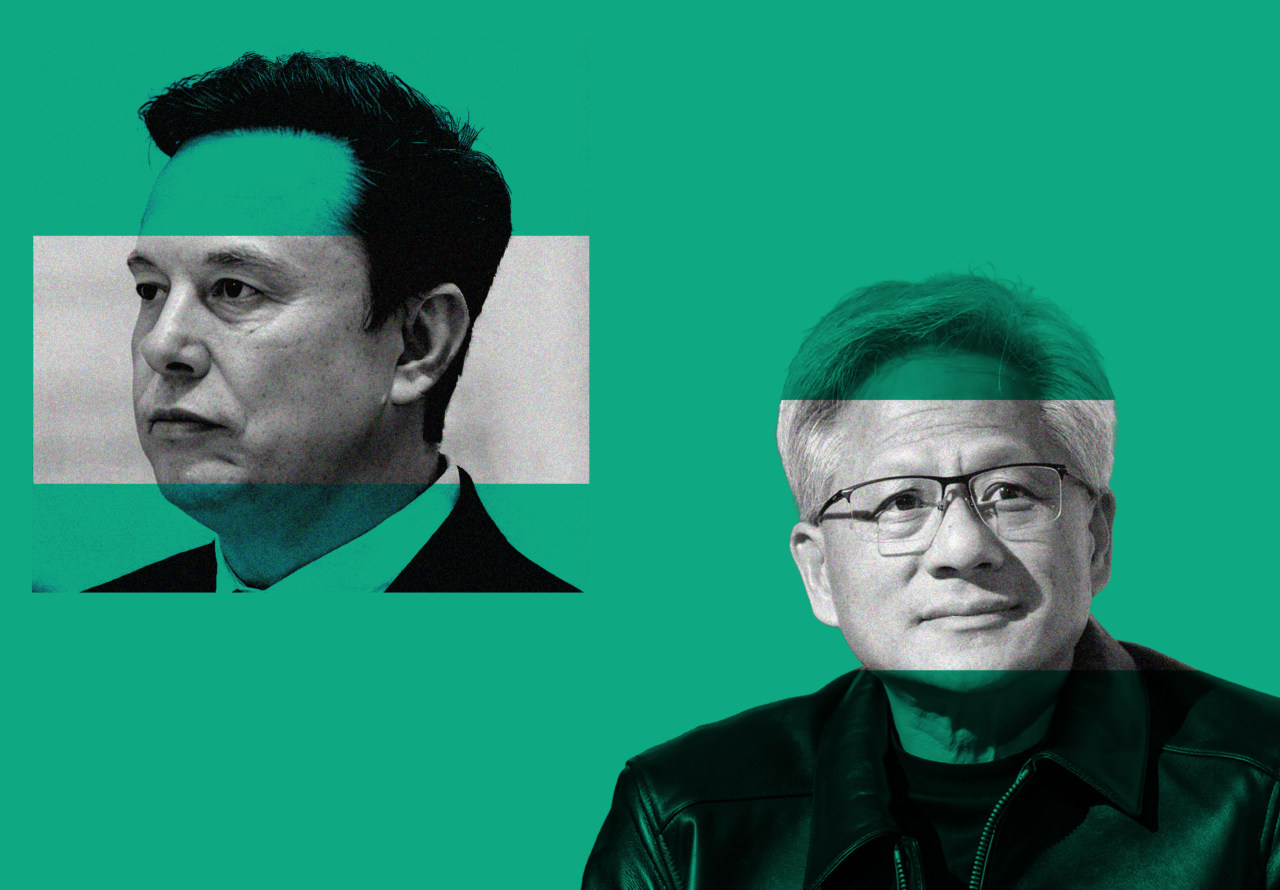
The market opened on 12 June 2026 with an unusual kind of arithmetic on every screen. A privately held rocket and satellite company, whose founder had spent two decades promising to colonise Mars, was being priced into public-market indices for the first time. By the close, SpaceX's debut was not just the year's largest listing. It had pushed bitcoin briefly back to $64,000, vaulted the company into the top tier of corporate bitcoin holders, and prompted Uday Kotak, the billionaire banker who built Kotak Mahindra Bank, to call the float a "true test for capitalism."
The reason is straightforward once the figures are read together. SpaceX, according to a tally published on 12 June, holds 18,712 BTC, a position that makes it the eighth-largest publicly identifiable corporate holder of the asset. That treasury sits on the same balance sheet that is now being marked by public investors for the first time. The listing is therefore not simply an exit event for early backers. It is the moment at which two previously separate stories — the privatisation of space infrastructure and the corporatisation of a non-sovereign reserve asset — are forced into the same price discovery mechanism.
A debut that does more than one thing
The float matters for three reasons, and only one of them is the usual liquidity-event story. The first is valuation. A debut of the size attributed to SpaceX resets the index weights of the entire US large-cap complex, and forces passive funds to rebalance. The second is bitcoin. By crystallising a corporate treasury of more than 18,000 BTC into a public filing, SpaceX has converted a private balance sheet into a tradable proxy for bitcoin exposure. Funds that cannot, or will not, hold the asset directly now have an equity route in. The third is geopolitical. A company that builds most of the world's commercial launch capacity, runs the dominant low-earth-orbit broadband constellation, and is now also a significant crypto custodian is no longer just a contractor to the state. It is a piece of strategic infrastructure in its own right, with a public-market price tag.
The market read on 12 June was that these three stories reinforced one another. The Cointelegraph dispatch on the day noted that bitcoin was "surfing" the SpaceX listing at $64,000, with traders warning that key support levels could yet crumble. The price action suggests that public-market participants are treating the float as a positive catalyst for the treasury asset, not a dilutive one. The risk, equally visible in the same coverage, is that the correlation runs the other way if SpaceX's equity weakens.
A treasury that the filing cannot hide
The bitcoin figure is unusually clean. Public-company crypto treasuries are usually assembled piecemeal: a Software company buys a few thousand coins, then tops up, then files a 10-Q that references them in a footnote. The SpaceX position of 18,712 BTC is large enough that, once the company is a reporting issuer, it cannot be hidden in a footnote. It will sit in the assets column of the audited balance sheet and be marked to market every quarter. The same Crypto Briefing tally that put the company at the eighth-largest public holder noted that the figure is unusual for a non-crypto, non-financial-diversified industrial. It is, in effect, a sovereign-style reserve policy run out of a private corporate treasury.
That framing is not new. It has been used, with varying degrees of accuracy, for Tesla and for the Japanese investment firm Metaplanet. What is new is the size of the issuer that is now adopting it. When a company of SpaceX's perceived strategic weight files public accounts showing a treasury of this scale, the conversation moves from "is corporate bitcoin treasury a viable strategy" to "how does a strategic industrial company manage a non-sovereign reserve asset, and what does that do to the cost of capital."
The Indian read: capitalism, but for whom
Kotak's comment, reported by LiveMint on 14 June, is the most pointed outside assessment yet. Calling the listing a "true test for capitalism" is, in the Indian financial context, a coded message. Kotak has spent four decades building a regulated bank inside a country that has, since 1991, run a sequence of liberalising experiments. To describe a private US rocket company's IPO in those terms is to ask whether the model — privately funded infrastructure, publicly listed equity, a treasury that includes a non-sovereign reserve asset — is the form of capitalism that emerging markets are expected to converge towards, or the form they are expected to fund through their savings.
The structural read is sharper than the rhetorical one. Indian pension and insurance regulators have, for several years, debated whether to allow domestic funds to hold a measured allocation to crypto-adjacent assets. A SpaceX listing that is partly a bitcoin proxy, partly a launch-services contractor, and partly a satellite-broadband operator gives those regulators an asset that is technically an equity but functionally a basket of all three exposures. The question for the Reserve Bank of India, and for its counterparts in the Gulf and in Southeast Asia, is whether that basket is a sensible thing for a regulated balance sheet to hold. Kotak's framing suggests he thinks it is — and that the test is precisely whether regulated capital can stomach a corporate counterparty that thinks in those terms.
The counter-read: a fragile bridge
The dominant frame, then, is that SpaceX's listing is a structural event. The counter-read, and it is a real one, is that this is a fragile bridge between two speculative markets. A company valued as an industrial champion is being asked to absorb the volatility of a non-sovereign asset that has lost more than seventy per cent of its value twice in the last decade. If bitcoin enters a drawdown at the same time as SpaceX's growth capex requirement rises — and SpaceX's capex requirement is, by any measure, structural rather than cyclical — the equity will be repriced for two kinds of risk at once.
There is also a governance question the public filing will force into the open. A private company can hold whatever it likes on its balance sheet. A public company with retail shareholders, index inclusion, and passive fund holders is, in practice, run by a different kind of board. The first quarterly filing will be the moment that the 18,712 BTC figure is no longer a Crypto Briefing tally but a footnote signed by an auditor. If the company is forced to mark the position down sharply, the optics of a strategic-asset issuer selling bitcoin to fund a Mars prototype will be worse than the optics of a software company doing the same.
What the listing actually changes
Three things shift on 12 June, and the rest is commentary. The first is that a strategic industrial company is now a measurable bitcoin proxy, with all the reflexivity that implies. The second is that an Indian heavyweight banker has, in effect, endorsed that bundling as a model for emerging-market capital. The third is that the public-market price for SpaceX will, from the first session onward, be a joint read on launch cadence, satellite-broadband margins, and the dollar price of bitcoin — three things that have no economic reason to move together except that the filing now says they do.
The sources do not yet say what SpaceX's underwriters have priced the float at, nor what the final treasury figure will be once audit adjustments are filed. They do not specify how the company intends to mark the position, nor whether the first 10-Q will disclose any hedging. Until those filings land, the public read of the listing is, unavoidably, a read on the messenger — the corporate press release, the banker's comment, the price ticker — rather than on the audited accounts. That is a normal state of affairs in the days after a major float, and an unusually consequential one when the asset being floated is partly a treasury and partly a launch company. The market has decided, for now, that those two things compound. The next earnings season will say whether they do.
Desk note: Wire coverage on 12-14 June treated the SpaceX listing primarily as a capital-markets event. Monexus read it as a balance-sheet event — the moment a non-sovereign reserve asset became a line item inside a strategic industrial — and gave equal weight to the Indian regulatory framing in Kotak's comment and to the technical bitcoin-market reporting.
Wire provenance
This editorial synthesis draws on the following public wire/social posts:
- https://t.me/LiveMint/
- https://t.me/CryptoBriefing/