The Sunday that wasn't: how an Israeli strike on Beirut punctured the Trump-Iran deal before the ink dried
Hours before a scheduled US-Iran signing ceremony, an Israeli strike on Beirut forced the question of who runs Middle East policy: the White House, the prime minister's office, or the field commanders.
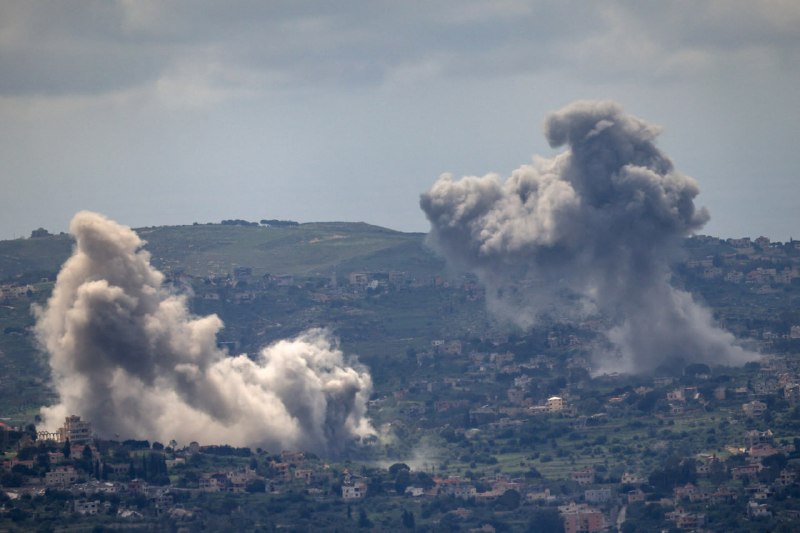
At 16:18 UTC on 14 June 2026, the official Iranian outlet Fars News published a short wire attributed to Donald Trump: the signing ceremony for a US-Iran agreement intended to end the war was still on for Sunday, despite the day's Israeli strikes on Beirut and despite Iran's threat of retaliation. Three minutes later, Fars carried an almost identical version of the same item. By 16:22 UTC, Iran's Tasnim English channel had published Trump's own framing, this time to Fox News: he had asked Iran not to respond to the Beirut attack. And by 16:21 UTC, the open-source geopolitical channel DDGeopolitics had posted a leaked account — that Trump had phoned Benjamin Netanyahu and asked him, in language the channel rendered unprintable, what he was doing. Literally, the channel noted, the same story they had been told two weeks ago.
Strip the noise out and a clear picture emerges. On 14 June 2026, a publicly announced diplomatic track between Washington and Tehran collided, on the day of its supposed culmination, with a kinetic act by the United States' closest Middle East ally. The result is a test of which actor actually sets the tempo of US Middle East policy: the White House that wants the deal, the prime minister's office that wants the strikes, or the field commanders who decide what flies over Beirut on a given afternoon.
The simplest read of the day — and the one most US cable producers will reach for — is that the regional war is winding down. Trump says the deal is on. The Iranians, through state media, are publicly agreeing that the deal is on. That is the headline the White House wants printed. But the strikes on Beirut, and the parallel reporting that the US president felt compelled to make a profane phone call to halt further escalation, suggest that the headline and the underlying reality have come unstuck. The question is no longer whether a deal can be signed. It is whether the agreement that emerges, if one emerges, is worth the paper it is printed on.
A deal on paper, a war in the air
The terms of the US-Iran understanding have not been published in full. What is publicly known, from Trump's on-camera remarks to Axios relayed via Fars News, is the timing: a Sunday signing, the end of a war that has involved direct exchanges between the two states, and an Israeli operation on the same day that, on the Iranian side, is being treated as a hostile act. Trump's read of the same facts, transmitted through Tasnim's English feed, is that he "requested Iran not to respond." The verb matters. A request implies a sovereign interlocutor capable of saying no.
What the sources do not specify, and what readers should keep in mind, is the substance of the deal. We do not yet know what Iran is being asked to freeze, what the United States is offering to unfreeze, what the role of the International Atomic Energy Agency is, and whether the agreement covers Iran's proxies in Lebanon, Iraq, Yemen and Syria or only the bilateral nuclear file. The same reporting that confirms the Sunday ceremony confirms, in the same paragraph, that Iran has threatened retaliation. Those two facts live next to each other in the Iranian wire because the Iranian side wants the contradiction to be visible.
The Israeli variable
The second moving part is Israeli policy, and the public reporting on it comes through an unusual channel. The most vivid item of the afternoon — the profane Trump-Netanyahu call — surfaced first on DDGeopolitics, an open-source aggregation channel, citing Fox News. Fox has not yet, at the time of writing, posted a public confirmation with the quote intact, and the second-largest source, Fars, is carrying Trump's softer line to Axios. The result is a well-documented pattern rather than a single hard fact: the two largest English-language wires carrying the Iranian government's framing of the day are at one remove from US or Israeli confirmation on the Netanyahu call.
The structural lesson is older than the news cycle. The Israeli security cabinet has, for the better part of two decades, retained the operational latitude to strike targets it judges urgent, irrespective of where the US president is in a negotiation with a regional counterparty. The Trump administration, both in its first term and in the period since January 2025, has publicly tolerated that latitude. What 14 June 2026 adds is a new data point: a US president who is publicly and visibly irritated by an Israeli strike that landed on a Sunday signing day, and an Israeli government that either did not know, did not care, or judged that the strike's intelligence value exceeded the diplomatic cost.
The Iranian framing of the same day
Reading the Iranian state outlets in English — Tasnim and Fars — what stands out is the discipline of the message. The Tasnim item frames Trump as having made a request, which preserves Iranian agency. The Fars item frames the Sunday signing as still scheduled, which preserves the diplomatic track. Neither outlet frames Iran as having agreed to absorb the Beirut strike in silence. The implicit Iranian line is: we are committed to the agreement we signed, not to the agreement you wish we had signed in a hurry while your ally bombs our neighbour.
That is a coherent negotiating position. It is also a position that makes the coming days harder for Washington. Any deal that emerges will now be measured against the question of whether it covers, implicitly or explicitly, the right of the Israeli air force to operate over Lebanon while Iranian-aligned assets are present on the ground there. The sources do not address that question directly, and the Iranian state outlets have an obvious interest in not resolving it in public while the ceremony is still nominally on the calendar.
The structural frame, in plain language
The pattern on display is not a one-off. It is the third major instance in roughly two years in which a US-brokered Middle East track has been complicated, on the day of a planned announcement, by an Israeli kinetic action. The mechanism is consistent. The United States commits, publicly, to a diplomatic milestone. Israel, with or without prior coordination, conducts an operation that the Iranian side reads as hostile. The US president, in response, makes a phone call intended to dial down the temperature. The diplomatic milestone is held up as evidence that progress is still being made, often by both Washington and Tehran. And the underlying sovereignty question — who actually decides what flies over Beirut, and who bears the political cost when something does — is shelved for the next round.
This is a familiar structural problem in plain language: a senior ally with a separate operational chain, a transactional counterparty that is watching for any sign of weakness, and a domestic political audience on all three sides that rewards toughness over continuity. Each round of the cycle erodes the credibility of the next announcement, because each announcement is paired with a strike that, in the receiving party's framing, makes the announcement ring hollow.
Stakes and what to watch next
If the Sunday signing goes ahead as currently framed, the immediate winners are the financial actors that have priced in a reduction in Middle East risk premia, the Iranian foreign ministry that has long wanted sanctions relief, and the White House that wants a deliverable. The immediate losers are the residents of southern Beirut who absorbed the day's strikes, the Lebanese state that lacks the capacity to retaliate, and the credibility of any future US-Iran announcement that does not come paired with a clear answer to the Israeli operational question.
Three things are worth watching in the next 72 hours. First, whether the Israeli government issues a public statement taking ownership of the strike, or whether it leaves the reporting at the level of "according to Fox" via aggregation channels. Second, whether the Iranian foreign ministry, as distinct from the Tasnim and Fars wires, weighs in on the Sunday signing in language that goes beyond the current holding line. Third, whether the planned ceremony is, in fact, held on Sunday, delayed, or quietly re-described as a "framework" rather than a "signing." Each of those outcomes is consistent with the available reporting, and each carries a different signal about which actor is actually driving the bus.
What the sources do not yet let us resolve is the most important question of the day: did the White House know the strike was coming, and if so, did it judge the diplomatic cost as acceptable. The most charitable read of the available reporting is that the US president was genuinely surprised, and reached for the phone in irritation. The least charitable read is that the strike was tolerated in advance, the Trump-Netanyahu call was for show, and the Sunday ceremony is a piece of stagecraft designed to put a date on the calendar. The honest answer, for now, is that the public record does not let us choose between those two reads, and that a serious news organisation should be candid about that gap rather than reaching for the framing that flatters the most powerful actor in the room.
Monexus reads the same day's Iranian and Israeli-adjacent wires against each other rather than treating one side's framing as default. The Sunday signing is the headline the White House wants. The strike is the headline the field commanders delivered. The interesting question is which one survives the next 72 hours.
Wire provenance
This editorial synthesis draws on the following public wire/social posts:
- https://t.me/tasnimnews_en
- https://t.me/DDGeopolitics
- https://t.me/FarsNewsInt
- https://t.me/FarsNewsInt
- https://t.me/DDGeopolitics
- https://t.me/tasnimnews_en
- https://t.me/FarsNewsInt
- https://t.me/DDGeopolitics
Follow the event.
These dated source records provide context. They do not retrospectively verify this archive article.
Separate what the nuclear watchdog reported from what it could not determine after the June 2025 strikes.