Towns and Anunoby cap title runs as a familiar NBA pattern returns
Two 2015 and 2017 lottery picks lifted the trophy on the same night, reviving a question the league's cap-rich contenders would rather not answer: is the gap between haves and have-nots widening again?
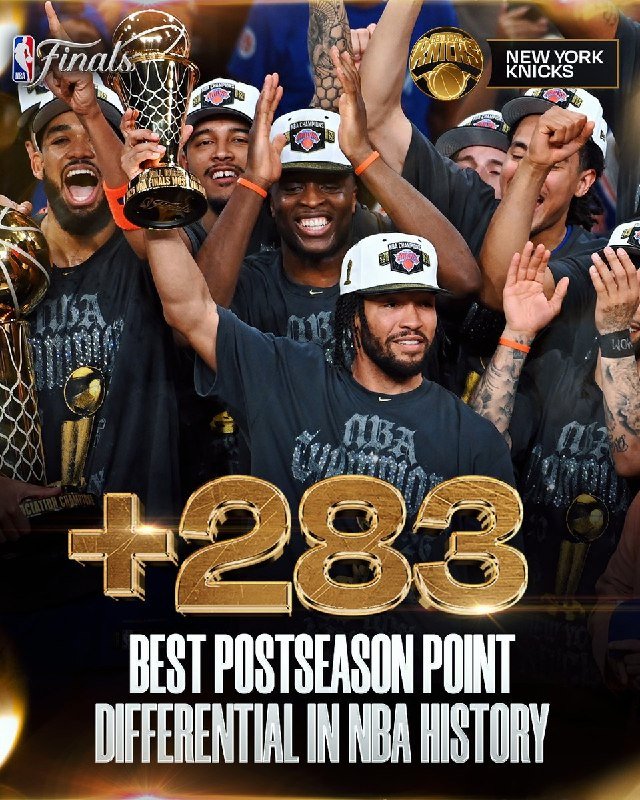
At 03:41 UTC on 14 June 2026, the NBA's social wires lit up with a symmetry the league has learned to read closely. Karl-Anthony Towns — drafted first overall out of Kentucky in 2015, now in his eleventh professional season — had become a champion. Twenty-three minutes later, the same channels framed the moment for OG Anunoby: drafted twenty-third overall out of Indiana in 2017, a champion in year nine. The trophies are different. The career arcs, after a decade of separation, landed on the same night.
The pairing is more than a sentimental postscript to a Finals series. It says something unflattering about how today's NBA title windows are built, and how rare it is for a player drafted outside the league's pre-ordained contender machine to ever reach the summit. Towns and Anunoby represent two distinct paths up the same mountain: the first-pick cornerstone traded at peak value into a ready-made contender, and the second-round-of-the-lottery wing developed in a winning culture, flipped mid-contract, and absorbed into a second contender with cap room to burn. Both arrived. That they arrived together is the story.
The 2015 and 2017 draft classes, reconvened
Towns was the consensus number one in 2015, a 7-footer out of Kentucky with a perimeter skill set that, even at the time, signalled a different kind of NBA centre. The Timberwolves built around him for nearly a decade — three All-Star selections, an All-NBA nod, a maximum extension — and eventually traded him to a New York–area franchise with title infrastructure already in place, plus the contract flexibility to absorb his salary. The move was widely read as Minnesota's acknowledgement that, in a league with a hard cap and a luxury tax that escalates sharply for repeat offenders, the developmental runway and the championship runway are not always the same runway.
Anunoby's path was quieter. Twenty-third overall in 2017, he spent his first four years in Toronto inside a culture that treated defence and switchability as non-negotiable, won a ring as a role player there, signed a long extension, and was later dealt to a second Eastern contender with the cap space and the defensive scheme to use him as a closer. Year nine of a career that started outside the top twenty is now a championship year. The 2015 first pick and the 2017 twenty-third pick are co-champions, and the league's draft-industrial complex has to make peace with what that implies about its own player development economics.
The contender carousel, in plain language
The pattern is not new, but the scale of it is. Title windows in the modern NBA are built less through the draft and more through pre-arranged stars, traded stars, and cap gymnastics that let a small number of franchises hoard optionality. A contender can be a young core that grew up together; it can be a team that went star-hunting in free agency; and it can be a team that absorbed a max contract from a smaller market by sending back role players and draft capital. Towns and Anunoby took different doors into the same room. The door itself is the headline.
The alternative reading is simpler: this is what good front offices do. The Timberwolves are not villains for moving a player they could not afford to keep on a contender-friendly deal. The Raptors' original decision to draft and develop Anunoby in 2017 is a vindication of scouting and patience, not an indictment of the trade-and-aggregate model. A sceptic would point out that the league's smaller markets — the ones who draft the Towns and the Anunobys of any given year — increasingly become farm systems for the league's destination franchises. The defender would counter that the alternative, a hard tank and a slow rebuild, has not produced a champion in nearly a decade.
What this says about the league's economics
The new collective bargaining agreement has tried to close the gap. The second apron is meant to punish teams that spend beyond a certain threshold repeatedly, and the league's new investment vehicle — designed to give small-market teams a path to capital without selling the franchise outright — was sold, in part, as a way to make patience pay. Whether it will is the league's open question. What the Towns and Anunoby championships illustrate is that, even with the apron in place, a team that drafts a transcendent player still faces a binary: pay him, lose the rest of the roster, and pray; or trade him, stockpile assets, and hope the assets turn into a different transcendent player. The middle has been narrowing for years.
There is also a player-side story. Both Towns and Anunoby have spoken, in their own ways, about the difficulty of losing in the league's postseason crucible — Towns in particular, whose Timberwolves teams were bounced in the early rounds more often than a number-one pick would like to admit. Year nine and year eleven. There is a version of this story in which two players, both excellent and both frustrated, simply waited out the variance and found each other at the right moment on the right roster. That version is not wrong. It is just incomplete. It does not explain why the right roster was available at the right moment, and it does not explain why, for a growing number of stars, the right roster is rarely available to the team that drafted them.
Stakes for the next twelve months
The next off-season will test whether the Towns-Anunoby template generalises. The Knicks and whichever franchise Anunoby finishes the celebration with will enter 2026-27 as favourites, with the second apron shaping every move they make. Smaller-market teams with young cores will weigh the same calculation Minnesota did. The league office will watch closely, because the television and streaming rights deals that underwrite the next decade of NBA economics depend on a competitive distribution of contenders — not on the perception that three or four franchises hold the trophy in perpetuity.
What remains genuinely uncertain is whether the 2025-26 champions will look, two years from now, like a sustainable model or a one-cycle fluke. Towns is in his prime. Anunoby is entering it. Both are under contract, both are healthy, and both are surrounded by the kind of supporting cast that contenders can rarely keep intact. The optimistic read is that the league is in a window of parity it has not enjoyed since the early 2010s. The sceptical read is that parity at the top, in a league with hard caps and apron cliffs, is just the visible face of a deeper concentration of talent and cap space at a handful of addresses. The Finals MVP will be announced in the coming days. The harder question — who, structurally, gets to play for it — was answered at 03:41 UTC, and again twenty-three minutes later, when two players a decade apart in their careers lifted the same trophy on the same night.
Desk note: Monexus framed the Towns-Anunoby convergence as a roster-construction story rather than a human-interest one, in line with our standing brief to treat player movement as a structural economic story whenever the source material supports it.
Wire provenance
This editorial synthesis draws on the following public wire/social posts:
- https://t.me/s/NBALive/101
- https://t.me/s/NBALive/102