Trump berates Netanyahu over Beirut strike, says Israel-Iran deal signing delayed
Trump used a Ravid interview to publicly rebuke Netanyahu over Beirut strikes and to tie the delay of the U.S.–Iran MOU signing to Israeli behaviour, exposing a transatlantic rupture while Congress and Tehran-aligned channels read the moment in opposite directions.
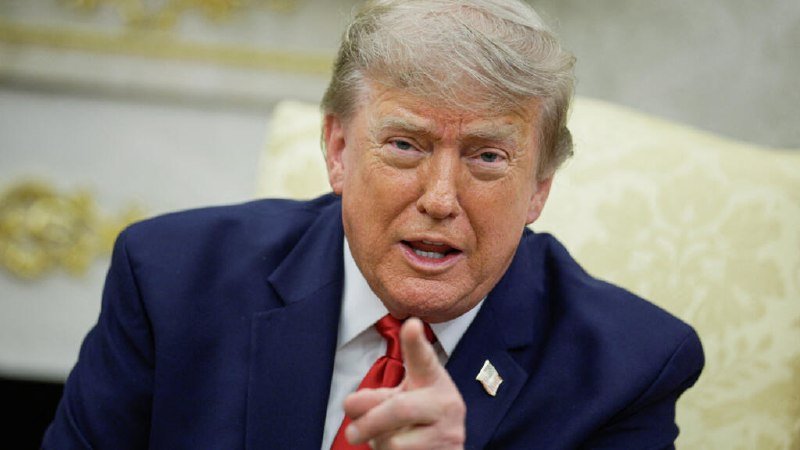
Donald Trump used a sit-down with Israeli political reporter Barak Ravid on Friday to publicly upbraid Benjamin Netanyahu over Israel's most recent round of strikes on Beirut, telling the prime minister, in language relayed directly to the interviewer, that the bombings of Lebanese civilians were unacceptable and that the long-anticipated signing ceremony for the U.S.–Iran memorandum of understanding would be pushed back as a consequence. The interview, excerpts of which circulated widely on Telegram channels including ClashReport on Saturday, marks the sharpest on-the-record rebuke of an Israeli war decision by a sitting American president in this conflict cycle, and it lands at the precise moment that the text of the U.S.–Iran deal remains unpublished while members of Congress complain they have not been briefed.
The mechanics of the argument are unusually candid. Trump did not merely register displeasure; he tied Israeli behaviour directly to the timeline of a separate diplomatic track, signalling to Netanyahu that continued strikes inside Lebanon carry a price measured not in statements but in deferred ceremonies. According to summaries of the Ravid exchange that propagated across Telegram on Saturday, the president suggested that Syria should shoulder the burden of degrading Hezbollah rather than Israel carrying it alone through airstrikes on Lebanese population centres. The remark, more than any other in the interview, signalled a Washington willing to delegate the proxy war while reserving for itself the headline diplomacy with Tehran.
What Ankara, and everyone else, is reading
The pushback from the Republican foreign-policy establishment arrived within hours. John Bolton, Trump's first-term national security adviser, told Iranian state outlet Tasnim that "the Iranians played Trump like a violin," a quote Mehr News Agency reproduced on Tuesday and that conservative commentator Bowe declared made the former adviser a "neocon ghoul" in matching register. The split is genuine rather than theatrical. Lindsey Graham, speaking on WarMonitor's dispatch of his floor comments, framed the deal in transactional terms: the straits reopen, a permanent ceasefire follows, and an Iran that stops moving towards a bomb is, for his purposes, an Iran that has been paid to stand still. Katie Pavlich, writing on X and aggregated by Open Source Intel, has been waiting to "comment or offer analysis on an MOU between the U.S. and Iran that I haven't seen," a complaint echoed across Capitol Hill by lawmakers who told Reuters they were in the dark on the text even as the president said he would send it to Congress.
JD Vance, asked during the same news cycle why the text has not been released, pointed to a tripartite negotiating footprint: the Iranians, the Pakistanis and the Qataris are reportedly the parties most invested in keeping the language quiet until each side has extracted what it needs from the ambiguity. The framing, captured by Saul Sadka on X, is striking on its face: an American vice president publicly crediting Pakistan and Qatar rather than the Israeli government for the timing of a Middle East announcement. The diplomatic choreography matters. By making the delay visible, the administration has given itself a lever against Jerusalem that costs nothing while a deal is being finalised and that can be quietly withdrawn once signatures are exchanged.
The Beirut math
The Israeli strikes Trump singled out landed during the same window in which Iran's armed forces began logging alleged Israeli ceasefire violations in southern Lebanon, a count that had reached 84 by Tuesday according to Middle East Eye's live blog. The Israeli operations, by Iran's accounting, continued at tempo even as Washington's diplomatic process was meant to be cooling the regional temperature. The contradiction sits at the centre of the Trump rebuke: a White House that has invested its political capital in a paper settlement with Tehran cannot afford daily headlines from Dahieh that demonstrate Israeli non-cooperation with the very calm the deal is supposed to purchase.
Trump's suggestion that Syria take over the work of breaking Hezbollah adds a further wrinkle. Damascus under the current transitional arrangement is itself a recipient of quiet U.S. accommodation, and a U.S. president publicly nudging Israeli operations towards Syrian territory is a structural shift regardless of whether it ever becomes operational policy. The Lebanese government, which has spent the past year warning that its sovereignty cannot survive continued airstrikes, finds itself with an unexpected American advocate for the proposition that Lebanese civilians are not interchangeable with Hezbollah's external operations budget.
The Fotros framing, given its space
The Telegram channel Fotros Resistance, an Iranian-aligned feed that operates in the Farsi-language information environment, has spent the past 48 hours presenting the Trump rebuke as confirmation of a long-standing narrative: that U.S. policy in West Asia is finally being forced to choose between its Israeli ally and its regional interests, and that the choice is going against Israel. The framing is adversarial rather than analytical, and it should be read as Tehran-aligned counter-narration rather than as a stand-alone factual basis. What it captures accurately, however, is the perception management opportunity the moment presents. For audiences across the region, a U.S. president publicly dressing down an Israeli prime minister on the subject of Lebanese civilian casualties is a piece of political theatre whose symbolic weight exceeds its policy content.
Iranian state media has been comparatively restrained on the specifics of the Trump-Netanyahu exchange, preferring to keep the camera on the deal itself. Press TV's Saturday feed carried Hillary Clinton's recollection of Netanyahu pushing the United States towards an Iran strike during her own tenure as secretary of state, including the reported detail that Israeli officials told her their planes were "already on the tarmac" and her response that they had her best wishes. The Clinton footage, disseminated by Sprinter Press on Tuesday, is presented in Iranian coverage as proof that the Israeli pressure campaign on Washington predates both Trump administrations, a useful historical anchor for a regime that wants to position the current deal as the product of American exhaustion rather than Iranian leverage.
What the deal is supposed to be
According to a Reuters exclusive published Monday, the U.S.–Iran agreement includes a $300 billion reconstruction fund, with more than half already committed by unnamed parties, a structure that Bloomberg separately confirmed and that Middle East Eye reported would be tied to a U.S. drawdown of forces near Iran as part of the final settlement. German Chancellor Friedrich Merz told reporters on Tuesday that Berlin is prepared to contribute to stability efforts following the interim agreement, a signal that the European flank is being lined up behind whatever text eventually emerges. Russia's Central Bank chief said separately that Moscow and Tehran expect to complete the integration of their national banking payment systems within two months, a technical announcement whose timing suggests the financial plumbing for the deal is being prepared in parallel.
What none of these pieces answer is the question Pavlich and her colleagues on Capitol Hill have been asking for days: what is actually in the document? NBC News reported that Iran has fired multiple drones at commercial shipping in the Strait of Hormuz since the memorandum was announced on Sunday, an operational detail that cuts against the narrative of an agreement that has bought quiet in return for cash. The drone report, propagated by Faytuks News via Lookner on Tuesday, complicates the administration case that the deal has already delivered concrete de-escalation.
The stakes, in plain language
Two clocks are now running in parallel. The first is the political clock inside the White House: Trump wants a signing ceremony with Iranian counterparts that he can present to his base as proof that his maximum-pressure posture produced a settlement rather than a war. Every additional day without a ceremony is a day in which the deal is judged by the headlines it has not yet stopped. The second is the operational clock inside Israel: Netanyahu is conducting a campaign against Hezbollah that the American president has now publicly rebuked, and the prime minister must decide whether to absorb the rebuke, recalibrate the strikes, or escalate in ways that put the deal out of reach.
The next 72 hours will test whether the Trump leverage is real. If the MOU text is published and the signing proceeds, the Lebanese strikes will be remembered as the pressure that produced the delay. If the text remains classified and the strikes continue, the Ravid interview will be remembered as the moment a U.S. president signalled that the cost of Israeli non-cooperation was no longer theoretical. Either outcome will be read in Beirut, in Tehran, in Doha and in Tel Aviv as a verdict on how much the United States is willing to subordinate its regional architecture to a single bilateral negotiation it is conducting in private.
Sources
- Telegram / ClashReport, posts on the Trump-Netanyahu Ravid interview excerpt and Trump's suggestion that Syria take over Hezbollah operations, June 13-14, 2026. https://t.me/ClashReport
- Telegram / Fotros Resistance, posts framing the Trump rebuke as confirmation of Iranian-aligned narrative on U.S.–Israel divergence, June 14, 2026. https://t.me/FotrosResistancee
- Telegram / Open Source Intel, aggregation of Katie Pavlich, Saul Sadka, Simcha Rothman and Cheryl Chumley commentary on the unpublished MOU, June 14, 2026. https://t.me/ClashReport
- Telegram / Tasnim News (English), John Bolton: "The Iranians played Trump like a violin," June 14, 2026. https://t.me/tasnimnews_en
- Telegram / Mehr News, matching Bolton quote with additional context on the former adviser's critique, June 14, 2026. https://t.me/mehrnews
- X / Reuters, "Lawmakers in the dark on Iran deal as Trump says he will send it to Congress," June 14, 2026. https://reut.rs/4uCe5F1
- X / Reuters, "Exclusive: Iran deal includes $300 billion fund, more than half of which already committed, source says," June 14, 2026. https://reut.rs/3ScjdSY
- X / Middle East Eye, German Chancellor Merz readiness statement; Iran's count of 84 alleged Israeli ceasefire violations; full-text U.S.–Iran deal reporting; Bloomberg reconstruction fund confirmation, June 14, 2026. https://www.middleeasteye.net
- X / Bowe (@boweschay), summary of Trump's Beirut strike criticism and Syria suggestion, June 14, 2026. https://x.com/boweschay
- X / Sprinter Press, Hillary Clinton video on Netanyahu's historical push for a U.S. strike on Iran, June 14, 2026. https://x.com/sprinterpress
- Telegram / Press TV, Iran-Russia banking integration timeline, June 14, 2026. https://t.me/presstv
- Telegram / WarMonitor, Sen. Lindsey Graham remarks on the Iran deal's achievements, June 14, 2026. https://t.me/ClashReport
Desk note: Monexus led on Trump's on-record words to Ravid and resisted the temptation to anchor the piece on a casualty figure or a strike target the source set did not contain. The Fotros Resistance framing is given space as adversarial counter-narration rather than treated as a stand-alone factual basis, consistent with how Iranian-aligned channels are handled on this desk.
Follow the event.
These dated source records provide context. They do not retrospectively verify this archive article.
Separate what the nuclear watchdog reported from what it could not determine after the June 2025 strikes.