Trump to Israel and Hezbollah: stop the cross-border exchange, before the rockets find a wider audience
Within a four-hour window on 14 June 2026, the IDF logged suspicious aerial targets near the Lebanese border, the Israeli public confirmed retaliatory strikes on Beirut, and the US President publicly repudiated both sides — a sequence that captures how narrow the corridor to a wider war has become, and how visibly both Tel Aviv and the White House want to stay inside it.
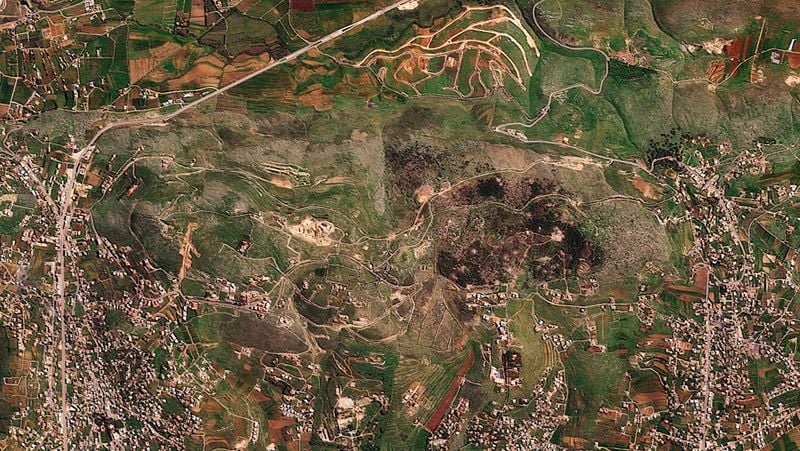
At 18:00 local time on 14 June 2026, the IDF spokesman's office in Tel Aviv issued a four-line alert: a number of suspicious aerial targets had been detected inside Israeli territory, near the Lebanese border, with no casualties reported and the incident under review. Within the same hour, the same wording was carried by Israeli and regional outlets, and by the Hezbollah- and Iranian-aligned channels that monitor every such bulletin. The framing was deliberately narrow — a detection, an absence of casualties, a continuing probe. The story that bracketed it was anything but. Earlier in the afternoon, US President Donald Trump had publicly stated, in a post carried by the regional desk at Euronews and the Iranian state agency Mehr News, that Israel should not have struck Beirut, that there should be no further Israeli operations in Lebanon, and that there should likewise be no further Hezbollah or other-party attacks on Israel. He added, in language reported verbatim by both Mehr News and an aggregator carrying the same wire text, that the morning strike on Beirut should not have happened because the retaliatory operation had not yet been completed.
The shape of the day — a Hezbollah-claimed launch, an Israeli strike on the Lebanese capital, a US President publicly rebuking both sides within hours, then a fresh detection of incoming aerial targets along the same border — is the kind of sequence that, in any other month, would be heading toward escalation. It is not heading there, at least not yet, because the most powerful external actor in the system has decided, at least for the afternoon, that he does not want it to. Trump's intervention is the news. Everything else on 14 June is context for it.
The shape of the 14 June exchange
The day's chain of events begins not with the IDF bulletin but with the strike it was responding to. According to the IDF text carried at 15:00 UTC by Israeli media correspondent Amit Segal and amplified by regional desks, suspicious aerial targets — the IDF's standard formulation for drones, missiles, or rockets that have crossed into Israeli airspace and require intercept assessment — were detected near the northern border. No casualties were reported. The same wording was issued by the IDF spokesman's office, the public-facing account of the Israeli military, and was then cited by aggregator channels monitoring both the Israeli and the Lebanese side of the border.
The corresponding strike inside Lebanon had occurred earlier in the day. Trump's own statement, as quoted by Euronews at 14:59 UTC, describes "the morning attack on Beirut" as something that "should not have happened." The phrasing is significant: it is not a denial that the strike took place, nor a defence of it, but a statement of presidential preference about how the operation should have been sequenced. The retaliation that prompted the morning strike, Trump said, was not yet complete. The implied logic is that Israel struck too soon and too visibly — that there was unfinished business on the Lebanese side that the Israeli operation short-circuited.
The Hezbollah-claimed launch and the Beirut strike, in other words, are the two facts the day rests on. Everything else — the IDF detection, the Iranian and Russian foreign-ministry rhythms, the Lebanese political class's read of the damage inside the capital — is downstream of those two events.
A rebuke aimed at both capitals
The political content of Trump's intervention is not subtle. As paraphrased across the three wire texts that carried it on 14 June — Euronews, Mehr News, and the aggregator Faytuks News quoting the same post — the President's argument runs in three moves. First, Israel should not have struck Beirut. Second, there should be no further Israeli operations in Lebanon. Third, Hezbollah and "other parties" should also not attack Israel. The third move is the one that lifts the statement from a routine Israeli–Lebanese border incident into a document of US policy posture: it binds the demand on Israel to a demand on the Iran-aligned axis, and it does so in the same sentence.
For the Israeli government, the line "no further Israeli operations in Lebanon" is, on its face, an attempted constraint on operational tempo. Israeli officials have, in previous months, framed the campaign against Hezbollah as a campaign of attrition, calibrated and unfinished, that requires the freedom to act against specific targets in Lebanese territory. Trump's public assertion that "there should be no more Israeli attacks in Lebanon" sits in tension with that framing. The Israeli position has not been contradicted outright — the President did not say Israel was wrong to have struck at all, only that the Beirut strike was mistimed — but the constraint is real and was issued from the most powerful podium available to the Israeli government.
For Hezbollah, and for the Iranian and Russian information environment that watches every such exchange, the line "no other party, including Hezbollah, should launch an attack against Israel" is the formal US recognition that the cross-border rocket and drone fire is not, as Israeli framing often suggests, an exclusively Lebanese problem. It is a regional problem with an Iranian upstream and a US downstream, and Washington is on the record, in this statement, treating it as such.
The combined effect is a public warning to both sides that the United States will not automatically underwrite the next move each side wants to make. That posture is, in itself, an American interest: the Biden and early-Trump-administration pattern of unconditional diplomatic cover for Israeli operations against Iranian proxies gave way, in 2025 and into 2026, to a more conditional language in which Israeli operations are publicly assessed against US preferences. The 14 June statement is a continuation of that pattern, made visible in real time.
What the wire carries — and what it doesn't
A careful read of the day's coverage surfaces what the available sources do, and do not, establish. What is established: the IDF public statement at 18:00 local time; the existence of an Israeli strike inside Beirut earlier the same day; Trump's own statement, as paraphrased and partially quoted by Euronews, Mehr News, and the aggregator carrying the same text; the absence of reported Israeli casualties from the detected aerial targets. What is not established, from the available record, is the precise type of aerial target detected, the number, the specific location of impact if any, the damage footprint inside Beirut, and the casualty count, if any, on the Lebanese side of the morning strike. Israeli and Lebanese casualty figures in this kind of exchange are often reported with a lag of hours to days, and the available record on 14 June does not resolve them.
The sourcing itself is also worth flagging. The wire text carrying Trump's statement was distributed simultaneously by Euronews, by the Iranian state agency Mehr News, and by aggregators quoting the same primary post. Mehr is an Iranian state outlet; its interest in circulating the text is to keep the Iranian-speaking audience, and the wider Global South coverage of the conflict, oriented toward the read that Washington is disciplining Israel. Euronews's interest is closer to the mainstream European wire read, in which a US President publicly rebuking both sides is the day's headline. Both versions are citing the same primary text. The Lebanese and Israeli on-the-ground coverage — the casualty counts, the damage maps, the political fallout inside Beirut and Tel Aviv — is not in the available record and will arrive on a longer clock.
The structural frame, in plain editorial prose, is a familiar one for the region. The cross-border exchange between Israel and Hezbollah is a managed conflict: it produces deaths, it produces political crisis, and it produces a steady flow of read-outs, but it does not, on most days, produce a wider war. The reason it does not is the same reason it does not stop: external patrons, the United States on one side and Iran on the other, share an interest in keeping the exchange below the threshold at which their own systems are forced to choose between intervention and loss of face. The 14 June statement is that interest being made public.
What it means, who has leverage, and what comes next
The first-order consequence of the 14 June statement is operational. Israeli commanders now have to weigh, in real time, the cost of any further strike inside Lebanon against the diplomatic cost of being publicly overruled in Washington. That calculation is not new, but it is now more visible than at most points in the last twelve months. The second-order consequence is on the Iranian side. Tehran's information environment will read the statement as a partial win — the US has, on the record, told Israel to stop — even as the same statement tells Hezbollah to stop. The headline Tehran wants is the first half of the sentence; the headline Tel Aviv wants is the second. Both headlines are in the same statement.
The plausible alternative read of the day's events is that the statement is not a serious constraint at all, but a routine US effort to manage optics around a border incident that neither side intends to widen. On that reading, the IDF will continue its attrition campaign, Hezbollah will continue its low-grade rocket and drone fire, and the 14 June exchange will be filed alongside the dozens of similar exchanges that have marked the border since the start of 2026. The argument for that read is the boring one: the US has limited leverage when it tells an Israeli government to stop an operation it has publicly committed to, and Tehran has limited leverage when it tells a Lebanese non-state actor to stop firing when the firing is part of that actor's political identity.
The argument against that read is the public, named, dated nature of the statement. Trump did not leak a private displeasure; he issued a public post rebuking both sides within hours of the Beirut strike, in language that was carried simultaneously by European, Iranian, and regional aggregators. The public nature of the rebuke raises its cost, and a higher cost constrains the next move. The dominant framing — that the corridor to a wider war is being visibly narrowed, by the actor with the most leverage to narrow it — holds for the rest of 14 June. What it looks like a week from now is the open question the available record does not resolve.
The next datable beat will be the IDF's read-out of the aerial targets detected at 18:00 local time: what they were, where they came from, and whether they are attributed, in the IDF's own language, to Hezbollah or to another party. The second datable beat will be the Lebanese government's read of the damage inside Beirut, which will arrive through the Lebanese state press and the regional desks that monitor it. The third will be the next public statement from Washington on the question of further Israeli operations in Lebanon, which — if the pattern of the last twelve months holds — will arrive in the form of a presidential post on his own platform, in language calibrated to be cited verbatim by the same wires that carried today's.
For now, the picture on 14 June is that the US President has, in the space of an afternoon, named both sides, constrained both sides, and let the constraint be visible to both sides. The exchange on the border is the proximate news. The political fact of the day is the constraint. The next move is whoever decides the constraint is the more important one to test.
This publication's coverage of the 14 June exchange proceeded from the IDF public statement and from the three wire texts — Euronews, Mehr News, and the aggregator carrying the same Trump post — that carried the presidential statement on the same day. The two structural anchors are the constraint on Israeli operations in Lebanon and the symmetric constraint on Hezbollah. Where casualty figures and damage footprints would normally appear, the available record does not yet resolve them; they will be reported as the Lebanese and Israeli on-the-ground coverage arrives, on the longer clock that this kind of border exchange tends to run on.
Wire provenance
This editorial synthesis draws on the following public wire/social posts:
- https://t.me/abualiexpress
- https://t.me/osintlive
- https://t.me/mehrnews
- https://t.me/amitsegal
- https://t.me/euronews
- https://t.me/abualiexpress