The ceiling on the deal: Trump, Israel, and the Iran agreement that Tehran says it will not buy
A White House push for a US-Iran deal collides with an Israeli strike on Beirut, a Hezbollah rocket that hit a home in southern Lebanon, and an Iranian rejection of a cash-for-restraint offer. The Middle East is being asked to hold still while three governments talk past each other.
At 18:10 UTC on 14 June 2026, an Israeli official walked reporters through a familiar argument: when Iran shot down an American drone in 2019, Donald Trump ordered a hard response even though no US service members had been killed. What is permitted for the United States, the official asked, is permitted for Israel. By 18:13 UTC, Iran's foreign-policy apparatus had already been briefed on a different offer — a US request that Tehran refrain from striking Israel in exchange for money — and was preparing a public refusal. By 19:08 UTC, Senator Lindsey Graham of South Carolina was on X defending the Israeli position, noting that Hezbollah had continued to fire rockets into the country since the last ceasefire. By 20:16 UTC, the president of the United States was telling both Israel and Hezbollah to stop, warning them in unusually personal terms not to "blow it." Within a single afternoon, the three principals who would have to hold still for a US-Iran deal — Washington, Jerusalem, and Tehran — had all spoken, and none of them had spoken in the same direction.
This is the condition of the Middle East in mid-June 2026. A diplomatic track that US officials have described in recent days as close to a final agreement is being negotiated in the open against a kinetic backdrop that no party in the conversation appears able, or willing, to pause. The question is not whether the deal can survive the next news cycle. It is whether the architecture the United States is trying to build is structurally compatible with the regional balance of forces that already exists.
The sequence as it actually unfolded
The afternoon's events, read in chronological order, draw a clear picture of escalation and attempted de-escalation running in parallel. Reporting by Deutsche Welle, citing the president's public remarks, says Trump declared a peace deal with Iran "close" and called specifically on Israel to halt strikes on Lebanon and on Hezbollah to refrain from attacks. The framing, in the president's own words, was transactional and impatient: do not, he said, "blow it." OANN's coverage of the same remarks, drawing on a separate pool report, framed the intervention as a condemnation of an Israeli strike on Beirut that had taken place earlier in the day — a strike the network said could complicate the fragile peace process between Washington and Tehran.
Iran's response, reported by DDGeopolitics citing Israeli Channel 12, came within hours. Tehran had rejected the US request that it refrain from striking Israel in return for payment, the channel reported, with the Iranian side framing the offer as an attempt to put a price tag on its alliances. "Our allies are not for sale," was the formulation carried by the channel. The Iranian framing is significant because it does not merely decline the offer; it reframes the offer as an insult. A transactional deal on the Iranian read presupposes a kind of market in restraint that Tehran is publicly declaring it will not enter.
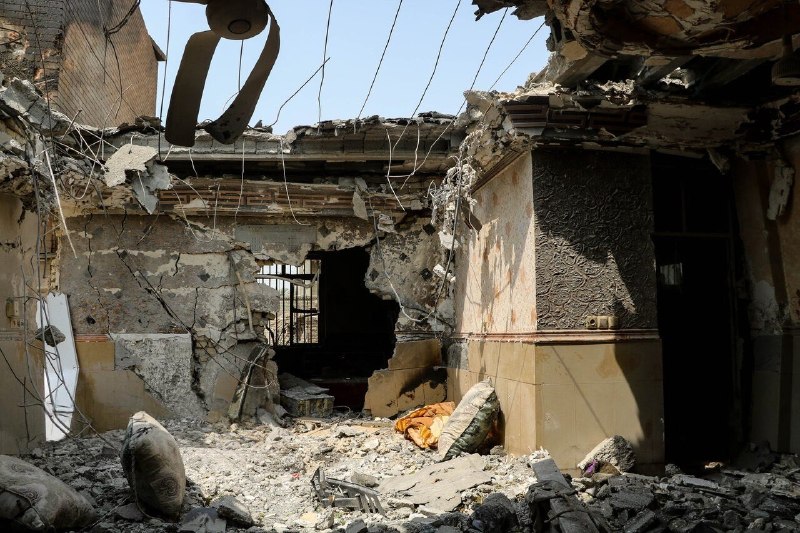
The kinetic layer, meanwhile, did not pause for any of this. Telegram channels wfwitness and englishabuali carried, in succession, a report that a Hezbollah missile had struck a home in southern Lebanon and wounded two IDF soldiers, and Senator Graham's X post defending Israel's right to respond to continued Hezbollah rocket fire since the last ceasefire. The two events, reported within an hour of each other, are best read together: a US-brokered ceasefire is being violated at the same moment the United States is asking the parties to extend it.
The Israeli position, in its own words
The argument made by the unnamed Israeli official to Ynet, and relayed by Telegram channels including wfwitness and GeoPWatch, deserves to be set out at length because it is the strongest version of the Israeli case, and because it is the case the US administration will have to answer if the deal is to survive. The official drew an explicit parallel to the 2019 US response to the downing of an American drone, in which Trump ordered a military operation against Iran that was recalled at the last minute. The Israeli question is structural: if a great power reserves the right to respond to the killing of an unmanned asset, what is the analytical ground on which a smaller ally, absorbing regular rocket fire from a non-state actor, is asked to absorb more?
The point is sharpened by Senator Graham's intervention, in which the South Carolina Republican argued that Hezbollah had not stopped attacking Israel since the last ceasefire. The Israeli position, in other words, is not merely that it has the right to respond. It is that the supposed restraint framework — the ceasefire that the US deal is meant to extend — is not, on the Israeli read, actually a restraint framework. It is a permissive environment for continued attack. Any deal the United States brokers has to be read against that baseline complaint.
The Iranian position, in its own words
The Iranian response to the US offer, as carried by Channel 12 and relayed by DDGeopolitics, is the structural counter-argument to the Israeli one. Tehran is not contesting the premise that it has leverage over Hezbollah's behaviour. It is contesting the premise that this leverage is for sale to a foreign power for cash. The two objections are not the same. The first would be a negotiating position; the second is a statement about the kind of relationship Iran believes it has with its regional allies.
The point matters because it implies a ceiling on the kind of deal Washington can broker. A deal that pays Iran for restraint treats Iranian policy as the variable to be adjusted. A deal that respects Iranian framing of its alliances as non-transactional has to find a different instrument — sanctions relief, recognition, security guarantees, something that costs the United States political capital rather than dollars. The Israeli framing, by contrast, accepts the transactional premise and disputes only the price. The two positions are not symmetric, and any agreement has to bridge an asymmetry of a kind that rarely closes quickly.
The American position, and what it actually costs
Trump's intervention, as reported by Deutsche Welle and OANN, tries to occupy a third position. He is asking Israel to stop, asking Hezbollah to stop, and asking Iran to accept a deal — three asks, each addressed to a different audience, each carrying a different cost. The first ask costs Israel nothing it has not already been asked to pay. The second ask depends on Iranian cooperation that has now, on the public record, been refused. The third ask depends on Israeli acceptance of a constraint that Israel, again on the public record, is publicly contesting.
The structural problem is that the United States is trying to mediate a deal between two parties that are not currently the ones doing the most kinetic damage to each other. The kinetic chain runs from Hezbollah into Israel, and from Iran into Israel, and from Israel into Lebanon. The deal is between the United States and Iran. The violence is happening elsewhere. Any deal that does not reach the actual parties firing the weapons is, by construction, a deal that can be undermined by a single rocket — which is, in effect, what the Hezbollah strike on the southern Lebanese home appears to have been designed to demonstrate.
What remains uncertain
Several pieces of the picture are not in the public record in a form that allows firm conclusions. The precise content of the US offer to Iran beyond the cash-for-restraint headline is not disclosed in the available reporting; the figure on the table, if there was one, has not been published. The status of the Israeli strike on Beirut that prompted the president's intervention — its target, its casualties, the specific Hezbollah infrastructure it was framed as hitting — is not detailed in the available wire copy. The Iranian rejection is reported by an Israeli channel citing unnamed officials; the Iranian foreign ministry has not, in the materials available, published a parallel confirmation in its own voice. The Hezbollah strike on the home in southern Lebanon is reported by a Telegram channel with no casualty figure beyond the wounding of two IDF soldiers; the condition of the two soldiers and the condition of any Lebanese civilians in the structure have not been independently verified in the available reporting.
The honest summary is that the diplomatic track described as "close" is being described as such by the principal who needs it to appear close. The kinetic track is doing what kinetic tracks do. The two are in contact at the level of the news cycle, but not yet at the level of a verifiable agreement in which all three parties have publicly committed to the same set of restraints in the same words.
The structural frame
The story is not, in the end, about any one of the three governments. It is about a US administration attempting to manage a regional order in which its principal Middle Eastern ally reserves the right to act unilaterally, the regional power it is trying to negotiate with reserves the right to refuse the price, and the non-state actors who actually fire the weapons have not been in the room at all. The leverage Washington has is real — it remains the indispensable security guarantor for Israel and the indispensable sanctions enforcer against Iran. The leverage is also, on the evidence of this single afternoon, narrower than the rhetoric of a "close" deal implies. A deal that the principal negotiator can describe as close, while a Hezbollah rocket is striking a home, an Iranian foreign-policy apparatus is publicly refusing a cash offer, and an Israeli official is publicly defending the right to keep striking, is a deal that has not yet arrived at the part of the negotiation that is hardest.
The Middle East in mid-June 2026 is not, on the evidence, on the edge of a war. It is on the edge of a deal that the parties have not yet agreed to want. The distinction matters because wars have a way of starting regardless of what the parties want, and deals have a way of dying regardless of how close they appear. The next forty-eight hours will tell us which of those dynamics is now in the driving seat.
This publication's framing leans on the public record of three governments speaking past each other, rather than on any one government's preferred narrative. Monexus will continue to track the Iranian foreign ministry's own statements as they appear, and the Israeli security cabinet's own readouts, before treating the diplomatic picture as settled.
Wire provenance
This editorial synthesis draws on the following public wire/social posts:
- https://t.me/wfwitness
- https://t.me/OANNTV
- https://t.me/englishabuali
- https://t.me/abualiexpress
- https://t.me/wfwitness
- https://t.me/DDGeopolitics
- https://t.me/GeoPWatch
- https://t.me/DDGeopolitics
Follow the event.
These dated source records provide context. They do not retrospectively verify this archive article.
Separate what the nuclear watchdog reported from what it could not determine after the June 2025 strikes.