Trump Breaks With Netanyahu Over Beirut Strike as US-Iran Deal Hangs in the Balance
A profane presidential outburst aimed at the Israeli prime minister has put a planned signing ceremony in doubt and exposed the limits of US leverage over a war it did not choose.
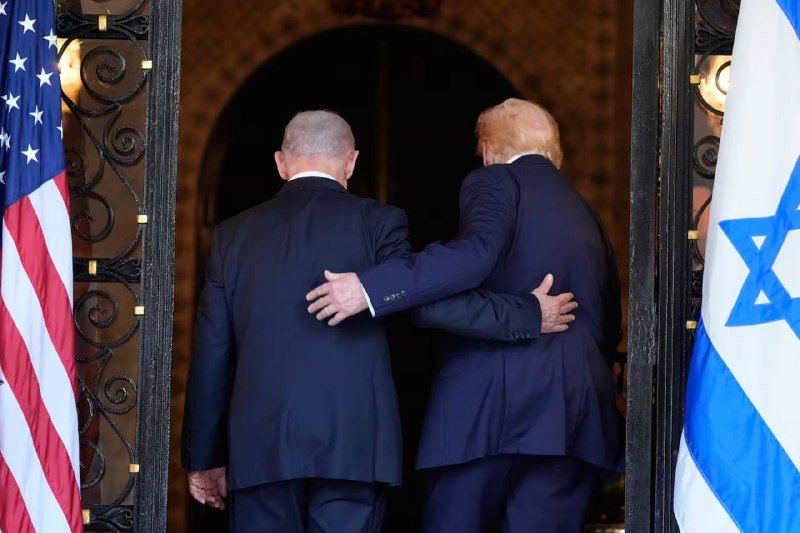
The rupture was unusually public, unusually profane, and unusually specific. In remarks to Axios on 14 June 2026, US President Donald Trump said he was "so pissed off" at Israeli Prime Minister Benjamin Netanyahu over an Israeli strike on Beirut earlier the same day, adding that "Bibi has no fucking judgement" and that he had communicated his displeasure directly. Trump went further: a deal with Iran that was due to be signed "this morning" had been disrupted by the attack, and he framed Israel's action as the reason a planned ceremony collapsed. The language, the leak, and the timing together amount to the sharpest public break between a sitting US president and an Israeli prime minister in the post-October 2023 period — and it lands on a day when a marquee diplomatic event was supposed to be the headline.
What makes the outburst more than theatre is the sequencing. The Beirut strike, the collapse of the signing window, and the president's complaint to Axios all fell inside roughly an hour of US morning news cycles, with Trump's quoted remarks circulating on Telegram channels including Insider Paper and Middle East Spectator by 16:17–16:20 UTC. The story is not merely that an Israeli operation annoyed a US president. It is that an Israeli operation, in the White House's telling, cost the United States a signed piece of paper with a regional adversary — a cost the president chose to spell out, in unprintable vocabulary, to a friendly outlet.
What happened on the ground in Beirut
Israel's strike hit the southern suburbs of Beirut, the Dahieh district long treated by Israeli planners and Western intelligence agencies as the operational heartland of Hezbollah. Al Jazeera's breaking-news bulletin at 15:22 UTC reported that Trump condemned the attack and insisted a deal with Iran remained close, framing the strike as having occurred on a "special day" when the agreement could have been signed. Reporting aggregated on Telegram by Middle East Spectator and English-language aggregators at 15:40 UTC carried Trump's position that "Israel should not have responded in Beirut and there should not be attacks by other parties, including Hezbollah."
The framing — Israeli action as a unilateral escalation rather than a calibrated response — is itself a contested claim. Israeli security sources have historically treated Dahieh strikes as part of an active deterrence campaign against a rearming Hezbollah, a posture the Israeli public has largely supported. By positioning the strike as gratuitous on a day when diplomacy was about to deliver, Trump effectively recharacterised a routine tactical operation, in Israeli terms, as a strategic own-goal. The substantive question — what was struck, who was killed, and whether the target justified the diplomatic cost — is not answered in the available source material, and this publication cannot supply the detail.
The deal that didn't sign
The diplomatic object on the table was a US-Iran understanding that, in Trump's telling, was supposed to be inked the morning of 14 June. Al Jazeera's headline language, summarised in the 15:22 UTC bulletin, was explicit: "Trump condemns Israel attack on Beirut, says Iran deal still close." That hedge — "still close" — is doing heavy lifting. It signals that the agreement is not dead, but it concedes that the planned ceremony is dead for the day, and it implicitly warns Tehran that any further Israeli action could move "close" toward "collapsed."
The structural problem this exposes is familiar to anyone who has watched the file for two decades. The United States can usually deliver the United States. It cannot reliably deliver Israel, particularly on a fast-moving security timeline, particularly when the Israeli domestic coalition treats visible restraint as weakness. The pattern of US-brokered deals in this period — JCPOA in 2015, the Abraham Accords from 2020, the various Gaza ceasefire frameworks — has been that the diplomatic architecture is built in Washington and then has to survive contact with Tel Aviv. The Beirut strike is the latest and most vivid reminder that the second step remains the harder one.
What the Iranian side is hearing
Iran's English-language commentary and its regional allies read the episode through a different lens. Al-Alam, the Iranian state broadcaster's Arabic channel, framed Trump's response in a 15:20 UTC item as "passive and purely verbal" — a complaint about Israeli conduct delivered in words rather than in material pressure. The framing is significant because it tells Tehran what to expect: criticism without consequence. If the United States will publicly berate the Israeli prime minister but not, in Tehran's reading, alter the underlying US-Israeli security relationship, then a deal with Washington is, at best, partial insurance against an Israeli strike it cannot predict.
This is the asymmetry that has killed US-Iran diplomacy before. Iran wants a deal that constrains Israeli behaviour, not just American behaviour. Trump can offer the latter; the Beirut strike is itself proof that the former is beyond his reach on a Tuesday morning. The Iranian negotiating position, accordingly, will likely harden in direct proportion to the credibility of US commitments — and the credibility just took a public hit, not from Tehran's adversaries but from the US president himself.
What we verified / what we could not
Verified. Trump's reported quote to Axios, including the explicit reference to Netanyahu by first name and the characterisation of the strike as having derailed a planned Iran deal, is corroborated across at least three independent Telegram channels (Insider Paper, Middle East Spectator, English Abu Ali) in a 40-minute window beginning at 15:40 UTC. Al Jazeera's breaking-news bulletin at 15:22 UTC independently confirms the substantive claims: US condemnation of the strike, the assertion that the Iran deal is "still close," and the demand for "no more attacks" by either Israel or Hezbollah.
Confirmed but framed differently. Al-Alam's read of the US response as "passive and purely verbal" is sourced to Iranian state media and is included here as a regional counter-interpretation, not as an objective description of US policy. The same facts — a public statement, no announced policy change — produce opposite readings in Washington and Tehran.
Could not verify. The targets of the Beirut strike, the casualty toll, the specific provisions of the unsigned Iran deal, and the exact text of Trump's communication to Netanyahu. The source material does not contain these details, and this publication will not invent them. The Israeli government's public justification for the strike, beyond the implicit logic of targeting Dahieh, is also not present in the available reporting.
Stakes and the week ahead
The next 72 hours will test whether "still close" means anything. If a signing ceremony is reconvened before the end of the week, Trump's outburst will be reread as theatre — effective pressure on Netanyahu, in the president's preferred framing, that produced the desired outcome. If the ceremony slips into next week, or is restructured to exclude the most politically toxic provisions, the episode will harden into a precedent: that an Israeli strike on a single morning can move a US-Iran understanding off the calendar, and that the cost of that movement is borne by the American signature, not the Israeli sortie.
The domestic political consequences inside Israel are harder to read from outside. Netanyahu has absorbed public criticism from US presidents before; what is unusual is the specific claim that an Israeli action nullified an American diplomatic achievement. That is a different category of complaint from disagreements over settlements, Iran policy in the abstract, or the pace of Gaza operations. It implies an accounting: a price tag in diplomatic currency, attached to a specific operation, in real time.
For Lebanon, the calculation is the oldest one. Dahieh residents, Hezbollah's political opponents, and Beirut's broader civilian population live inside the answer to a question they are not asked: whether the United States can deliver the regional arrangement it is currently negotiating. A presidential outburst, however colourful, does not on its own answer that question. What answers it is whether the signing happens — and what the signed text says about what happens the next time an Israeli aircraft turns south.
Desk note: Monexus ran the Beirut strike and the Trump-Axios interview against the Iranian state-media counter-read in a single frame, rather than treating the US condemnation as the end of the story. The structural point — that US leverage over Israeli operational decisions remains the limiting variable in any Iran diplomacy — is the through-line, and it is supported by the pattern, not by any single quote.
Wire provenance
This editorial synthesis draws on the following public wire/social posts:
- https://t.me/insiderpaper/
- https://t.me/Middle_East_Spectator/
- https://t.me/englishabuali/
- https://t.me/alalamfa/
Follow the event.
These dated source records provide context. They do not retrospectively verify this archive article.
Separate what the nuclear watchdog reported from what it could not determine after the June 2025 strikes.