Hours From Signing, Israel Sends the Deal Back to the Drawing Board
A memorandum of understanding with Tehran was meant to be signed on 15 June. An Israeli strike hours before the ceremony has reopened every question the deal was designed to close.
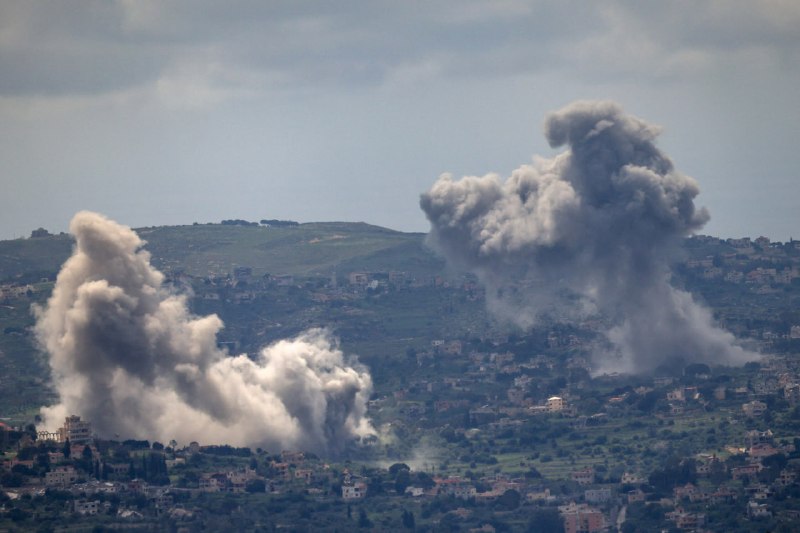
The memorandum of understanding that the Trump administration said on 13 June would be signed the following day did not survive the night. By the early hours of 14 June, an Israeli strike on Iranian-linked targets had knocked the US–Iran text off its appointed course, and the White House was on the record blaming its closest Middle East partner for the delay. The episode, in which a scheduled diplomatic ceremony was overtaken by a kinetic event with direct American civilian and strategic implications, is now being read in three different keys — as a betrayal, as brinkmanship, and as a familiar re-run of the pattern in which Israeli military action sets the outer limit of what an American president can deliver to Tehran.
What is actually in dispute is not whether the deal existed. It is whose hand is on the tiller of a relationship Washington has spent eighteen months trying to re-engineer, and how much damage an ally can do to that project in the small hours of a single night.
The ceremony that did not happen
On the afternoon of 13 June, Polymarket's news account carried the announcement: the United States and Iran would sign a memorandum of understanding the following day. The language was unambiguous — "memorandum of understanding," "tomorrow," "signed." Twenty-four hours later, the same channel of communication carries a different story. The ceremony has slipped. A delay measured, in the first telling from the Oval Office, not in days but in hours, and attributed publicly to an act of war.
Middle East Eye's live blog for 14 June leads with President Donald Trump's claim that an Israeli strike on Iran pushed the signing back by hours. The framing matters. "Delayed by hours" is the diplomacy of reassurance — the deal still exists, the calendar has merely moved. It is also the diplomacy of an administration that has not yet had to answer for the political cost of a strike carried out by a country that operates, on the military balance, as a third party to the negotiation it has been trying to break for a decade.
On the same day, the White House press operation, relayed by Unusual Whales' account, conceded that the deal was "likely in the coming days, but not '100%' certain." That formulation is itself a tell. A confident administration would have held the 13 June line. The shift to "likely" — within twenty-four hours and against the backdrop of an Israeli operation — is the public square equivalent of a banker watching a counterparty miss a closing condition.
The Israeli reading
The Israeli account is the one that travels furthest through English-language wires, but its substance is narrower than the coverage suggests. Two Majors, a Russian-military-affiliated Telegram channel that has been a useful — if partisan — early-warning feed on Middle Eastern air operations, asked on 14 June whether Trump was genuinely trying to rein in Netanyahu or whether the relationship was a managed performance in which the public quarrel is the policy. The question is not a conspiracy theory. It is a fair reading of a US–Israeli relationship that has, in successive administrations, run on the assumption that visible disagreement is sometimes the price of continued alignment.
The argument inside that frame goes as follows. The strike is not a sabotage. It is a parallel track. Israel retains the right to defend itself against an Iranian nuclear and missile programme that no memorandum of understanding, on the public information available, will dismantle. The deal is about sanctions relief and a return to a constrained enrichment posture. The strike is about the missile factories, the weapons flows to Hezbollah, the proxy infrastructure that sits on a different shelf of the problem. The two are not, in this reading, in contradiction. They are in parallel, and the American president who permits both is doing a more honest job than the one who would have to choose.
There is a second Israeli reading, voiced publicly by the prime minister's allies in domestic commentary and surfaced in the 14 June posts on X: that the deal, as it stood on 13 June, was simply too generous to Tehran. In that frame, the strike is the instrument by which an Israeli government told Washington that the negotiating envelope had been exceeded, and the subsequent delay is the correction. The American pressure that follows is theatre, but the Israeli pressure that produced it was material.
The first reading is the one Israeli strategic commentators tend to prefer in English. The second is the one that, in private, gets closer to the bureaucratic truth of the Israel lobby's week. Both reduce, in the end, to the same proposition: the deal is acceptable to Jerusalem only on Jerusalem's terms, and the kinetic instrument is the lever that holds those terms in place.
The American counter-frame
The Trump administration's position, as it has been carried in public posts on 14 June, is more pointed. Trump, per the X account of Sprinter Press, blasted Netanyahu for trying to sabotage the Iran deal. The word is the president's own. Sabotage, in US diplomatic usage, is the term reserved for a partner that acts against an American-negotiated outcome in a way that materially damages American interests. Sabotage is what an adversary does. The use of the word against the leader of a country that, on paper, is the closest intelligence and military partner the United States has in the Eastern Mediterranean is the most legible signal yet that the White House is willing, at least rhetorically, to draw a line.
Whether that line is operational is a different question. The pattern of the past two decades is that rhetorical lines, drawn by American presidents of both parties, are repeatedly redrawn when an Israeli action produces a fait accompli on the ground. The strike has happened. The MOU has slipped. The administration's leverage, in the twenty-four hours after the strike, is the verbal kind — the kind that announces a delay, attributes it to a partner, and waits to see whether the partner moves first to repair the relationship or to escalate it further.
The third American position is the one that matters most for the deal's actual content, and the one that the public posts do not name. It is the position of the negotiators who drafted the text. For them, an Israeli strike hours before a signing is not a foreign-policy problem. It is a contract problem. It introduces a new fact — the strike itself — that the text, as drafted on 13 June, did not anticipate. Reopening the text to absorb that fact is the work of the next seventy-two hours. Reopening the text to give Israel the concessions it wants, in exchange for the strike, is a different and more dangerous piece of work, and it is the one the administration is now in the position of having to refuse or accept under a clock that has already started.
The structural frame, in plain language
What is in front of the reader, in the second week of June 2026, is the familiar geometry of an American-brokered Middle East deal: an American president seeking a deliverable, an Israeli government that reserves the right to act outside the negotiating envelope, and an Iranian counterpart that has learned to read the gap between the two. The memorandum of understanding was meant to be the deliverable. The strike is the reminder that the deliverable is not, in the Israeli strategic reading, a US–Iran document at all. It is a triangular one, and the third corner has a vote.
This is the pattern that has governed US–Israeli–Iranian diplomacy since at least the 2002 disclosure of Iran's enrichment programme. The pattern is not American weakness. It is the structural condition of an alliance in which one partner holds a nuclear monopoly in the region, a veto-grade intelligence relationship, and a domestic political constituency inside the United States that is operationally significant. The American president who wants a deal with Iran has always had to do it in the shadow of a partner that can produce a fait accompli at any hour of any night. The 14 June strike is the latest iteration of that capacity, and the Trump administration's response — delay, attribution, the word "sabotage" — is the latest iteration of the American answer.
The structural point, stripped of language, is this: in a contest where one of the parties to the negotiation is also the closest ally of the broker, the broker's commitment is always a function of the ally's tolerance. The MOU was possible on 13 June because Israeli tolerance was, on that day, sufficient. The MOU slipped on 14 June because that tolerance was exhausted, or because the Israeli cabinet decided that the political return on a strike outweighed the cost of a delayed signing. The next seventy-two hours will tell the reader which of those it was.
Stakes, forward view, and the small print of uncertainty
The reader should hold three propositions in mind. First, the deal, on the public information, is not dead. The administration's own framing is delay, not cancellation. The MoU was "likely" to be signed "in the coming days" on 14 June, in the same breath as the strike. That is a public posture of an administration that intends to keep negotiating.
Second, the price of the negotiation has gone up. Israel has demonstrated, in kinetic terms, that it is willing to pay a public-relations cost — a presidential statement using the word "sabotage" — to alter the trajectory of an American negotiation. That demonstration changes the expected value of any future Israeli calculation. If a strike hours before a signing produces only a delayed signing and a verbal reprimand, the strike was, from the Israeli cabinet's perspective, almost free. The next strike will be cheaper still.
Third, Iran's posture in the days after 14 June is the variable that the English-language coverage has, to date, been thinnest on. The Iranian negotiating position was constructed on the assumption of a US partner that could deliver its end. The 14 June strike is the first hard data point that the assumption may not hold, and Iranian state-media responses in the next forty-eight hours will tell the reader how much of the negotiating envelope the Iranian side is willing to preserve, and how much it is willing to reopen in light of an ally that has acted against the deal in plain sight.
The smaller print is where the story actually sits. The MoU text is not in the public record; only the existence and timing of a signing ceremony is. The strike's target, scale, and casualty count are not in the public record in a form the present sources can verify. The Israeli government's public confirmation of the strike, beyond the Two Majors channel that has asked whether the US is being played, is not in the sources at hand. The Iranian response, in any official form, is not in the sources at hand. What the sources do establish is the sequence: announcement of a 14 June signing on 13 June, an Israeli strike on Iranian-linked targets in the early hours of 14 June, an American public statement attributing the delay to the strike, an American public statement using the word "sabotage" against the Israeli prime minister, and an American fallback to "likely in the coming days, but not '100%' certain." That sequence is enough to make the structural argument. It is not enough, on its own, to settle the question of which of the three readings — Israeli parallel-track, Israeli sabotage, American theatre — the next seventy-two hours will ratify.
The reader should also note what the wire coverage has not done. The major Western outlets have, on the present sources, been cautious in attributing specific casualty figures, specific strike targets, and specific deal text. The two Telegram/X channels that have carried the bulk of the breaking news — Two Majors on the Israeli frame, Sprinter Press and Middle East Eye on the American frame — are partisan or regional in their orientation, and the reader is entitled to read them as such. The combination is the most informative version of the story available at the time of writing. It is not, yet, the most verifiable one.
What to watch by Tuesday
Three indicators will resolve, in the next seventy-two hours, which of the three frames is the operative one. First, a confirmed signing date and venue, or a confirmed cancellation — the binary test of whether the deal exists at all. Second, an Israeli government statement on the strike, on the record, with a target set and a justification — the test of whether the strike is being claimed as policy or being left in the fog of plausible deniability. Third, an Iranian official response, in any of the state-aligned channels that have been quiet in the past twenty-four hours, on whether the negotiating envelope is being held or reopened.
The reader who holds those three indicators in mind, against the sequence established here, will be in a better position to read the next week than the reader who is content with the wire's working assumption that the deal will be signed "soon." Soon, in Middle Eastern diplomacy, is the word that covers every distance between a ceremony that almost happened and a text that never gets signed. The Israeli strike on 14 June has moved the deal somewhere inside that distance. Where it ends up is the question the next seventy-two hours are designed to answer.
How Monexus framed this: the wire led with the strike as a fact and the deal as a process item. This publication has reversed that order, on the view that the process item is the structural event and the strike is the instrument — and that the reader who is told about the instrument first is left to assume a context the sources have not, in the present cycle, established.
Wire provenance
This editorial synthesis draws on the following public wire/social posts:
- https://t.me/two_majors
Follow the event.
These dated source records provide context. They do not retrospectively verify this archive article.
Separate what the nuclear watchdog reported from what it could not determine after the June 2025 strikes.