Trump publicly rebukes Israel's Beirut strike as a peace-deal spoiler
Hours after a deadly strike on Beirut's southern suburbs, the US president broke with Israel in unusually direct language, calling the attack a setback for a deal he says is within reach.
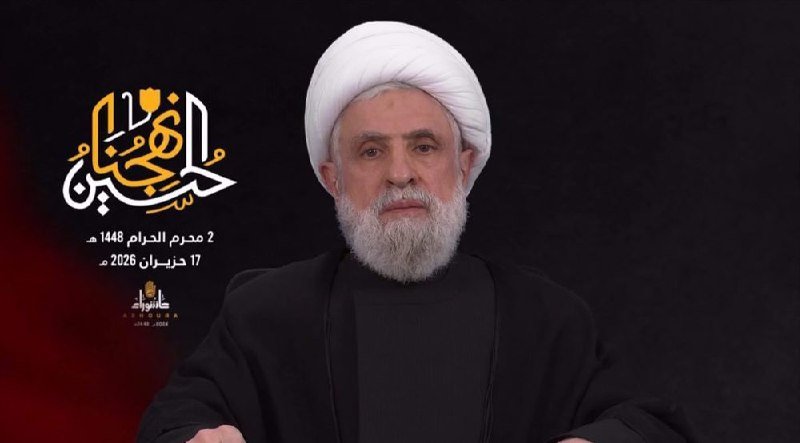
At 15:09 UTC on 14 June 2026, the English-language service of Iran's Al-Alam television posted a quoted statement that, even in paraphrase, lands as a public break between the United States and Israel. US President Donald Trump, the channel reported, said the morning's Israeli strike on Beirut "should not have happened, especially on such an important day when we are so close to a peace agreement." Within thirty minutes, the same line was being recirculated by the Fars news agency and Iran's Tasnim, each appending its own editorial framing; by 15:40 UTC, a separate Telegram channel run by the Beirut-based analyst Adam Abuali was carrying an expanded formulation in which Trump added that "Israel should not have responded in Beirut" and that "there should not be attacks by other parties, including Hezbollah."
What is unusual is not the substance of the American complaint — US presidents have criticised Israeli operations before — but its timing, its tone, and the diplomatic moment it interrupts. The statement lands on a day that, in the president's own telling, was supposed to be a peace-deal day, with what he described as significant movement toward a regional agreement. An Israeli strike on the southern suburbs of Beirut, an area associated with Hezbollah's civilian-facing infrastructure, was a direct strike at precisely the actor the negotiations presumably have to keep talking.
What is known about the strike and the warning
The factual skeleton on 14 June 2026 is short. At 15:00 UTC, the Fars news agency, citing Axios and an Israeli Channel 12 reporter, reported that Israel had informed the United States before carrying out the attack on Beirut. That single line, if confirmed by mainstream Western reporting, changes the political reading of Trump's response materially: the president is not rebuking a surprise Israeli escalation, he is rebuking a pre-notified operation whose timing, in his view, was wrong.
Trump's own words, as carried by Al-Alam, are more pointed than the standard "we have concerns" formulation. "The attack on Beirut this morning should not have happened, especially on a special day like today, when so much progress is being made — we are so close to a peace agreement with Iran," the quoted statement reads, in the translation provided by the channel at 15:09 UTC. The reference to a deal with Iran — not Lebanon, not Hezbollah — situates the strike inside the wider track of US–Iran diplomacy that has run in fits and starts since 2025, and which Israeli security planners have viewed with deep suspicion. Tasnim's English feed, posting at 15:06 UTC, frames the statement through an editorial lens, calling the US the "head of the American terrorist state"; the language is the channel's, not Trump's, but it is a useful signal of how the statement is being received in Tehran.
The Hezbollah end of the negotiation has, on this evidence, been frozen out of the diplomacy Trump is describing. The Abuali-channel quote makes that explicit: the president does not want the strike answered, and he does not want Hezbollah to respond either. In the framework of an Israel–Lebanon ceasefire, that is a coherent position. In the framework of an Israel–US–Iran deal that brackets out Hezbollah, it is an announcement.
The counter-narrative from Tehran and the axis of resistance press
The framing from Iranian state-adjacent media is worth taking seriously on its own terms rather than dismissing as boilerplate. Al-Alam's English service does not call the strike a violation; it calls it "barbaric," and accuses the US president of a "passive and purely verbal stance" that stops short of condemnation. Fars, posting the Axios-attributed confirmation that Israel gave Washington advance notice, implicitly sharpens the critique: if Israel told the US in advance, then a post-hoc statement of regret is not a rebuke, it is theatre.
There is a structural argument buried in that framing, and a reporter who ignores it misses the point. The Iranian line is that American "management" of Israel is not the same as American constraint of Israel, and that the gap between the two is the space in which Lebanese civilians die. A staff writer who treats that as mere rhetoric has not done the reading. It is, however, a partisan line, and it has a built-in incentive to overstate the US–Israel rupture. The same press organs have, on other days, characterised identical US statements as proof of perfect coordination. The honest read is somewhere between: the statement is real and unusually direct, and it is also a tactical instrument inside a negotiation the White House is still trying to run.
What the structure of the statement tells us
Read as a diplomatic document rather than a sound bite, Trump's statement does three things at once. It publicly registers displeasure — a signal to Israeli domestic audiences and to the Israeli defence establishment that the timing of operations on a negotiating day carries a cost. It preserves US deniability of foreknowledge by stopping short of condemning the substance of the strike, only its placement on the calendar. And it pre-emptively forecloses the Hezbollah response, in language aimed less at Beirut than at the Iranian and Shia-coordination audience that reads statements like this for permission to act or to hold.
The Abuali-channel extension, with its reference to "other parties, including Hezbollah," is the version of the statement that does the most work. It is the version that says: the deal we are close to is not a deal with the Lebanese state alone, it is a deal in which Iran's regional deterrent is being asked to stand down. Whether Hezbollah reads it that way is the open question of the next forty-eight hours, and it is the question that the Western wire press, once it picks the story up, will need to engage with directly.
What remains uncertain
Two things the Telegram coverage does not resolve. The first is the casualty count and the specific target in Dahiyeh; the second is the scope of the "peace agreement" Trump is referencing. Al-Alam's translation refers explicitly to Iran; the Abuali-channel version refers to a broader framework including Hezbollah. If it is the former, then the strike is a deliberate complication of a US–Iran track; if it is the latter, it is a strike against a specific negotiating partner on the day a deal was meant to be announced. The Western wire has not yet, on the evidence available here, attached its own reporting to either reading, and the most consequential variable — which side of that distinction is correct — is the one that will determine whether Trump's public statement hardens into policy or evaporates by Tuesday.
This piece relies on Telegram-channel reporting in English and translation, pending wire confirmation of casualty figures and target identity. Monexus will update when mainstream-wire reporting attaches to the same events.
Wire provenance
This editorial synthesis draws on the following public wire/social posts:
- https://t.me/englishabuali/
- https://t.me/alalamfa/
- https://t.me/alalamfa/
- https://t.me/tasnimnews_en/
- https://t.me/farsna/
- https://t.me/ClashReport/
Follow the event.
These dated source records provide context. They do not retrospectively verify this archive article.
Separate what the nuclear watchdog reported from what it could not determine after the June 2025 strikes.