The 24-Hour Deal: Anatomy of a US–Iran Announcement That Wasn't
On 13 June 2026, Donald Trump, the Pakistani prime minister, and a Bitcoin chart all converged on the same claim: a US–Iran peace deal was hours away. By Sunday morning the picture is murkier — and the gap between announcement and agreement is where the real story sits.
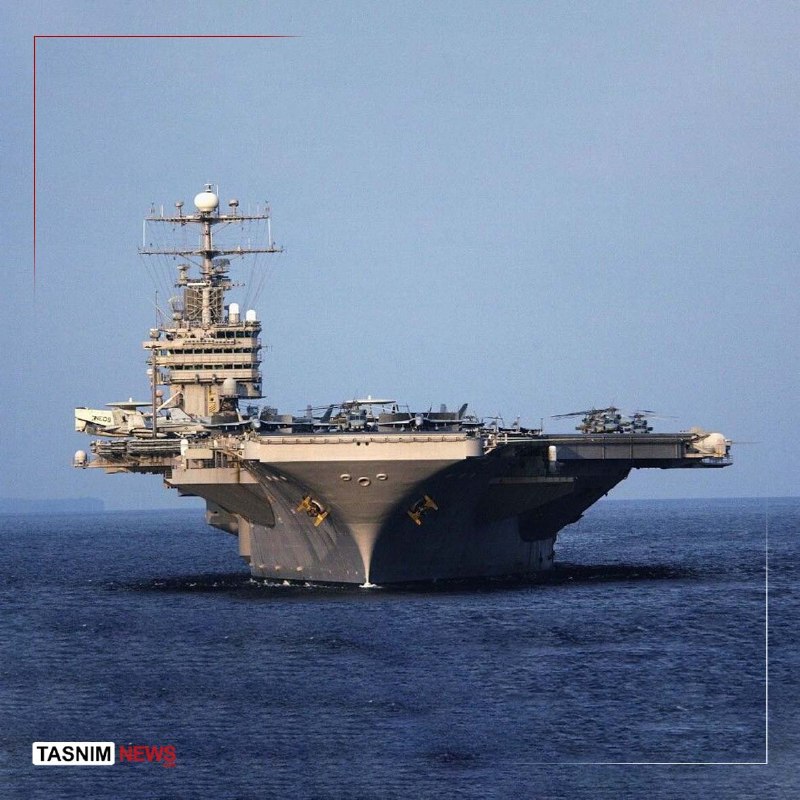
At 17:40 UTC on Saturday 13 June 2026, Donald Trump posted that a US–Iran peace deal would be signed on Sunday. Forty-six minutes earlier, Pakistan's prime minister had told reporters in Islamabad that the signing was expected within twenty-four hours. By 17:53 UTC the US president had added a second message: if a deal falls through, the United States has the "ultimate alternative." Bitcoin, which has spent two months consolidating in the low-$60,000s, pushed through $64,000 the same afternoon, supported by its strongest single-day ETF inflows in a month and by traders' reading of the headlines. The scene had every marker of a diplomatic fait accompli: a host nation's endorsement, a regional mediator's timeline, a market response, and an implied threat calibrated to land in the same news cycle.
What it does not yet have is a signature. Iran's own communications, filtered through the deal's most contested clause, suggest the gap between announcement and agreement is wider than the Saturday-evening posts implied. The story of the next 72 hours will be written in that gap — in whether "Sunday" turns out to be a date or a posture, and in what the United States is actually buying with the threat it is holding in reserve.
The mediator's clock and the president's megaphone
Pakistan's role is the load-bearing piece of the geometry. The Pakistani prime minister, the public face of an Islamabad-based mediation track that has run parallel to the more visible Gulf-channel talks, said on Saturday that a peace deal was closer "than ever before" and could be finalised "in the next 24 hours," as reported by NPR's news desk on 14 June 2026. That is a faster timeline than any US or Iranian official has publicly endorsed in recent weeks, and it places Islamabad — not Doha, not Muscat, not Geneva — at the centre of the choreography.
The Pakistani framing matters for two reasons. First, it gives Washington a deniable escalation ramp: if Sunday produces a deal, the credit flows to the Trump administration's "ultimate alternative" posture; if it produces a collapse, the timeline is recast as Islamabad over-promising. Second, it gives Tehran a parallel channel in which to slow-walk without publicly contradicting the Americans. Pakistan's prime minister has been a useful honest broker precisely because Islamabad is one of the few capitals that can carry a message to both the White House and the IRGC's diplomatic interlocutors without it being read as either submission or capitulation. That utility is finite, and it is being consumed at speed.
Trump's two posts on 13 June — the Sunday-signing announcement, then the "ultimate alternative" warning — are the press-release and the press-leverage of a single negotiating stance. Read in sequence, they are not contradictions. They are the diplomatic equivalent of writing a cheque and announcing the overdraft facility in the same breath.
What the markets heard, and what they did not
Bitcoin's break above $64,000 on Saturday, as reported by CoinDesk on 13 June 2026, is the cleanest market-side confirmation that traders treated the weekend posts as a higher probability of de-escalation than the prior week's pricing had allowed. The move was supported by the strongest ETF inflows the asset had seen in roughly a month — a real bid, not just a thin-order-book spike. That is the right read in the short term. It is also a read with a known failure mode: crypto markets price the announcement of geopolitical resolution long before they price the substance of the underlying dispute, because liquidity is cheap and the position is sized for the headline, not the eventual text.
The less reported point is what oil did not do. With an Iran deal plausibly hours away, and with that deal presumably touching the sanctions architecture around Iranian crude, the front-month Brent curve should have been visibly softer through the Saturday session. The sources available to Monexus do not specify the intraday move, and the absence of a rout in the energy complex is itself a tell: serious desks were not yet willing to price in the deal. They were willing to price in the chance of a deal. That is a much smaller bet, and a much more reversible one.
The leaked account and the dispute over what was actually agreed
On 12 June 2026, two days before the Pakistani prime minister's 24-hour framing, Trump said that Iran's leaked account of a US deal "bears no relation to the truth" — a denial issued, notably, after a leak from the Iranian side, not before. The sequence matters. By the time the Sunday-signing announcement landed on 13 June, both governments had spent at least thirty-six hours in public disagreement about what the draft text actually said.
This is the pattern that has broken every previous US–Iran deal framework in the last decade: the headlines converge first, the texts converge later, and the gap between the two is filled with denials, walk-backs, and re-leaks. The 2015 JCPOA collapsed in part because the public framing in Washington and the public framing in Tehran were never quite the same document, and the 2018 withdrawal exploited the seams between them. The Saturday timeline does not foreclose that history. It risks repeating it on a 72-hour clock.
The structural point is not that one side is lying and the other is telling the truth. It is that the two governments have, in the run-up to this signing, been talking past each other in two different documents — and the market is pricing the announcement of the document, not the content of the document.
The "ultimate alternative" and the geometry of coercion
The phrase "ultimate alternative" is the tell that this is not yet a deal. It is the phrase a principal uses when the negotiating counterpart has not yet accepted the principal's preferred text and the principal wants to move the marginal probability of acceptance before the next news cycle. Read against the Saturday-evening posts, it implies that the United States is signalling an off-ramp to the Iranian negotiating team: sign Sunday, or face the unstated consequence. Read against the prior week's reporting, it implies that the United States believes it has escalation dominance and is choosing to spend some of it for the optics of a weekend signing.
This is also the part of the story where the Western wire and the regional wire will diverge most sharply. The American framing — that credible coercion is what produces agreements — will read "ultimate alternative" as a negotiating instrument. The Iranian framing — that coercion is what makes agreements fragile — will read it as a reason to delay the signature until the text is settled, not the politics. Both readings are internally consistent. The question is which one the Sunday calendar answers to.
Stakes: what is being traded and who loses if Sunday slips
If a deal is signed on Sunday, the immediate winners are the Pakistani mediation track, the Trump administration's preferred narrative of coercive diplomacy, and the short-Bitcoin / long-risk complex that priced the move. The immediate losers are the Iranian negotiating team's leverage for any second-tranche issues — nuclear verification, missile constraints, regional proxy containment — that are widely understood to be deferred rather than resolved by the headline text. The market is currently pricing the win column. The sources available to Monexus do not specify the architecture of the deferred items, and that is the part of the deal the 24-hour timeline is most likely to compress past the point of durable agreement.
If Sunday slips, the immediate winners are the Iranian side's hardliners, who get a quiet win on text rather than a public win on principle, and the energy complex, which gets to retain the optionality it has been holding. The immediate losers are the Pakistani track's credibility as a fast-cycle mediator, and the credibility of "ultimate alternative"-style coercion as a substitute for settled text. Bitcoin's move above $64,000 would unwind in part; the question is how much, and how fast.
The structural frame is older than this negotiation. The dominant power's threat works to close a deal on a date. It does not, by itself, close the underlying dispute. The underlying dispute — what Iran is permitted to do, what Iran is willing to be seen accepting, and what the United States is willing to trade for verifiable limits — runs on a clock measured in months and years, not in the twenty-four hours Islamabad has put on the table. The market is pricing the date. The dispute is still on its own clock.
What remains uncertain, and what the sources do not settle
The sources available to Monexus do not specify the location of any planned Sunday signing, the parties who would be present, or the legal architecture of the text. They do not specify the status of the dispute that produced the 12 June leak. They do not specify whether the "ultimate alternative" is a kinetic posture, a sanctions posture, or a hybrid that has not yet been used. The Pakistani prime minister's 24-hour framing is a mediator's timeline, not a principal's signature, and the principals — the White House and the Iranian negotiating team — have not, in the sourced material, publicly committed to the same clock. Bitcoin's break above $64,000 is a market read of the headlines; it is not an attestation of the underlying deal.
What Monexus will be watching in the next 24 hours is straightforward: a signed text, a named venue, and a counterpart on the Iranian side who is publicly on the record as having agreed to it. Until at least two of those three land, "Sunday" is a posture, not a date. The market is entitled to price the posture. Readers are entitled to know the difference.
This piece treats Saturday's announcement as a posture rather than an event. Where the sourcing supports a specific actor, timestamp, or price move, the claim is sourced; where it does not, the gap is named rather than filled.
Wire provenance
This editorial synthesis draws on the following public wire/social posts:
- https://x.com/polymarket/status/
- https://x.com/unusual_whales/status/
- https://x.com/unusual_whales/status/
- https://x.com/polymarket/status/