Ceasefire by Press Release: How a Late-June US-Iran Deal Came Together Without a Single Confirmed Clause
Iranian state television, the Pakistani prime minister and Donald Trump all announced a US-Iran deal within twelve hours on 14 June 2026 — but no government has published a single operative clause, leaving markets and regional allies to price an agreement that, on the public record, does not yet exist in writing.
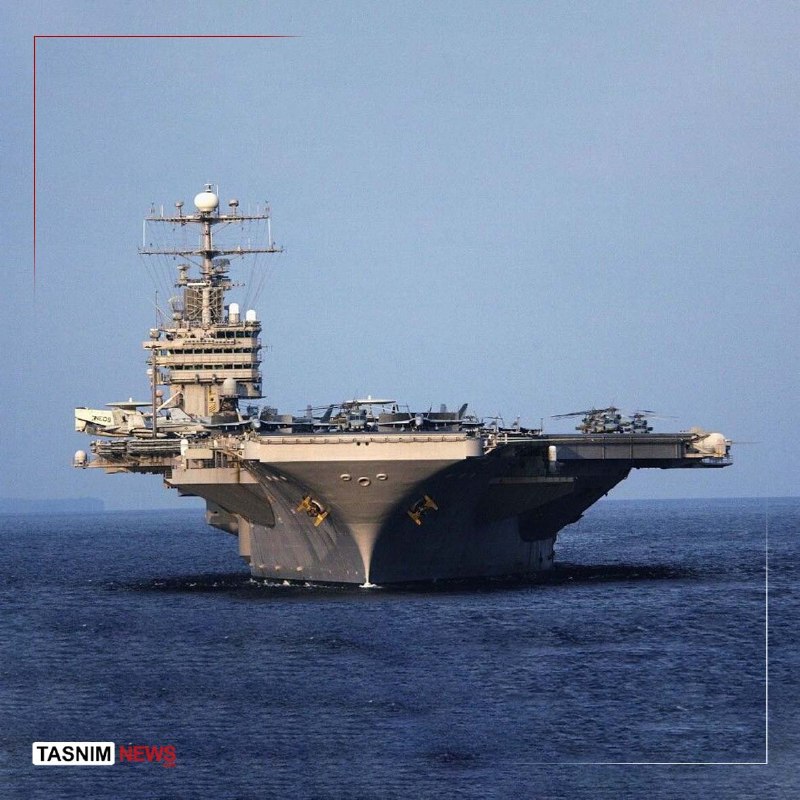
At 21:46 UTC on 14 June 2026, Iranian state television carried an announcement that would, in any other week, have been the lead item on every wire in the world: a peace deal between the United States and the Islamic Republic of Iran. Twelve minutes earlier, the office of Pakistan's prime minister had told Reuters the same thing. Roughly seven hours before that, Donald Trump had told a White House pool that Israel and Iran were "moving toward a ceasefire." By close of business in New York, no foreign ministry on either side of the Gulf had published a single operative clause of the agreement those announcements purported to describe.
This is the strange shape of the episode the markets are now being asked to price. A diplomatic event of the first order — one that, if real, restructures the sanctions architecture around the Islamic Republic, changes the energy-supply outlook for the second half of 2026, and rewrites Israel's strategic posture — has been transmitted to the world almost entirely through press releases, social-media reposts, and the statements of two governments (Pakistan and the United States) who are not parties to the underlying dispute. The two principals, Washington and Tehran, have not on the public record as of this writing exchanged a text, identified a venue for a signing ceremony, or confirmed the sequencing of any reciprocal steps. The reported deal exists, at this hour, as a confidence — not yet as a document.
The pattern is worth examining on its own terms, because the precedents set in the next 72 hours will govern not only this dispute but a much wider set of negotiations in which the United States is presently engaged, from Ukraine to the post-October 7 files in Gaza and Lebanon. A deal announced but not signed is a particular kind of instrument: it moves money, it calms oracles, and it buys time. It also, historically, is the form in which the most brittle agreements tend to live and die.
The sequence: a deal built from the outside in
The public chronology of 14 June runs in three overlapping waves, and the order in which they arrived is itself a piece of evidence about who is doing the talking.
The first wave broke at 14:21 UTC, when Telegram channels carrying the product and financial-news feeds — Product Hunt and AngelList, both reposting the same item — pushed a short Trump statement to their audiences: that Israel and Iran were "moving toward a ceasefire." The language was aspirational, not contractual. No Israeli source had, at that minute, confirmed the framing; no Iranian source had responded.
The second wave landed at 18:53 UTC, in a thread on X by Sprinter Press, which reported that the United States had offered Tehran additional economic incentives — including the release of Iranian funds — to dissuade Iran from striking Israel, and that the proposal had been rejected, with Tehran replying that the Beirut attack "will be answered." The image the wire left with readers was of a US offer on the table and an Iranian refusal on the table at the same moment, in a single day.
The third wave arrived in the early evening, European time, and inverted the second. At 21:34 UTC the Middle East Spectator account on Telegram urged caution: "Let's see what the Iranian statement says before jumping to any conclusion." At 21:35 UTC, Reuters moved a flash citing Pakistan's prime minister saying the United States and Iran had reached a peace deal. At 21:46 UTC, Iranian state TV — via the Clash Report Telegram channel — carried its own announcement of a US-Iran deal.
Read together, the day's evidence supports two compatible interpretations. Either the principals had a deal that was finalised and held back from publication for political reasons, and the early-afternoon Trump line and the early-evening Pakistani line were the calibrated unrolling of a coordinated message; or there was no deal at 14:21 UTC, no deal at 18:53 UTC, and a deal — of some kind — only at 21:35 UTC. The two readings cannot both be right. The available reporting does not let this publication choose between them.
The pre-deal: what the United States reportedly put on the table
The single most concrete piece of substance in the day's record is also the one that the principals have been least willing to expand on in public: the reported US offer of "additional economic incentives, including the release of Iranian funds," made in the hours before the announced deal. The Sprinter Press thread, citing the framing circulating among US and Israeli commentators, described a package intended to forestall an Iranian strike on Israel in response to what the report characterised as a Beirut attack.
The release of Iranian funds is the element most easily reconstructed from prior coverage. Successive administrations — including the present one — have at various points released frozen Iranian central-bank assets held abroad, most prominently the $6 billion held in South Korean accounts that was the subject of a 2023 understanding tied to the release of American detainees. Any new "release of Iranian funds" component of a deal would, in form, resemble that earlier arrangement: escrow, humanitarian designation, monitored disbursement. Iranian state media have, on past occasions, treated such arrangements as partial reparations for the damage caused by sanctions; Western negotiators have framed them as confidence-building measures whose scope is technically limited. Both readings are present in the historical record, and the day's reporting does not yet say which framing the present package adopts.
What the day did not surface — and where the structural stakes of the deal are likely to be set — is any visible movement on the nuclear file. There is no public indication, as of the announcements catalogued here, that the reported deal touches enrichment levels, IAEA access, or the snapback mechanism under UN Security Council resolution 2231. The absence is conspicuous. Every US-Iran understanding since 2013 has, in the end, turned on the nuclear question; an agreement that left it untouched would be either a stopgap or a different kind of arrangement altogether — closer to a security and sanctions-routine ceasefire than to a strategic settlement.
The mediators and the message: Pakistan, the Gulf, and the politics of who speaks first
The presence of the Pakistani prime minister in the announcement chain is not incidental. Pakistan has, since at least the 2019 escalation that followed the killing of Qassem Soleimani, maintained a quiet channel to Tehran that has been useful to several US administrations. In the current sequence, Islamabad's role appears to have been the public one of the third-party validator: a government with a working relationship to Iran that the Iranian side will accept as a neutral broker, and that can also credibly carry a line back to Washington.
The mediator question matters because the deal's most fragile edge runs through Israel. The reported Trump line — Israel and Iran "moving toward a ceasefire" — was issued without an Israeli confirmation on the public record, and the Israeli political system has, since the 12-day war of June 2025, been visibly split over the strategic wisdom of any arrangement that leaves Iran's nuclear programme and proxy network substantially intact. A US-Iran understanding that reaches the Israeli public as a fait accompli, with the Israeli government informed in advance but not a co-author, would land badly in Tel Aviv and Jerusalem. A US-Iran understanding in which the Israeli side is openly a co-author, with explicit Israeli security guarantees appended, would land differently — but the day's record contains no Israeli source confirming such a role.
The Gulf states, who are not parties to the announcement but whose airspace, banking rails and energy infrastructure are central to the deal's implementation, are similarly absent from the day's reporting. The fact that the announcement was carried by Iranian state TV, by the Pakistani prime minister's office, and by the US president — but not, on the public record, by the foreign ministries of Saudi Arabia, the UAE, Qatar, Oman, or Iraq — is itself a structural fact. A deal of this scope usually has a regional diplomatic undercarriage that surfaces in leaks within hours. The undercarriage here is not visible.
The markets and the margin of doubt
The financial reaction to a deal announced this way is, by design, fragile. A formal text — even a short framework — would lock in expectations: a sanctions-relief schedule, an enrichment-cap regime, a prisoners' exchange, a defined duration. None of those has been published. What the markets are pricing, in the hours after the 21:46 UTC announcement, is the probability that a text will follow, and the conditional value of the concessions that text is most likely to contain. That is a wider distribution than the headline implies, and it explains why oil benchmarks and tanker freight, which move on certainty, have a more cautious response than equities, which move on direction.
This is also the part of the cycle at which previous announced-but-not-signed US-Iran understandings have come apart. The April 2021 talks in Vienna moved for weeks on the basis of a "proximity agreement" between US and Iranian delegations that was not in writing; the public framing of progress outran the actual narrowing of gaps, and the political space for the deal closed before the text was finalised. The May 2018 withdrawal from the Joint Comprehensive Plan of Action, by contrast, happened in writing, on a date announced in advance, and the markets had time to position. The present episode sits between those two precedents: more formal than Vienna, less formal than a treaty withdrawal, and structurally dependent on whether a text appears within a window measured in days rather than weeks.
What the record supports, and what it does not
The honest ledger of what this publication can verify on 14 June 2026, between 14:21 and 21:46 UTC, runs as follows. It is established that the US president used the word "ceasefire." It is established that the office of Pakistan's prime minister told Reuters a deal had been reached. It is established that Iranian state television carried an announcement of a US-Iran deal. It is not established, on the public record, what the deal contains, which clauses are operative, which government ministries have signed off, or whether the Israeli side has been informed as a partner or as a downstream audience. It is not established that the earlier Sprinter Press account of an Iranian refusal of a US incentive package is incompatible with the later deal announcement; the two could be reconciled if the package was revised, sweetened, or rebranded in the intervening hours. The day's record does not allow this publication to say which.
The throughline of the coverage is, finally, an old one in the recent history of Middle East diplomacy: the most consequential announcements are sometimes the ones that arrive before the underlying document does. In the next 48 to 72 hours, three things will determine whether the 14 June episode becomes a settlement or a footnote. First, a published text — even a brief one — with operative language. Second, an Israeli response that goes beyond a single press-line, indicating that the Israeli government has been read in as a co-author rather than a customer. Third, a movement on the nuclear file, or an explicit decision to defer it, that gives the deal a strategic shape rather than a procedural one. The markets will, with their customary speed, decide in the meantime.
This article treats the 14 June announcements as a single news event whose internal sequencing matters, on the working assumption that a deal announced by three governments in twelve hours is, until a text appears, a deal in motion rather than a deal in force. Where the day's reporting contained contradictions — most prominently between the early-evening account of an Iranian refusal and the late-evening account of a deal — the article surfaced both rather than choosing a side.
Wire provenance
This editorial synthesis draws on the following public wire/social posts:
- https://t.me/ClashReport
- http://reut.rs/43Ezq5R
- https://t.me/Middle_East_Spectator
- https://t.me/producthunt
- https://t.me/AngelList
Follow the event.
These dated source records provide context. They do not retrospectively verify this archive article.
Separate what the nuclear watchdog reported from what it could not determine after the June 2025 strikes.