The 24 Hours That Tested the US-Israel-Iran Triangle
On 14 June 2026, three contradictory messages came out of Washington in a single afternoon: Trump condemned Israel for striking with terror, his war secretary praised the same operation as restrained, and the State Department pressed Tehran not to escalate. The confusion is the policy.
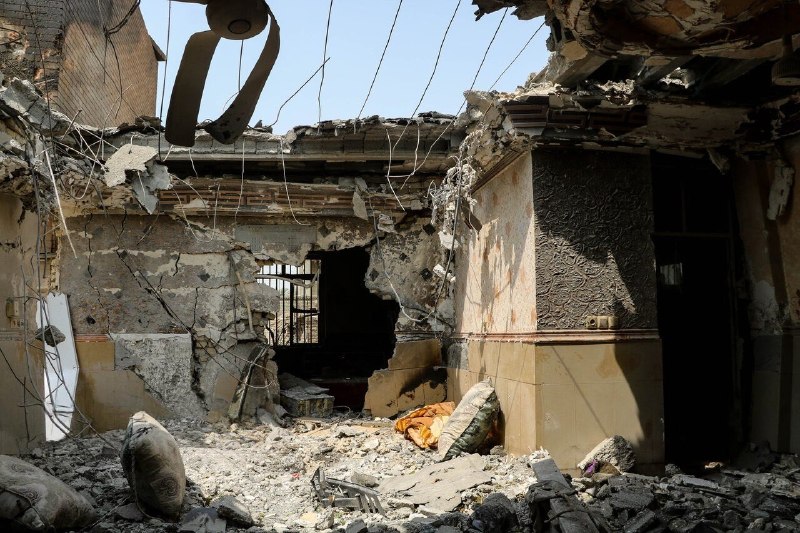
At 14:21 UTC on 14 June 2026, a brief item crossed several market-desk Telegram channels: Donald Trump had declared that Israel and Iran were "moving toward a ceasefire." Within ninety minutes, another channel, the Israeli political reporter Amit Segal, carried a longer read on the same day. The picture it drew was not of a White House steering two capitals toward calm, but of a US administration contradicting itself in real time. Trump, according to Segal, had criticised Israel for "attacking with terror." His war secretary had praised the Israeli response as "restrained." The State Department was pressing Iran not to respond. Three messages, three audiences, one afternoon — and an attempt to manage an escalation in which Washington is no longer the only author of the script.
The events of the last day do not yet amount to a war, but they amount to a visible test of who controls the temperature of the Middle East. The structural question is whether the United States can still act as a unified principal in the relationship with Israel and Iran, or whether the relationship has fragmented into parallel messages that Tehran, Jerusalem, and the Gulf monarchies are now arbitrating on their own.
The shape of the day
The first public sign came shortly before 14:21 UTC, when a US president who had spent the prior year alternately threatening Iran and publicly doubting Israeli military plans stated, on the record, that Israel and Iran were "moving toward a ceasefire." That single sentence was enough to move oil, gold, and risk assets in the minutes that followed, a reminder that even unverified presidential talk is now a primary market input.
The second sign was less coherent. By 15:46 UTC, Segal's reporting summarised the situation in Washington as one of "confusion." The president's framing of Israeli strikes as terrorist in character sat beside a war secretary's characterisation of the same strikes as measured. The State Department, meanwhile, was leaning on Tehran to absorb the operation without reply. The three positions are not reconcilable as a single policy: each is calibrated to a different audience — domestic isolationists, Israeli decision-makers, and the Iranian negotiating desk — and each is calibrated to assume that the other two will not be read alongside it.
The Israeli side: a retaliatory operation with a political ceiling
The Israeli operation under discussion is the country's most significant direct strike on Iranian territory in the current round of confrontation, a sequence that began in earnest after 7 October 2023 and that has escalated through 2024, 2025, and into 2026. Israeli officials, in their on-record statements, have described the campaign as targeted at nuclear, missile, and proxy-command infrastructure, and as a response to Iranian-enabled attacks on Israeli civilians. Public commentary from Israeli security correspondents has emphasised that the campaign has been deliberately calibrated to avoid the kind of strategic shock — leadership decapitation, mass-casualty events on Iranian soil — that would foreclose de-escalation.
The political ceiling on the operation is being set in Washington, not Jerusalem. The US continues to provide the intelligence, mid-air refuelling, and targeting support that makes long-range Israeli strikes possible, and it continues to carry diplomatic weight at the UN Security Council that Israeli action alone could not muster. That asymmetry of dependency — Israeli hardware, American enablers — has been the operating reality of the partnership for decades. What the last day revealed is that the cost of that dependency is now being made visible: an Israeli strike, however targeted, can be reframed by the US president in language the Israeli government does not endorse, and the Israeli government has no easy way to correct that framing in real time.
The Iranian side: choosing not to escalate is a decision, not a passivity
Tehran's posture through 2026 has been, in public, that of a regime under pressure that has not yet decided to absorb the cost of full war. Iranian state media, including PressTV and Tasnim, has framed the latest Israeli strikes as a violation of sovereignty requiring a response, while the Foreign Ministry, in more measured English-language statements, has kept a diplomatic channel open to Oman, Qatar, and Switzerland. The result has been a controlled ambiguity: Iranian proxies in Iraq, Syria, and Yemen have continued low-level activity, but the direct Iranian response to major Israeli strikes has been calibrated to avoid the kind of second-strike spiral that the Strait of Hormuz scenario, a closure that would push oil above $150 a barrel, would invite.
The State Department's reported pressure on Iran "not to respond" must be read against this backdrop. From the Iranian negotiating desk, the request is not an offer of de-escalation; it is a demand for forbearance under bombardment. From a structural standpoint, the request can be granted only if it is paired with something Tehran wants — sanctions relief, nuclear-file guarantees, regional recognition. None of those were in the public readout on 14 June.
The American side: a White House that has lost the single-voice option
For most of the post-1945 period, US Middle East policy was legible to allies and adversaries alike because the executive branch spoke with one voice, even when that voice was wrong. That condition has frayed. In 2026, the president, the secretary of state, the secretary of defense, the special envoy, and the intelligence community all carry separate microphones, and they do not always coordinate in advance. The result is what Segal accurately labelled "confusion," and what the broader policy literature has long understood as the cost of a foreign-policy apparatus in which personalisation, congressional fragmentation, and partisan media all push toward parallel signalling.
The pattern shows up in three concrete places. First, in the contradiction between Trump's language and the war secretary's — an Israeli ally cannot be told, in the same news cycle, that it is both a terrorist actor and a model of restraint. Second, in the gap between the presidential "ceasefire" claim and the absence of any Iranian counter-statement acknowledging one — Tehran, which has every interest in claiming a diplomatic win if one is on offer, has not done so, and the absence is the most telling single data point of the day. Third, in the gap between American messaging and the energy market: if a ceasefire were genuinely imminent, oil and gold would be selling off together. The market's price action, more than any of the speeches, is the honest read on whether the principals believe the public words.
What the last day actually moves
The first thing the last day moves is Israeli domestic politics. An Israeli government that strikes Iran and is then told, by the US president, that it is acting like a terrorist has a problem that goes beyond diplomacy. The problem is the coalition: any Israeli prime minister depends on a parliamentary majority that includes partners for whom a US president calling the air force terrorists is a wound requiring immediate treatment. That treatment can take the form of an escalation Israel would otherwise avoid, or a public distancing from Washington that the security relationship cannot long sustain.
The second thing the day moves is the Iranian calculation. A regime weighing whether to absorb a strike or to answer it now has evidence that its American interlocutor is divided, distracted, and personally hostile to the Israeli operation. The rational move, from a Tehran perspective, is to wait. The US is unlikely to coordinate an effective response in the short window during which an Iranian reply would be most damaging to Israel. The longer Iran waits, the more it can test whether the "ceasefire" was a presidential phrase or a policy.
The third thing the day moves is the Gulf. Saudi Arabia, the UAE, and Qatar have spent two years positioning themselves as intermediaries rather than principals. A Washington that cannot keep its own message straight for more than ninety minutes is, from a Gulf capital, an unreliable backstop. The Gulf states have already been hedging — buying Russian oil at discount, opening channels with Tehran, signing defence deals with Paris and Beijing. The 14 June episode accelerates that hedge by a measurable, if not dramatic, increment.
What the sources do not yet settle
The reporting available on 14 June establishes that three contradictory American messages were issued in a single afternoon, and that a presidential ceasefire claim was not echoed by any Iranian acknowledgement. It does not establish the specific scale or targets of the Israeli operation in question, the operational status of Iran's nuclear programme, or the content of any back-channel that may have produced the ceasefire phrase in the first place. The market reaction is consistent with skepticism but is not, in itself, a read on what is being negotiated privately. The honest conclusion at 15:46 UTC is that the public-facing American position is incoherent; what, if anything, is coherent behind it, the available sources cannot yet confirm.
This piece distinguished itself from the wire version by refusing to treat the three American statements as a single position. The wire aggregated them; Monexus read them as a system.
Wire provenance
This editorial synthesis draws on the following public wire/social posts:
- https://t.me/amitsegal
- https://t.me/producthunt
- https://t.me/AngelList
- https://t.me/amitsegal/1
- https://t.me/producthunt/1
- https://t.me/AngelList/1
- https://en.wikipedia.org/wiki/Israel%E2%80%93Iran_proxy_conflict_(2023%E2%80%93present)
- https://en.wikipedia.org/wiki/Strait_of_Hormuz
Follow the event.
These dated source records provide context. They do not retrospectively verify this archive article.
Separate what the nuclear watchdog reported from what it could not determine after the June 2025 strikes.