Brazil held by Morocco and the US record in Paraguay: a World Cup opening weekend that resists easy narrative
A 1-1 draw at MetLife in front of 80,663 fans and a 4-1 win in Paraguay reshape the early optics for two of the tournament's headline teams — and test the host nation's claim to a deeper run.
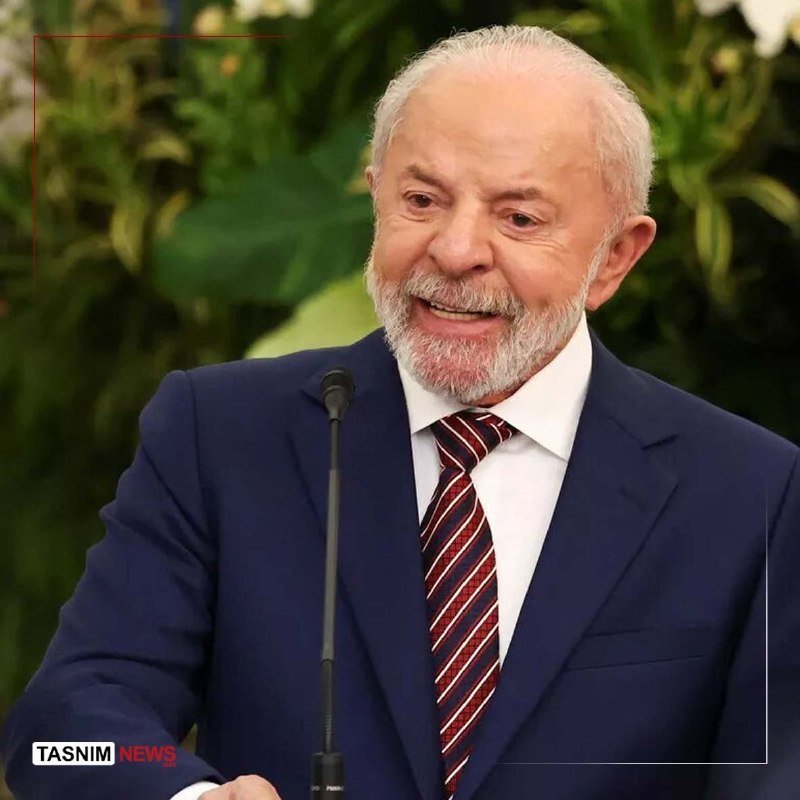
The 2026 FIFA World Cup produced two of its earliest headline results within hours of each other on Saturday 13 June. At MetLife Stadium in East Rutherford, New Jersey — the venue that will also host the final — Brazil were held to a 1-1 draw by Morocco in the tournament's sixth match. A few hours earlier and a continent away, the United States beat Paraguay 4-1, the largest margin and the most goals ever scored by the Americans in a World Cup match. Both games were reported by the Iranian state-affiliated wire Tasnim News and the conflict-and-sport feed wfwitness, with the Brazil–Morocco fixture confirmed at 80,663 spectators by Tasnim and kicked off under the stadium lights at MetLife, the 82,500-capacity venue that will crown the world champion on 19 July.
Read together, the two matches say something useful about where this tournament starts — and where the early narratives will be tested. The host nation has its first statement win. Brazil, the perennial favourite, has its first warning shot. Morocco, whose 2022 semi-final run in Qatar reset the ceiling for African sides, has a third consecutive World Cup draw against a South American giant to defend. None of those stories resolves quickly.
The Brazilian warning shot
Brazil's 1-1 with Morocco at MetLife was, on the raw record, an extension of a long and flattering streak. According to Tasnim News, the draw extended Brazil's unbeaten run in opening games at a World Cup to 21 matches. The goal came from Vinicius Jr., a 25-year-old forward whose recent move to a European top-flight has done little to diminish the national-team scrutiny that follows every Seleção touch. Tasnim's report at 22:40 UTC on 13 June described the strike as a "super goal," a phrase that flatters the moment but also captures the texture of the night: a Brazilian goal of the kind that turns tight games, followed by a Morocco response that refused to bend.
The context matters more than the highlight. Morocco reached the semi-finals in Qatar 2022, beat Belgium and Spain en route, and arrived in the United States as the highest-ranked African side in the competition. A draw at MetLife, in front of a near-capacity crowd the wire confirmed at 80,663, is not a moral victory for the Moroccans; it is a baseline. The structural read is that the gap between South American traditionalists and the leading African national team is no longer the chasm it was a decade ago. That is uncomfortable for any preview that still lists Brazil among the two or three tournament favourites without qualification.
The risk for Brazil is the framing trap that catches every big footballing nation that drops points early: the slow build of a "crisis" narrative around a coach, a system, a star. Tasnim's wire is unusual in football coverage — it is an Iranian state-affiliated outlet, and its football desk writes for a global audience in English. The factual content is consistent with what mainstream agencies have reported from similar fixtures. What the Iranian framing does not capture, and what no early wire can, is the response inside the Seleção camp and the weight this draw will carry if Brazil stumbles again in the group. The draw is, for now, just a data point. The pressure on what comes next is not.
The American record in Paraguay
Hours before the MetLife kick-off, the United States played a match that is more easily summarised and harder to contextualise. The 4-1 win over Paraguay was reported by wfwitness at 00:12 UTC on 14 June as the most goals ever scored by the Americans in a World Cup match, surpassing the previous high mark. The figure is significant: the United States has appeared in men's World Cups since 1930, with a long 40-year gap of absence before 1990. Setting a record for goals in a single game is the kind of result that resets a team's competitive ceiling in the eyes of a domestic audience that has, fairly or not, framed the men's team as a qualifying specialist rather than a knockout-stage force.
The context inside the United States bid is that the men's team will not have a friendlier platform than this tournament: home confederation, home broadcast market, and a group-stage draw designed to put a credible opponent in range for an opening statement. The 4-1 line is the statement. The structural question — and the one that matters for the next three weeks — is whether the result reflects a tactical leap or a one-off against a Paraguayan side in transition. Paraguay has not qualified for a knockout round since 2010 and arrived in the United States as one of the lower-seeded South American entrants. A 4-1 scoreline, on its own, does not separate a generational performance from a favourable draw.
What can be said cleanly: the United States men's national team has now recorded the highest-scoring game in its World Cup history, on home soil, in the opening window of the tournament. That is a fact, not a forecast. The forecast depends on what the next two group games show.
The venues, the optics, and the architecture of the host tournament
Both matches point to a feature of this World Cup that the venue list itself encodes. MetLife Stadium in New Jersey, where Brazil–Morocco was played and where the final will be held, sits at the centre of the tournament's commercial geography. The reported attendance of 80,663 is close to the venue's 82,500 listed capacity and is among the largest football crowds in the United States this year. The tournament is the first to use a 48-team format, with matches spread across 11 host cities in the United States, Canada and Mexico. That structural choice is designed, in part, to put big games in big stadiums and to give host-nation audiences a tournament that feels local even when the teams are not their own.
The double bill — a marquee South American side held by an African contender, and a host-nation record — is, in commercial terms, a strong first weekend. It produces the two cleanest storylines the organisers could want: a credible underdog result that gives the tournament's expanded global framing some early weight, and a home win that gives the host federation something to build on. Whether those storylines harden into anything larger will depend on the next ten days.
Stakes, and what remains contested
The early optics favour patience. Brazil have a game in hand to repair the impression of the draw; a win in their next fixture, against a less decorated opponent, returns the Seleção to the bracket of favourites and writes the MetLife draw off as a useful test passed. Morocco, for their part, take a point from a top-five-ranked side and confirm the Qatar thesis: Africa's leading nations can compete with the South American traditionalists across a full ninety minutes, and the next step is to convert draws into wins at the knockout stage. The United States, finally, take a record scoreline into a tournament where, for once, the home advantage is more than atmospheric.
What the sources do not resolve, and what no opening weekend can, is the deeper question of form. The Brazilian goal came from Vinicius Jr. in a game where the Seleção created more than they finished; the American goals came against a Paraguayan side that conceded more than they attacked. Both are facts. Both will be re-read by the time the group stages close. For now, the tournament has a 4-1 record, a 1-1 at MetLife, and a 21-match unbeaten run in openers that survived its hardest test in a decade.
This article framed the opening weekend's two most concrete results — a 4-1 US win over Paraguay and a 1-1 Brazil–Morocco draw at MetLife — through the wire reports actually available, treating Tasnim's football coverage as a usable source while noting its state-affiliated origin. Mainstream wires had not yet published match reports in the thread's UTC window; the article will be updated as those land.
Wire provenance
This editorial synthesis draws on the following public wire/social posts:
- https://t.me/wfwitness
- https://t.me/tasnimnews_en
- https://t.me/tasnimnews_en
- https://t.me/tasnimnews_en
- https://t.me/GeoPWatch