A controlled blast in Aita al-Jabal and the limits of an on-air post-mortem
Lebanese outlets reported an IDF controlled detonation inside the southern Lebanese village of Aita al-Jabal on 15 June 2026. The episode is small; the framing around it is not.
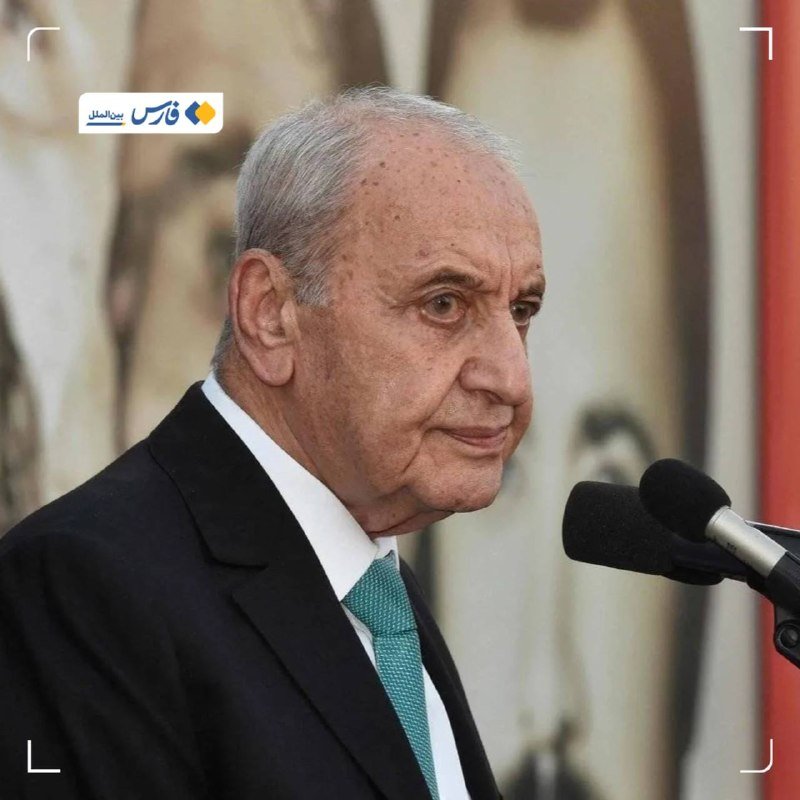
On 15 June 2026, at 12:34 UTC, a channel operating under the Abu Ali Express account on Telegram reported that the Israel Defense Forces had recently carried out what it described as an improvised explosive device inside the village of Aita al-Jabal in southern Lebanon. A follow-up post from the same feed thirty-seven minutes later, at 13:11 UTC, softened the language, saying the IDF had carried out a controlled explosion in the same village. The shift in vocabulary — from "improvised explosive device" to "controlled explosion" — was made on the same day, on the same platform, by accounts sourcing the same Lebanese channels, and it captures the central difficulty of reporting this stretch of the Israel–Lebanon border: the same physical event is being narrated in two grammars that imply opposite moral conclusions.
A separate post at 12:39 UTC from the Middle East Spectator account widened the frame, calling on Lebanese authorities to "review all the calculations and paths taken … to benefit from this experience and the experiences that preceded it in our homeland Lebanon, to move away from illusions." The post does not name a specific operation, party or official. Read together, the three items sketch a small kinetic event inside a much larger interpretive contest — a contest in which Israeli border operations, Hezbollah's post-war posture, and Lebanese state capacity are all being argued over in real time.
What the wire actually says
Stripped to its minimum, the factual claim in the Telegram thread is narrow: an Israeli military unit used explosive ordnance inside the built-up area of Aita al-Jabal on or shortly before 15 June 2026. The same wording — "controlled explosion," "improvised explosive device," "village of Aita al-Jabal," "southern Lebanon" — recurs in the cited Lebanese channels, which are not named individually in the thread. No Israeli spokesperson statement, no casualty figure, no property damage estimate, and no identification of the specific target is included in the three source items.
That thinness is itself the story. The Arabic-language ecosystem covering the Israel–Lebanon frontier is dense, fast and politically inflected, but it is not a wire service. A report of an "improvised explosive device" from a southern Lebanese village could refer to (a) an Israeli engineering demolition of a building the IDF had previously identified as a Hezbollah staging site; (b) a booby-trap detonation triggered during an Israeli foot patrol; (c) a Lebanese or non-state actor device that Israeli sappers deliberately set off in place; or (d) post-strike clearance of unexploded ordnance, a routine activity in villages that have been on the front line since late 2023. The three source items do not let a reader distinguish between these. The retitling of the event from "IED" to "controlled explosion" within forty minutes is consistent with a Lebanese channel receiving clarifying language from an IDF liaison channel, or with a Hezbollah-affiliated outlet recharacterising a detonation that had been pre-coordinated and was therefore not, in the strict sense, "improvised." It is also consistent with neither.
The Hezbollah question, without the word itself
The follow-up commentary from Middle East Spectator is the more revealing of the three items, because it is the one that is openly not about a single village. The reference to "all the calculations and paths taken by the authorities" and to "moving away from illusions" in Lebanon is the kind of post-war stock-taking language that has become routine in Lebanese Shia and cross-confessional discourse since the November 2024 ceasefire. The post does not mention Hezbollah by name. It does not need to. The "authorities" of the phrase are plural and unspecified; the "illusions" being warned against are left to the reader to fill in — disarmament timelines, the credibility of the UNIFIL-mediated arrangement, the assumption that border villages would return to a pre-2024 equilibrium.
The structural point is that southern Lebanon is no longer narrating itself as a front line of an active war. It is narrating itself as a place where a war has formally paused but the security logic of the war has not. A controlled detonation in a single village is the kind of operation that fits a ceasefire regime — engineers clearing a site, ordnance disposal teams sanitising a route, troops marking a buffer — but it is also the kind of operation that, when described in the language of improvised explosive devices, fits an invasion. The choice of grammar is itself a position.
A border that runs on vocabulary
This is the pattern that has defined the Israel–Lebanon frontier since the cessation of major hostilities in late 2024. Israeli forces conduct almost daily engineering, demolition and clearance work inside Lebanese territory near the border, justified under the ceasefire's terms as the removal of Hezbollah infrastructure and the enforcement of a buffer north of the Blue Line. Lebanese state authorities, including the Lebanese Armed Forces, frame much of the same activity as violations of sovereignty, but they rarely respond with force. UNIFIL records the incidents in near-real time. Hezbollah, weakened operationally but not dissolved, frames them as evidence that the ceasefire is being administered rather than observed.
What changes from incident to incident is not the underlying activity — Israel has been demolishing or clearing structures in southern Lebanese villages for the better part of two years — but the way each incident is received. A controlled demolition in a village that has been cleared of residents is reported one way; a detonation in a still-inhabited street is reported another. A blast in daylight, announced in advance through liaison channels, is reported one way; a blast at night, after a patrol, is reported another. The Telegram accounts covering this stretch of the border have learned, in real time, which verbs to attach to which blasts. "Controlled explosion" and "improvised explosive device" are not synonyms, and the choice between them is a political act performed in the moment of typing.
Stakes, and what is not in the thread
The honest reading of these three posts is that they are signals, not events. The signal they send is that the post-ceasefire architecture along the Blue Line is holding in the sense that matters most — no Israeli casualties are reported, no Lebanese civilian casualties are reported, no exchange of fire is reported, and the language used by all sides is the language of administrative friction rather than battlefield escalation. The signal they also send is that "holding" in this context is a low bar, and that the gap between a controlled demolition announced through proper channels and an improvised device triggered during a foot patrol is small enough that the same village can host either narrative on the same day.
The three source items do not let this publication say who carried out the detonation in Aita al-Jabal, what it was targeting, whether the village was evacuated at the time, or whether any Lebanese state authority was notified. They do not let this publication say whether the post-war "review of calculations" urged by Middle East Spectator is a call for a new national security doctrine or a comment on a single demolition. They do not let this publication say what Aita al-Jabal looks like at ground level on the afternoon of 15 June 2026, or whether the residents of the village have been displaced, returned, or never left. The sources do not specify. The honest version of this story is therefore shorter than the Telegram thread, and it sits inside a much longer one that the thread is only gesturing at.
This publication tracked the three Telegram items as they crossed the wire at 12:34, 12:39 and 13:11 UTC on 15 June 2026. The reporting question is not whether the blast happened — Lebanese channels reported it and the IDF's general pattern of engineering activity in southern Lebanon is well documented — but whether a single controlled detonation in a single village is being used, in real time, as proof for two incompatible stories about the same border.
Wire provenance
This editorial synthesis draws on the following public wire/social posts:
- https://t.me/abualiexpress
- https://t.me/englishabuali
- https://t.me/Middle_East_Spectator