The 2026 World Cup's Real Story Isn't the Trophy — It's Who Controls the Broadcast
A national-team coach is briefly the internet's most-watched figure, exposing how social platforms — not federations or rights-holders — now set the terms of football fame.
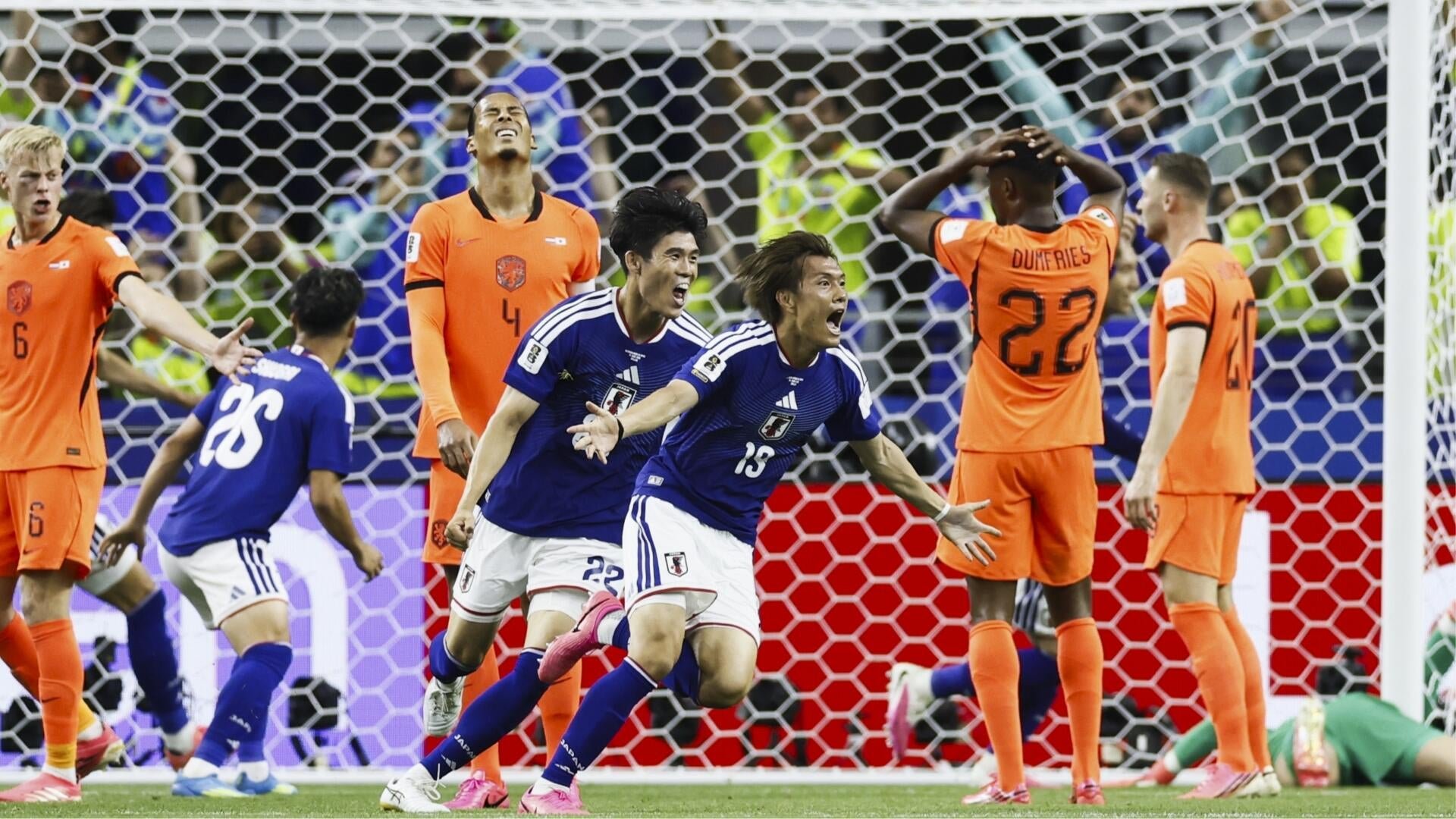
On 15 June 2026, the global football story was not a result. It was a coach's face. The Indian Express reported that Japan's head coach had become the latest addition to a growing list of World Cup figures turned social-media sensations, a category that has, over the past decade, done more to reshape how the sport is watched than any change to the rules on the pitch.
The phenomenon is a useful lens on where the centre of gravity in global sport has actually moved. The Football World Cup still produces a trophy, but the broadcast rights, the highlight economy, and the influencer economy now decide who gets famous, who gets paid, and whose accent gets copied. Coverage routinely defers to the language of official spokespeople; the platforms decide who breaks through, and the federations have lost the gatekeeping they once had over national-team imagery.
From the dressing room to the algorithm
For most of the last century, a national-team coach was a press-conference figure. A few — Italy's Vittorio Pozzo, Brazil's Mário Zagallo — became household names. Most did not. The job was technical, and the visibility ceiling was set by the broadcasters who paid the federations for the rights.
That ceiling collapsed. Phones, then apps, then short-video platforms turned every press conference into raw material. The Indian Express's note on the Japan coach is part of a pattern: managers whose face, manner, and press-conference style translate into loopable clips accrue audiences that no rights-holder can monetise directly, but that nevertheless set the terms of the next broadcast negotiation.
The structural shift is straightforward, even if the platforms themselves rarely put it this way. The user is the broadcaster now. A 19-second clip of a coach's reaction reaches more people than the full rights-holder replay did a decade ago. The federation still owns the trademark; the federation still sells the rights; the federation no longer controls the moment.
The counter-narrative the federations prefer
The official line, repeated by FIFA and by most confederations, is that broadcast rights remain the foundation of the sport's economy. That is true in the narrow sense: the 2026 cycle produced record rights deals across the major markets, and those contracts are still the single largest revenue line for most national associations.
It is misleading in the larger sense. Rights are sold on the assumption that audiences will turn up; the audiences now turn up at the clips first, and at the rights-holder stream second. The platforms extract the discovery layer. The federations extract the rights fee. The coaches — and the players — extract the fame. None of those three parties is in a position to renegotiate the others' cut without the others' consent, which is why the current arrangement, lopsided as it is, has held.
A second counter-claim is that this is simply the natural extension of a trend that began with televised highlights in the 1960s. There is something to that. But there is a meaningful difference between a federation-controlled highlights package and a platform-controlled one. The former carried a federation logo, a federation editorial line, and a federation-defined set of permissible uses. The latter carries none of those. The same clip can be cut four ways by four different accounts in four different languages within minutes.
What the bigger pattern looks like
This is a small instance of a much larger rearrangement. Across sport, entertainment, and news, the platform companies have quietly converted user behaviour into a discovery infrastructure that the traditional rights-holders did not build and cannot replicate. The federations own the content; the platforms own the audience's attention; the federations have to rent that attention back through deals that grow more expensive with every cycle.
The effect is not symmetrical. A major federation like the DFB, the FA, or the JFA can still extract concessions at the bargaining table. Smaller federations cannot. The 2026 cycle, with its expanded format, was supposed to widen the pool of beneficiaries; in practice, it has widened the pool of moments the platforms can monetise, which is not the same thing.
There is also a Global South dimension that the dominant Western coverage tends to underweight. The federations in Africa, South Asia, and Southeast Asia are increasingly dependent on the platforms for the visibility they cannot buy through their own broadcast rights. The clip economy is, for them, the closest thing to a level playing field the modern game has produced. The Western-centric framing — which treats platform virality as a distraction from the real business of sport — misses this. For most of the world, the platform is the sport's primary window.
What is actually at stake
The stakes for the 2026 cycle are concrete. If the current pattern holds, the next round of broadcast negotiations will be conducted against a backdrop in which the federations' most valuable content is already being distributed, for free, by parties they do not control. The rights fees will still be paid; the federations will still pocket them; the gap between what the federations can claim ownership of and what they can actually control will widen.
The coaches will keep becoming sensations. The clips will keep doing the work. And the slow transfer of leverage from the federations to the platforms, accelerated by a cycle that produced more matches in more time zones than any before, will continue to be described, in official communiqués, as a triumph of the sport's growing reach. That is one way to describe it. It is not the only one.
How Monexus framed this: the wire led with the coach; this piece treats the coach as the visible symptom of a quieter rearrangement of who actually runs the sport's attention economy.