Gold, ceasefires, and the architecture of a multipolar clearing: two June 15 signals worth reading together
On the same morning Tehran signalled a draft ceasefire-and-sanctions package, Singapore announced it would build sovereign gold clearing and storage. Read together, the two items sketch the early shape of a post-dollar clearing geometry.
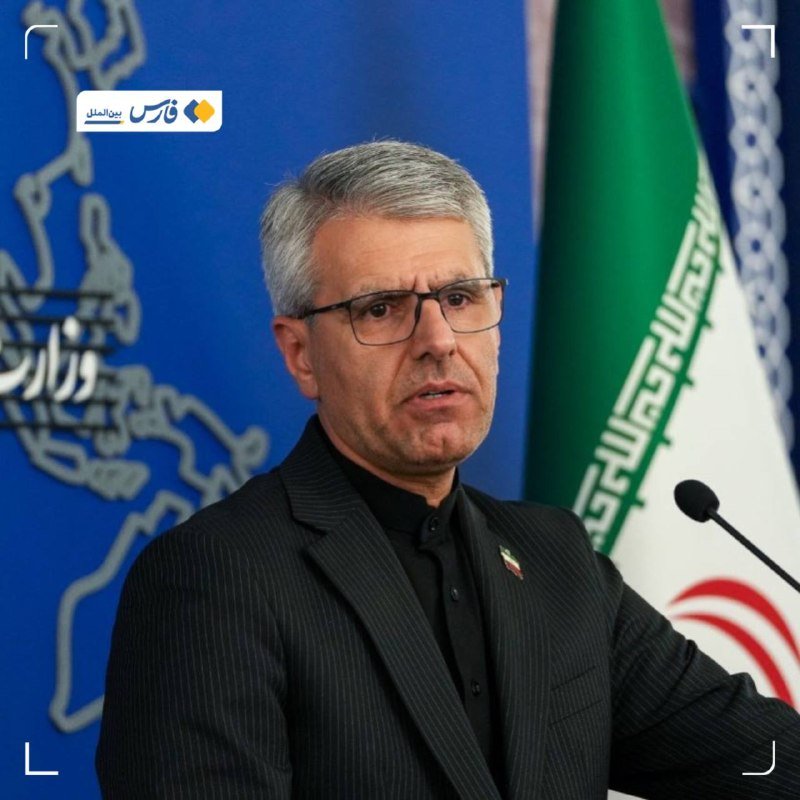
Two announcements landed within a few hours of each other on the morning of 15 June 2026. The first, carried by Iranian state-linked outlets and summarised by The Palestine Chronicle at 10:53 UTC, described the publication of a draft agreement that bundles a ceasefire, sanctions relief, and a return to nuclear talks into a single text. The second, reported by Nikkei Asia at 07:31 UTC the same day, set out Singapore's decision to build out gold clearing and storage systems aimed at turning the city-state into a leading trading hub for the metal. The items look unrelated. They are not. Read together, they sketch the early geometry of a financial order in which oil-and-sanctions diplomacy, and the physical infrastructure for settling trade in non-currency reserves, are being wired up on parallel tracks.
The pattern is this: every time a major sanctions episode opens — a war, a seizure, a freeze — capital that once settled in dollars looks for a parallel track. Gold is the most obvious one. A sovereign-grade clearing venue outside London, New York, and the Swiss refiners is the precondition for that track to scale. Tehran's draft, whether or not it survives the next negotiating round, is the kind of event that makes a Singapore announcement look less like a boutique finance-industry press release and more like a piece of plumbing.
What the Iranian draft actually says
The Palestine Chronicle's reporting, drawn from Iranian state media, describes a draft whose three pillars are presented as inseparable: a ceasefire arrangement, sanctions relief, and a re-opening of nuclear negotiations. The reporting characterises the package as a draft, not a final text — an important distinction. Iranian outlets have, in the past, published terms attributed to intermediaries in order to harden negotiating positions; the framing here should be read as one side's read of where the other side might move, not as a settled bilateral document. What matters for present purposes is that the package is being put into circulation at all, and that the public description of its architecture — ceasefire-plus-relief-plus-talks, with the nuclear file bound to the sanctions file — matches the sequencing that Western and Gulf mediators have floated in outline over recent months.
The structural read is straightforward. The sanctions regime against Iran has, over more than a decade, driven the country into a set of workarounds: oil sales denominated in yuan and dirham, bilateral barter arrangements, growing reserves of physical gold, and a payments architecture that runs through non-OECD banks. Any package that meaningfully relieves sanctions unwinds some of that machinery; any package that fails to deliver relief extends the life of the workaround. The political economy of the draft is therefore not only about centrifuges and inspections. It is about which financial rails get reinforced.
What Singapore is actually building
Nikkei Asia's reporting on the Singapore announcement is shorter on geopolitics and longer on plumbing. The city-state, already the dominant Asian price-discovery venue for precious metals, is moving to add clearing and storage — the back-office functions that turn a trading hub into a settlement hub. A trading hub can quote a price. A settlement hub can take title, move bars, and net positions in a way that satisfies a central bank's risk department. The shift from the former to the latter is a step-change in a jurisdiction's standing.
For global gold flows, the practical question is which currencies, and which counterparties, the new infrastructure is designed to clear. The Nikkei report does not specify a non-dollar design — Singapore's existing precious-metals ecosystem is dollar-anchored — but the political economy of the move is hard to read in isolation. The city-state has spent the last several years positioning itself as a neutral venue for state actors seeking to diversify reserve composition, including through direct talks with Gulf and Chinese counterparts. Adding sovereign-grade clearing is a precondition for a larger reserve-diversification story to land.
The structural frame, in plain editorial prose
The two announcements, taken together, sit inside a longer pattern. The incumbent monetary system runs on a single dominant settlement currency, with gold and other reserves held mostly in vaults controlled by a small number of Western jurisdictions. That arrangement has functioned for decades, and it has real efficiencies. It also has a political corollary: countries that fall out of political favour with the system's principal operators can find their access to it throttled. The response, from the throttled and from those who want optionality, has been steady investment in parallel rails.
Gold is the cleanest of those rails. It is not a currency, but it is the asset that all currencies are measured against in moments of stress. A jurisdiction that can clear and store it at scale — and that is not subject to the political direction of any single bloc — is a useful venue for central banks that want to hold reserves in something other than the bonds of any one government. Singapore is not the only jurisdiction making this bet. Hong Kong, Dubai, and Shanghai-adjacent free-trade zones are all moving on overlapping tracks. The signal in the Nikkei report is not that Singapore has done something unique; it is that the offering is now broad enough to look like a market.
In that light, the Iranian draft and the Singapore announcement are two facets of the same question. The sanctions architecture of the last fifteen years has, in places, accelerated the construction of the very rails that make future sanctions less effective. A ceasefire-and-relief package that genuinely reopens dollar-based trade for Iran reduces the political demand for those rails. A package that fails — or that delivers only a partial relief, in which carve-outs preserve the workaround economy — does the opposite. The draft's fate, in other words, is not only a Middle East story. It is a story about the speed at which the post-dollar clearing geometry is built out.
Stakes, and what remains uncertain
If the trajectory continues, the practical consequence is a multi-tiered monetary system: dollar-cleared trade for the integrated economies, parallel rails for those who choose or are pushed to use them, and gold — increasingly held in non-Western vaults — as the long-duration store of value that bridges the two tiers. The political consequence is that the leverage that comes from controlling the dominant settlement layer is diluted, and that the cost of imposing financial restrictions rises, because the marginal actor has a viable alternative. The losers, in that scenario, are the operators of the existing system; the winners are states and private actors with diversified access. The Iranian regime is an early test case in both directions: the regime that built the workaround, and the regime whose sanctions drove the workaround's construction.
A great deal remains uncertain. The draft circulating in Iranian media is, on the available evidence, a draft — its final form, its acceptance by the other parties, and the sequencing of any relief are not visible in the public reporting reviewed here. The Singapore announcement, similarly, is an intent statement; the regulatory and tax architecture that will determine who can clear, and in what currency, has not been disclosed in the Nikkei report. The two stories are most usefully read as parallel signals from a system under stress, not as a single coordinated move. Monexus will return to each as more text becomes public.
This publication frames the two 15 June 2026 announcements as parallel signals from a financial order in transition. The wire reporting is correct in its specifics; the structural read is an editorial synthesis of those specifics and is not attributable to any single source.
Wire provenance
This editorial synthesis draws on the following public wire/social posts:
- https://t.me/PalestineChronicle
- https://t.me/NikkeiAsia
- https://t.me/nikkeiasia