Hegseth's Hormuz boast and the new grammar of US-Iran coercion
A sitting US war secretary has publicly claimed Washington 'controlled' the Strait of Hormuz throughout the latest crisis, and framed the new Iran deal as one distinguished from the JCPOA by the fact that the alternative was bombing. The admission recasts the entire architecture of American pressure.
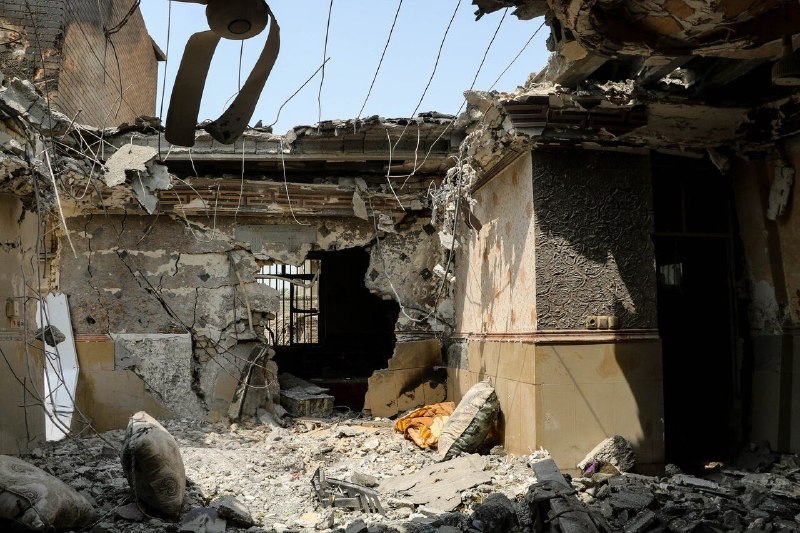
In the early hours of 15 June 2026, two short video clips circulated from a US television interview that, taken together, did more than any policy paper to clarify what the Trump administration's understanding with Iran actually is. In the first, Secretary of War Pete Hegseth told his interviewer that the United States had "controlled the Strait of Hormuz this entire time," and was asked to confirm that Washington had "negotiated with them to reopen it." In the second, pressed on the gap between the new deal and the 2015 Joint Comprehensive Plan of Action, Hegseth offered the simplest possible distinction: "The main difference between Trump's deal and Obama's deal is that we bombed Iran." A third exchange, in which Hegseth argued that the document "says Iran will never have a nuclear weapon" while conceding that "the JCPOA said that too," drove the point home. The added ingredient, he said, was the "threat of military force."
Read together, those remarks are not a slip. They are an unusually candid articulation of the operating theory behind the new US-Iran arrangement, and they deserve to be taken seriously on their own terms, even by those who find the theory alarming. The Strait of Hormuz — through which roughly a fifth of seaborne oil and a meaningful share of liquefied natural gas transit — was, in this telling, an instrument of US leverage rather than a marketplace governed by international law. The deal is, in this telling, the difference between a non-proliferation promise with no teeth and a non-proliferation promise backed by the explicit willingness to use force. The administration is, in effect, conceding what critics of the 2015 framework have long argued: that diplomacy without a credible military shadow is a paper barrier.
A toll-free corridor that isn't
The economic scaffolding of the agreement, as the administration has chosen to describe it, was laid out by the president himself. On 14 June 2026, Donald Trump said the deal would keep the Strait of Hormuz "permanently toll-free," according to a summary distributed by Clash Report citing the New York Times. Earlier the same day, the president had also told reporters that the strait "will be open to all immediately after deal is signed," per a public post captured by the X account @unusual_whales. The framing matters because the strait has, at various points over the past three years, been the site of Iranian seizures of commercial tankers, partial closures, and the kind of harassment campaign that drives insurance premiums into double digits and reroutes oil around the Cape of Good Hope at a cost of roughly a million dollars a day per very large crude carrier.
A "permanently toll-free" strait is a striking claim, not least because the United States does not, in any legal sense, own the waterway. The 1982 UN Convention on the Law of the Seas guarantees transit passage through straits used for international navigation, and Iran sits on the northern shore. The Trump formula — control by force, passage guaranteed as a US-granted benefit — is a direct repudiation of that architecture. The White House is not arguing that international law secures free passage; it is arguing that American power does, and that this is preferable. Critics, including the Iranian government and several European foreign ministries, will read the formula as confirmation that Washington intends to treat the most important energy chokepoint on earth as a US-patrolled corridor, with Iran's consent purchased rather than its sovereignty respected. Iranian state media, when it carries the Hegseth clips, will not have to editorialize to make that point.
The JCPOA that wasn't, and the deal that is
It is worth dwelling on Hegseth's JCPOA comparison, because it puts the administration in an unusual position: admitting that the 2015 deal was substantively similar in its non-proliferation core, while arguing that the surrounding conditions are entirely different. "The document says Iran will never have a nuclear weapon," Hegseth said, adding, when his interviewer noted that the JCPOA said the same thing, "But they didn't have the threat of military force." That is a coherent — if candid — position. It is also one that unsettles the standard arms-control logic. Treaties are typically valued precisely because they replace threats with rules, and rules with verification regimes. Hegseth's argument inverts that hierarchy: the binding part is the threat, the document is the receipt.
This is, broadly, the position that JCPOA hawks in the United States and Israel have taken since 2018, when the first Trump administration withdrew from the accord. The argument used to be that the JCPOA was insufficient because its sunset clauses and verification gaps allowed Iran to reach the threshold of a nuclear weapon after a decade or so. That is a technical argument, and it is the one the agreement's defenders could meet. Hegseth is making a different argument: the JCPOA failed because it relied on a promise rather than a punishment. If the new deal works, in this telling, it will not be because its terms are more inventive but because the cost of cheating has been priced into the arrangement through a demonstrated willingness to use force. The June 2025 US strikes on Iranian nuclear and military infrastructure, which the administration has described in similar terms, are not background to the deal; they are a clause.
The structural problem with that approach is that it does not survive a change of administration. The JCPOA was negotiated as a treaty-equivalent precisely because its proponents understood that US-Iranian relations would outlast any single presidency. A deal whose binding agent is the personal willingness of one administration to bomb is, by construction, a deal that expires when that administration does. That is not a left or right critique; it is the standard reason arms-control professionals prefer verification regimes to coercion regimes. Hegseth would presumably respond that the United States' capacity and willingness to use force is itself the more durable asset. The next administration will test that proposition.
What "control" actually means at sea
The word "control" does a great deal of work in the Hegseth remarks, and is worth unpacking. The US Fifth Fleet, headquartered in Bahrain, has for decades maintained a robust presence in the Persian Gulf and the Gulf of Oman, and US Central Command has run a multinational maritime security initiative in the region since the 1980s. Iran, for its part, fields a large IRGC Navy, a missile and drone arsenal arrayed along its coast, and a network of fast-attack craft that have repeatedly harassed commercial shipping. Neither side has the kind of total control the Hegseth remark might imply; what has existed is a tense, mutually observed deterrence.
That the US has been able, at moments of acute tension, to assemble coalitions and escort tankers through the strait is true. That it could, in extremis, mine the strait, sink Iranian patrol craft, and impose a naval blockade is also true, though at a cost in lives and regional stability that no administration has been willing to pay. Hegseth's "we have controlled the strait this entire time" is best read as shorthand for: we have had the capacity to prevent Iran from closing it, and Iran has known that, and the knowledge has shaped Tehran's choices. That is a meaningful statement about the balance of forces. It is not a statement about ownership. The conflation of those two ideas is the most consequential line in the interview.
The stakes, for the region and for the rules
If the new arrangement holds, three things follow. First, the United States will have demonstrated that a coercive approach to non-proliferation — strike, threaten, then sign — can produce a document that looks superficially similar to the JCPOA while resting on a fundamentally different foundation. The template will be available to successors. Second, Iran will have accepted, in public, the language of US control over a waterway on its own coastline. This is the kind of formulation that Iranian conservatives will use to argue that the Islamic Republic has been humiliated, and the kind that reformists will use to argue that dignity was the price of sanctions relief. The internal Iranian debate over whether the deal is worth it will be shaped for years by the Hegseth clips, which Tehran's state broadcasters will not have to edit to embarrass. Third, the European and Asian buyers of Gulf hydrocarbons — and the governments of the small Gulf monarchies that depend on US security guarantees — will have to decide whether a US-policed, US-claimed strait is a better arrangement than the Law of the Seas regime they have operated under for four decades. The signs so far suggest quiet acquiescence in private and polite hedging in public.
The Global South reading of the same events is more pointed. For governments in Africa, South Asia, and Latin America that have spent the past decade arguing for a multipolar international order in which chokepoints are governed by international institutions rather than great powers, the Hegseth remarks are a vindication in the worst possible sense. They confirm that the energy security of the world outside the OECD still depends on the disposition of the US Navy, and that the United States is no longer bothering to dress that dependence in the language of international law. A "permanently toll-free" strait, policed by Washington and conceded by Tehran, is the most explicit statement of that arrangement in years. It is also a statement that the post-1945 settlement, in the Middle East at least, is over in all but name.
What remains uncertain
The sources available at the time of writing do not yet include the full text of the agreement Hegseth was describing, and they do not specify the verification regime that will replace or supplement IAEA monitoring. They do not confirm whether the deal includes the kind of constraints on Iran's missile program that hawks in Washington have long demanded, or whether, like the JCPOA, it is narrowly scoped to fissile material. The clip in which Hegseth says the strait was "negotiated" open is suggestive but thin: the terms of that negotiation, and the Iranian side's account of them, are not in the record available here. Iranian state media's framing of the deal — and Tehran's choice of language to describe what it has conceded — will be the first real test of whether the agreement is sustainable in the politics of the Islamic Republic. The next test is whether the next US administration, eighteen months or six years from now, treats the document as a binding instrument or as an artefact of a particular presidency's preferred operating theory.
This article is part of Monexus's long-reads desk. The framing departs from the wire by treating Hegseth's televised remarks as the operative text of the new arrangement rather than as off-the-cuff commentary, and by giving equal weight to the Iranian and Global-South readings of what US "control" of Hormuz implies.
Wire provenance
This editorial synthesis draws on the following public wire/social posts:
- https://t.me/Middle_East_Spectator
- https://t.me/Middle_East_Spectator
- https://t.me/Middle_East_Spectator
- https://t.me/ClashReport
- https://en.wikipedia.org/wiki/Strait_of_Hormuz
- https://en.wikipedia.org/wiki/Joint_Comprehensive_Plan_of_Action
- https://en.wikipedia.org/wiki/United_Nations_Convention_on_the_Law_of_the_Sea
Follow the event.
These dated source records provide context. They do not retrospectively verify this archive article.
Separate what the nuclear watchdog reported from what it could not determine after the June 2025 strikes.
- https://t.me/Middle_East_Spectator
- https://t.me/Middle_East_Spectator
- https://t.me/Middle_East_Spectator
- https://t.me/ClashReport
- https://en.wikipedia.org/wiki/Strait_of_Hormuz
- https://en.wikipedia.org/wiki/Joint_Comprehensive_Plan_of_Action
- https://en.wikipedia.org/wiki/United_Nations_Convention_on_the_Law_of_the_Sea