Hezbollah and Israel trade fire in southern Lebanon as ceasefire framework wobbles
Rocket barrages and ground advances in southern Lebanon on 15 June 2026 underscore how thin the post-war ceasefire remains, and how much depends on US-Iran diplomacy that has not yet produced a written accord.
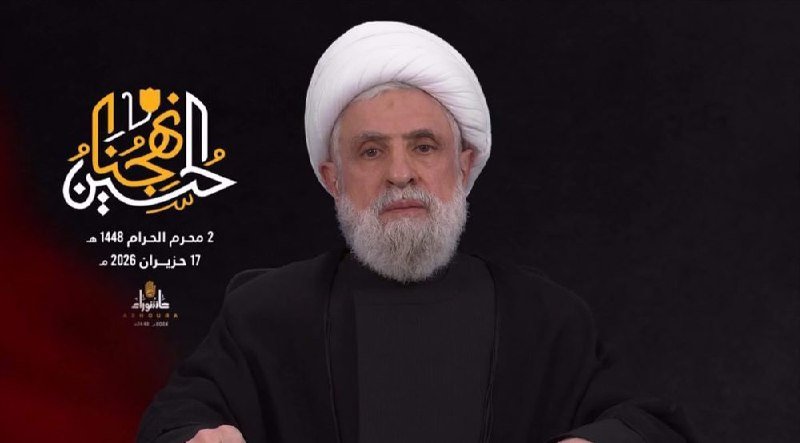
At 17:13 UTC on 15 June 2026, Iranian state broadcaster Press TV carried a Hezbollah claim of a fresh rocket barrage against Israeli troops attempting to advance inside southern Lebanon. The same line of reporting appeared within the hour on Tasnim News, the Iranian state outlet that most closely tracks the Islamic Revolutionary Guard Corps' own communications, and was echoed by The Palestine Chronicle, a Beirut-based outlet that has long carried Hezbollah and Iranian-faction framing. None of the three Telegram channels named a specific town, a casualty figure, or an Israeli unit, and the report ran without an Israeli military confirmation in the source material available to this publication. That asymmetry — Iranian-aligned outlets leading, Israel silent or outpaced — is itself part of the story now playing out along the Litani.
The rocket fire is the operational half of a political signal. At 17:03 UTC, Tasnim and The Palestine Chronicle both carried an Iranian foreign ministry formulation: any lasting agreement with Washington must guarantee Lebanon's sovereignty, with Hezbollah publicly characterising the ceasefire framework currently on the table as "the beginning of a broader process aimed at ending occupation." Read together, the two messages describe a position rather than an event. The Lebanese front is being held open as leverage in a US-Iran negotiation that has produced a framework but not, as of the source material, a signed accord.
The immediate picture on the ground
What the source items actually show is a single day of tit-for-tat: a Hezbollah rocket barrage at troops the group says are advancing in southern Lebanon, and an Israeli ground push that the Lebanese and Iranian-aligned channels describe as a renewed attempt to penetrate new areas. Press TV used its alert template ("🔴 Hezbollah fires another rocket barrage…") twice in ten minutes, suggesting an ongoing exchange rather than a single salvos. Tasnim's language — "reports of confrontation… according to news sources, following the renewed attempt of the Zionist army to penetrate" — is closer to paraphrase than first-hand reporting, and Palestinian Chronicle's coverage leans heavily on the Iranian foreign ministry framing.
None of the three sources offers a corroborated location. The Litani River, roughly 30 km north of the Israeli border, is the line most often cited in ceasefire reporting; the so-called "Blue Line" demarcation has been the boundary of the post-2006 understanding. The source material does not specify which side of that line the contacts are occurring on, and Israeli military briefings are absent from the inputs. The honest reading is that the day's exchanges are real, in the sense that Hezbollah and the IDF have been operating against each other in this geography for months, but the specifics of 15 June are not verifiable from the wires available to this publication.
The political frame: a ceasefire in name only
The language in the source items is striking for what it concedes. Hezbollah is not, on this evidence, claiming a strategic attack. It is describing a defensive barrage at "Israeli troops advancing" — the framing of a militia holding ground against an incursion, not opening a new front. The Iranian foreign ministry is not threatening escalation. It is conditioning a US-Iran agreement on Lebanese sovereignty, which is the diplomatic term for "do not let Israel use this moment to redraw the border."
That is the position the post-war architecture has been drifting toward since the November 2024 ceasefire arrangement. The agreement halted open warfare between Israel and Hezbollah and required the Lebanese Armed Forces, with UNIFIL monitoring, to fill the vacuum south of the Litani. In practice, Israel has continued to strike what it says are Hezbollah resupply and reconstitution sites in the Bekaa and the southern suburbs of Beirut, and Hezbollah has continued to fire at Israeli soldiers it says are operating inside Lebanese territory. Each side frames the other as the violator. The Iranian messaging on 15 June slots into that pattern: a routine skirmish, narrated as a sovereignty dispute, to keep the diplomatic file live in Washington.
What the Western and Israeli wires are likely to say
A reader reaching for a fuller picture will find, in the days ahead, Israeli military briefings characterising the day's contacts as strikes against Hezbollah infrastructure or attempts to dismantle re-established launch positions. Haaretz and Ynet are likely to run operational detail and named sites; Reuters and AP will tend toward confirmed-casualty counting and Israeli military spokesperson quotes. The structural critique in those rooms will be that Iran uses Lebanese territory as a forward buffer, that Hezbollah's continued armed presence south of the Litani is itself the violation, and that the United States has been slow to compel disarmament.
The structural critique in the Iranian-aligned channels is the mirror image: that Israel is using the ceasefire as cover for incremental annexation, that "sovereignty" for Lebanon means a written prohibition on ground operations, and that the United States has been willing to underwrite Israeli advances in exchange for a non-proliferation signature in Tehran. Both critiques contain a real empirical claim. The empirical question is whether the rate of contact has risen, fallen, or held steady, and on that point the source material here is too thin to adjudicate.
Stakes over the next weeks
The shape of the next month turns on three decisions, none of which has been made in public as of 15 June 2026. The first is whether the US-Iran track produces a written text. An agreement that explicitly guarantees no Israeli ground operation inside Lebanon is the Iranian condition; whether Israel would accept that text is the unresolved question. The second is whether the Lebanese Armed Forces can deploy in sufficient density south of the Litani to make the Iranian condition redundant. The third is whether Israel decides that incremental operations are an acceptable price for keeping Hezbollah's longer-term reconstitution capped.
If the track collapses, the contact on 15 June becomes a template: Hezbollah barrages narrated as defensive, Israeli advances narrated as counter-terror, both sides technically inside the ceasefire's letter, neither inside its spirit. If the track holds, this is the kind of friction that gets quietly absorbed into the next round of diplomatic language. The wire traffic on 15 June reads more like the first scenario being priced in than the second being ruled out.
What this publication could and could not verify
What is in the source items: a Hezbollah claim, carried by Press TV, Tasnim and The Palestine Chronicle, of a rocket barrage at Israeli troops in southern Lebanon; a parallel Iranian foreign ministry statement conditioning any US agreement on Lebanese sovereignty; and a Hezbollah characterisation of the ceasefire as the start of a broader process. What is not in the source items: an Israeli military confirmation, a specific location, a casualty figure from either side, the text or status of any US-Iran draft, and any UNIFIL or Lebanese Armed Forces statement. A full read of the day would require Israeli, UN and Lebanese wire confirmation — none of which was available in the inputs to this article.
Desk note: Monexus is reporting this event from Iranian-aligned and Beirut-based Telegram channels because those are the wires that moved first on 15 June. Israeli and Western-wire confirmation is pending; the article will be updated when it lands. The pattern — Tehran using the Lebanese front to set the terms of the US-Iran track — is consistent with how this file has moved since the 2024 ceasefire, and the journalism here is less about 15 June as a single day than about the asymmetry of who gets to define it.
Wire provenance
This editorial synthesis draws on the following public wire/social posts:
- https://t.me/presstv/
- https://t.me/PalestineChronicle/
- https://t.me/JahanTasnim/
- https://t.me/presstv/
Follow the event.
These dated source records provide context. They do not retrospectively verify this archive article.
Separate what the nuclear watchdog reported from what it could not determine after the June 2025 strikes.