Hormuz in the headlines, oil markets in the dark: parsing the Trump-Iran ceasefire of 14 June 2026
A presidential announcement of a US-Iran ceasefire and a "toll-free" Strait of Hormuz landed within hours on 14 June 2026. The hard details — terms, timing, verification — are still thinner than the headlines.
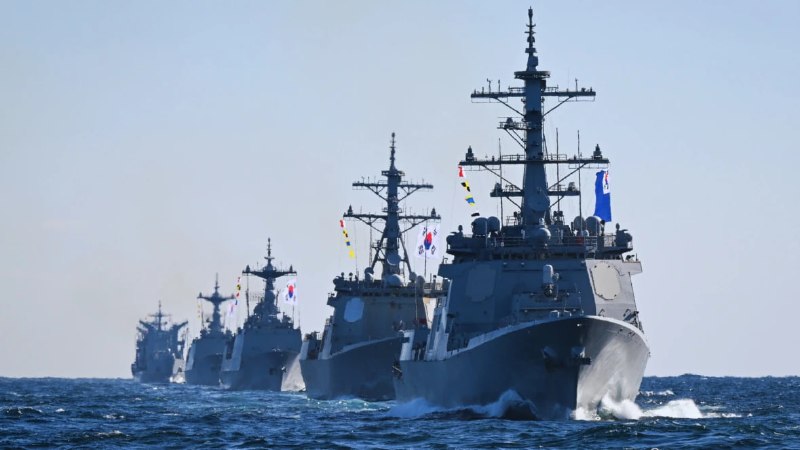
At 22:43 UTC on 14 June 2026, Al Jazeera's breaking-news desk carried a single line that, if it holds, resets the most volatile shipping corridor in global energy: a United States–Iran ceasefire had been agreed, and the Strait of Hormuz would reopen. Within an hour, Donald Trump had confirmed the arrangement to the New York Times, telling the paper that a deal was reached "despite" Israeli objections and that US strikes would resume if a nuclear accord failed to follow. By 23:25 UTC the same evening, an aggregator wire had captured the most consequential clause: the Strait of Hormuz would be made "permanently toll-free." For roughly twenty-four hours the architecture of Middle East energy diplomacy has, on paper, been rewritten — by presidential interview, social-media post and an unsourced wire flash, in that order. The full text of what was agreed, who signed, and what verification regime applies has not been published in the window between announcement and this article going to press.
What is known is the shape, not the substance. The deal exists; the Strait of Hormuz will open; the US naval blockade, imposed before the ceasefire announcement, has been lifted by presidential order; a backstop threat of resumed strikes is built into the US position. What is not known — and what every energy desk, tanker owner and insurance underwriter in the world is now trying to work out — is the legal status of the corridor under Iranian sovereignty, the duration of the arrangement, the enforcement mechanism for "permanently toll-free," and whether the nuclear file, which the New York Times reporting flags as the unresolved back end of the deal, will travel with the same timeline as the maritime file. Until those answers harden, the markets are pricing a statement of intent, not a treaty.
A corridor without a draft
The Strait of Hormuz is the chokepoint through which roughly a fifth of seaborne crude and a comparable share of liquefied natural gas moves each day. It is also a corridor Iran has, in different postures, claimed the right to police by its Revolutionary Guard Navy, by passive mining, by fast-boat interdiction and, in extremis, by surface-to-surface missile batteries along its northern shore. The "toll-free" language in the 14 June reporting matters precisely because the status quo ante has never been a free transit regime: Iran has long argued that the strait is not an international waterway in the legal sense implied by the 1982 UN Convention on the Law of the Sea, and Western powers have argued the opposite. A US-brokered announcement that the corridor is "permanently toll-free" therefore reads, on its face, as an American concession to the Iranian legal position, dressed as a commercial gift to the world.
The second-order problem is the absence of a visible text. Ceasefires in the Middle East are, historically, scaffoldings on which later documents are hung; the scaffolding is what keeps the parties from shooting while the lawyers write. What is unusual about the 14 June sequence is the speed and asymmetry of disclosure. The US side has spoken first and most loudly — the Al Jazeera flash, the Polymarket-amplified social post confirming that "Trump officially lifts the U.S. naval blockade & authorizes the toll-free reopening of the Strait of Hormuz," and Trump's own quoted statement to the Times that strikes will resume absent a nuclear accord. Iranian confirmation, by contrast, has been more circumspect. The pattern, in other words, looks less like a jointly-released communiqué and more like a US political announcement on which Tehran has so far declined to disagree.
That distinction is not academic. A ceasefire in which one party describes the deal in maximalist terms — free corridor, restored shipping, latent strike threat — while the other is silent or vague creates a built-in dispute-resolution problem the moment the first vessel tries to transit. Iran's silence is not necessarily opposition; it is, often, the diplomatic equivalent of reserving rights. But the markets, which must price shipping risk, war risk premiums and insurance the morning after a statement like this, are not pricing silence. They are pricing the version of events being read out at the White House podium.
What the Israeli veto looks like in this story
The single most politically loaded word in the New York Times–captured quote is "despite." The deal, Trump told the paper, was reached "despite" Israeli objections. That construction — a transactional president overruling a regional ally on the substance of the deal, but invoking the disagreement in the same breath — is a feature, not a bug, of the announcement strategy. It tells the Israeli audience that Washington heard them, judged the deal preferable on balance, and proceeded. It tells the Iranian audience that Israel was in the room as a restraining force, and that Iran got a better deal by waiting Washington out. It tells the Gulf audience — Saudi Arabia, the UAE, Qatar, Bahrain, Kuwait — that a US-brokered security architecture in the Gulf is no longer the consensus product of a US–Israel–Gulf triangle, but a bilateral arrangement between Washington and Tehran in which the triangle is informed after the fact.
The structural consequence of that shift is harder to reverse than the deal itself. For two decades, the US security presence in the Gulf has rested on the assumption that the regional states, Israel and the Gulf monarchies, broadly read American strategy the same way. If the 14 June arrangement is the first sign that Washington will make consequential deals with Tehran over Israeli objection, then Tel Aviv's risk calculus — on Iran, on West Bank policy, on any future file where US alignment is a security input — changes immediately. Israeli security concerns remain legitimate and must be read on their own terms; they are also, on this evidence, no longer the upstream variable in US regional decision-making they were understood to be.
Energy markets, discount rates and the price of a tweet
The market reaction in the first hours of the announcement, on the limited reporting available, was muted rather than euphoric. That is the right tell. A genuine, verifiable ceasefire that reopens a chokepoint carrying roughly a fifth of seaborne crude would, in textbook finance, be worth several dollars a barrel off the front of the curve and a comparable move in the freight indices. What the market is doing instead is waiting for a document. War risk premiums on tanker hulls transiting the strait do not fall on a presidential interview; they fall on a Lloyd's joint war committee circular, and that requires a Lloyd's-readable risk assessment, which requires somebody in the Lloyd's market to be told, on the record and in legal English, what Iran has agreed to enforce inside its own twelve-mile zone.
The "toll-free" clause, if it survives, is more economically significant than the ceasefire itself. A transit toll on the Strait of Hormuz, levied by any party, would be one of the most consequential micro-changes to global trade infrastructure in the post-1945 order — a rerun, at smaller scale, of the Suez toll politics that toppled an Egyptian government in 1956. A US-brokered, "permanent" renunciation of any such toll is therefore not a throwaway line in a Trump Times interview. It is a strategic commitment with downstream effects on every maritime corridor whose security premium is currently priced against the precedent of a tollable chokepoint. That it was announced by interview rather than by joint text, and that the permanence is asserted rather than documented, is the precise reason the markets are not rallying.
There is also a Global-South reading of the same clause. For an Iranian, Indian, Chinese, Omani, Pakistani or East African economy that imports Gulf hydrocarbons, a toll-free Hormuz is not a US foreign-policy gift; it is the restoration of a normal condition that should never have been otherwise. The framing of "toll-free" as a concession the United States extracted from Iran is a Western wire convention; the structural fact is that the shipping lanes between the Gulf and the Indian Ocean are common maritime space, and the legal presumption of free transit in such corridors is what most of the non-Western world has always taken for granted. Both readings are defensible. The dominant wire framing — that Washington has "won" a free corridor — is the more parochial of the two.
What the sources do, and do not, tell us
The four inputs to this story are unusual for a story of this scale. The first is a Telegram aggregator (Faytuks News) reposting what it represents as the substance of the New York Times interview. The second is an Al Jazeera English breaking-news flash confirming the existence of a ceasefire and a Hormuz reopening, without a corresponding Iranian readout at the time of writing. The third is a Polymarket-attributed social-media post announcing the lifting of the naval blockade and the "toll-free" authorisation. The fourth, from unusual_whales on X, is a paraphrase of Trump's own statement that the strait "will be open to all immediately after deal is signed." That is, between them, an aggregator, a wire flash, a prediction-market social account and a financial-commentary account — with no published joint communiqué, no Iranian foreign ministry readout, no IAEA confirmation on the nuclear file, and no text.
This is not a critique of the reporters. It is a description of the state of disclosure. Monexus's standing editorial line, applied symmetrically across reporting from every direction, is that what has been said, by whom, on what record, is the article — and that a story resting on four social-and-flash inputs is a thinner story than a story resting on a signed text. The most useful thing a reader can do with the 14 June sequence is treat it as the announcement phase of a process whose terms are not yet in evidence. Iranian silence does not refute the deal; it does, however, mean the deal is currently a one-sided statement. Until the second side speaks on the record — in English, with a text, in a form a Lloyd's underwriter can read — the article remains half-written, and so does the ceasefire.
Desk note: Where wire desks in the United States and the United Kingdom have led with a deal-shaped headline — "Trump brokers ceasefire," "Hormuz to reopen" — Monexus has framed the same 14 June sequence as an announcement phase, not a settlement. The same facts are presented; the load-bearing question — what Tehran has actually signed, and whether the "toll-free" clause is in any operative document rather than a presidential interview — is held in the foreground. The structural reading is offered in plain editorial prose: the legal status of the corridor, the displacement of a previously assumed US–Israel–Gulf consensus, and the Global-South reading of "toll-free" as restoration rather than concession.
Wire provenance
This editorial synthesis draws on the following public wire/social posts:
- https://t.me/s/FaytuksNetwork