After the Deal: Why Reopening Hormuz Could Take Longer Than Signing It
Washington and Tehran say they have agreed to reopen the Strait of Hormuz, but demining, escort arrangements and the unresolved nuclear file mean a return to normal traffic is weeks away at best.
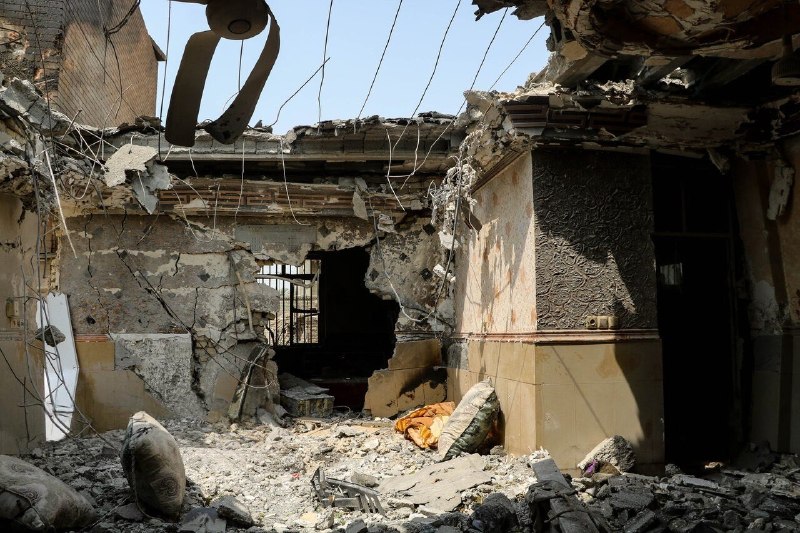
By the time the headlines caught up, the deal was already the easy part. On 15 June 2026, Iranian and American envoys said they had reached an agreement to reopen the Strait of Hormuz, ending a war that, by the most conservative reading, killed thousands of people and roiled the global oil trade (LiveMint, 14:54 UTC). Within hours, the harder arithmetic was being done by naval planners, port authorities and tanker insurers: mines laid during the conflict, escort arrangements still being negotiated, and a nuclear file that was paused, not resolved, while diplomats talked about it.
The sequence matters. A "deal" to reopen Hormuz, in the language the two sides used on Monday, is a political event. A working strait, with insurance underwriters willing to cover hulls at near-premium rates and refineries in India, China and the Mediterranean confident in their crude deliveries, is an engineering and confidence event. The two are not the same thing, and the gap between them is the story of the coming weeks.
What was actually announced
The announcement, carried on 15 June 2026 by Indian outlet LiveMint citing US and Iranian statements, frames the deal as the opening move of a longer process: Tehran and Washington have agreed to reopen the strait and to set the stage for talks on the Iranian nuclear programme (LiveMint, 01:54 UTC). The phrasing — "set the stage" — is doing real work. It does not commit either side to a substantive nuclear outcome. It commits them to talk about one. For a conflict that has already killed thousands and disrupted a fifth of the world's seaborne oil flows, that is a meaningful de-escalation, but it is not a settlement.
In practice, the immediate package consists of three moving parts. First, an end to attacks on commercial shipping in the gulf. Second, permission for vessels that had been trapped or routed around the strait to transit again. Third, an in-principle framework for the mine countermeasures that will make the second part physically possible. None of those three elements is fully operational yet. They are commitments to behave differently, conditional on the other side doing the same.
The mine problem is the schedule
The bottleneck is not political. It is explosive. According to security sources cited by Middle East Eye, ensuring that the Strait of Hormuz is safe from mines could delay a return to normal shipping traffic by weeks, even though both Iran and the United States have enabled some ships to exit the strait during the negotiation period (Middle East Eye, 14:40 UTC). The wording — "weeks" — is unusually candid for an outlet that, like most regional desks, is normally careful with timeline forecasts. It signals that the sources are confident in the order of magnitude, even if not the precise number of days.
The implication is that the deal clears the diplomatic airspace for traffic to resume but does not, on day one, hand shipowners a safe channel. Mine countermeasure operations — sweeping, hydrographic survey, identification and disposal of the devices laid during the war — are slow, expert-driven and weather-dependent. They are also politically sensitive, because the question of which navies do the sweeping, and on what authority, is part of the deal that has just been struck rather than something that was settled beforehand.
Into that gap stepped an American demining operation. Open Source Intel, summarising a Politico report, noted that US demining operations in the Strait of Hormuz are set to begin after the Iran agreement is signed (Open Source Intel / Politico, 14:42 UTC). Read carefully, that is a sequence, not a coincidence. The demining does not begin before the agreement; it begins after. That sequencing is itself a concession, and it implies that the mines in question include ordnance the United States has a direct interest in clearing — likely Iranian-laid devices whose location and trigger mechanisms American naval planners want to control rather than leave to a third party.
What the wire sees, and what it does not
The Western wire line on this story has been straightforward. A war ends. A deal is signed. Shipping resumes. It is a clean narrative, and it is the narrative most readers will encounter in the first 24 hours. It is also incomplete in two specific ways.
The first omission is cost. The sources available on 15 June 2026 do not put a single dollar figure on the economic damage from the closure — no quantified hit to global GDP, no specific insurance market loss, no named refinery that has gone offline for lack of feedstock. That absence is itself informative. The deal was struck before the full audit was possible, and the parties had an interest in announcing before the bill was final. The accounting will come, but it is not in the record yet.
The second omission is the nuclear file. The LiveMint summary is explicit that the agreement is a staging post for nuclear talks, not a nuclear agreement (LiveMint, 01:54 UTC). That distinction matters because the market, the Gulf monarchies, and Israeli planners are pricing in different futures depending on whether the next round produces a verified limits-for-sanctions arrangement, a longer interim freeze, or another collapse. The deal as announced is consistent with all three.
The structural frame: corridor politics, not theatre
What this episode demonstrates, more clearly than most recent Middle Eastern crises, is that control of a single maritime corridor is now the single most leverageable asset in the global energy system. The strait handled roughly a fifth of seaborne oil before the conflict; during the conflict, that share was redistributed through longer routes, strategic reserves, and demand destruction. The winners were the producers who could sell on a rerouted basis — Russia above all — and the refiners with diversified crude slates. The losers were the small Gulf shipowners and the importing economies in South Asia and East Africa, which lacked the optionality.
A deal that reopens the strait does not unwind that distribution. It freezes it at a slightly less painful setting. Insurance premia will not return to pre-war levels overnight; the war-risk underwriters who have repriced hulls will not reprice them back down until the mine countermeasures are visibly complete and the escort arrangements are routine. That is the "weeks" Middle East Eye is warning about, and it is a structural fact about how maritime insurance markets work, not a forecast about any particular vessel.
The other structural fact is the asymmetry of information. The United States knows where it dropped ordnance, where it knows Iranian mines were laid, and where it suspects them. Iran knows where its own forces laid devices, and what their trigger logic looks like. Neither side will publish that information. The demining operation that begins after the agreement is signed will, by definition, be an operation in which the public learns the result — a clean strait, or a still-contaminated one — and not the process. That opacity is normal for mine countermeasures. It is also, in a corridor of this importance, a permanent feature of the post-deal landscape.
Stakes over the next ninety days
The next three months will turn on four questions, in order of how quickly they can be answered. First, can mine countermeasure operations complete in the "weeks" window the security sources describe, or will weather, scope expansion, or political disputes push it out by a month or more. Second, can the insurance market be brought back to a state in which a standard hull-and-cargo policy covers Hormuz transits without an explicit war-risk premium. Third, can the nuclear talks that this deal was supposed to "set the stage" for actually begin on a defined schedule, with a defined agenda, and not be deferred the way similar rounds have been deferred in the past. Fourth, can the wider regional actors — the Gulf monarchies, Israel, the Houthi movement in Yemen — be brought into the new normal without testing it.
On each of those four, the deal as announced is necessary but not sufficient. The political commitment to reopen is real, and it is the product of a war the parties apparently concluded they could not win outright. The operational, financial, and diplomatic commitments that follow from it are still being written, and the next three months will tell whether the announcement was the start of a process or a pause before another one.
What remains contested
The sources available on the day of the announcement do not agree on every operational detail, and they do not attempt to. The LiveMint summary is clear on the political headline (LiveMint, 01:54 UTC). The Middle East Eye report on the demining timeline is the most specific quantitative claim in the record, and it comes from "security sources" rather than from either government on the record (Middle East Eye, 14:40 UTC). The Open Source Intel summary of the Politico report confirms the sequencing of the American demining operation but not its size, its rules of engagement, or its expected duration (Open Source Intel, 14:42 UTC). On those points, the public record is silent, and a reader should treat any number offered in the coming days as preliminary.
What is not contested is that a deal was reached, that it ends the fighting in the corridor for the time being, and that the world's oil trade now has a defined — if uncertain — path back to its pre-war configuration. That is more than was true a week ago. It is also less than the headline suggested.
This piece leads with the wire, weights the Middle East Eye operational reporting as the most specific quantitative claim in the public record, and treats the nuclear file as paused rather than settled — a position closer to the Indian and Gulf press than to the more triumphalist Anglo-American framing.
Wire provenance
This editorial synthesis draws on the following public wire/social posts:
- https://t.me/LiveMint/194
- https://t.me/OsintLive/2066417866044280832
Follow the event.
These dated source records provide context. They do not retrospectively verify this archive article.
Separate what the nuclear watchdog reported from what it could not determine after the June 2025 strikes.