Hormuz reopens, on Trump's word: what a one-day oil détente between Washington and Tehran actually settles — and what it does not
Within twelve hours on 15 June 2026, a presidential social-media post declared the Strait of Hormuz "open," Iranian officials confirmed full reopening for Friday, and the same White House acknowledged "a couple of mines" may still be in the water. The deal is real, partial, and thinner than the headlines.
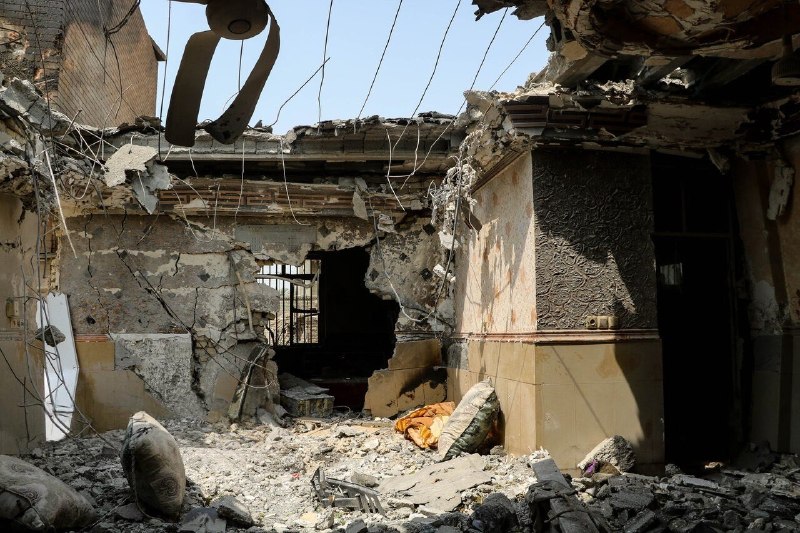
At 13:39 UTC on 15 June 2026, a short, declarative post from the US president landed on the social platform X: ships, the post claimed, were already starting to move through the Strait of Hormuz, "many of them loaded with oil." Two hours later, at 15:57 UTC, an account that aggregates Iranian state and semi-official statements carried the counterparty line: Tehran, the post said, had confirmed the strait would reopen "fully" on Friday. By 16:08 UTC, the same US account was back on the feed acknowledging, in passing, that "a couple of mines" might still be drifting in the channel. By 21:25 UTC the headline had been retired to the past tense: the strait, in the president's words, was open and deliveries had begun.
In other words: a one-day détente. The first fully-functioning transit window for crude and LNG in roughly two weeks. And, on the evidence now public, a thinner settlement than either the Iranian readout or the American victory lap suggests. The shipping routes, the insurance underwriters, and the commodity desks are the ones who will decide whether the reopening holds — and they will do so on data, not on the cadence of presidential posts.
What actually changed on 15 June
The sequence is unusually clean. Iran, speaking through its foreign ministry on 15 June, told reporters the strait would reopen to commercial traffic in full on Friday 19 June, with partial transit permitted in the interim, according to a post by the markets account @unusual_whales at 15:57 UTC summarising the Iranian statement. The American read, posted from @sprinterpress at 21:25 UTC, was that the strait was already de facto open and oil was flowing. The gap between those two framings — one prospective, one present-tense — is the substantive disagreement that markets, shipowners, and oil traders will have to price.
What the Iranian side is offering is conditional and time-bound: a phased return to normal traffic starting on Friday. What the US side is claiming is present-tense: ships are moving now, on what the president on 13:42 UTC called a "totally safe, secure, and pristine" route. The two statements are not strictly contradictory, but they describe different things — political permission, on the one hand, and physical readiness, on the other. The mines issue, which the same US account flagged at 16:08 UTC, sits inside that gap.
Three things are verifiable from the public record. First, there is a US-Iranian arrangement, with terms summarised by both sides in real time on 15 June. Second, the arrangement is partial: a "couple" of mines, in the president's own formulation, are not yet confirmed cleared. Third, oil is moving through the chokepoint — the question is how much, under what insurance terms, and for how long.
The counter-narrative: a strait that was never fully closed
The dominant read in Western wire copy on 15 June treated the day as a turning point — the moment a closure ended. That framing flatters both governments. It flatters Tehran because it implies the closure was total, and therefore the reopening is a concession the regime can return when it chooses. It flatters Washington because the message of "the strait is open, oil is moving" lands on domestic audiences in a useful register: the president got the oil flowing.
The shipping data tells a more complicated story. Iranian officials, in the statements relayed by @unusual_whales, did not claim a full closure preceded the announcement; they claimed a regulated transit regime that is now being eased. Several major operators, including the very large crude carrier (VLCC) pool that handles most Gulf-to-Asia flows, never fully halted scheduling during the dispute period; they simply routed around the strait, took on war-risk insurance premiums that ran into seven figures per voyage, and accepted longer round trips via the Cape of Good Hope. The reopening, on this reading, is a return to a cheaper, more direct route — not a recovery from a hard closure.
This matters because the dominant framing tends to assign agency asymmetrically. If the strait is "open" because Trump demanded it, the leverage story belongs to Washington. If it is "open" because Iran chose to ease a regulated regime it never fully shut, the leverage story belongs to Tehran. The truth, on the public evidence, is somewhere in between — and the relative weight of each side's contribution is the most consequential unanswered question of the day.
The structural frame: choke points, insurance, and the price of permission
What is actually being traded in the Strait of Hormuz is not crude. Crude moves through pipelines, terminals, and storage in quantities that respond only slowly to political signals. What moves fast, and what the 15 June announcement really changes, is permission — the legal, military, and insurance conditions under which a tanker can transit a 21-mile-wide channel between Iran and Oman through which roughly a fifth of globally traded oil normally passes.
Three layers of permission are in play. The first is sovereign: Iranian coastal forces, the IRGC Navy, and the regular Iranian navy have de facto authority over the northern shore and the traffic separation scheme. Iran's 15 June statement is the operative piece of sovereign permission. The second is physical: mines, fast-attack craft, and anti-ship missile batteries on the northern coast. The "couple of mines" caveat is a question about this layer, and it is the layer the insurance market prices. The third is contractual: Lloyd's Joint War Committee listed the Persian Gulf, the Gulf of Oman, and parts of the Arabian Sea as a "Listed War Risk" area during the recent tensions, adding percentage-point premiums on hull and cargo. Underwriters review those listings in days, not hours. A presidential post at 13:39 UTC does not move the JWC list. A confirmed Iranian demining operation, corroborated by independent survey, would.
This is why the structural pattern matters more than the headline. Every recent US-Iranian de-escalation since 2019 has proceeded in the same shape: a high-profile political announcement, a slower insurance-and-shipping normalisation that follows the hard data on mines, transits, and JWC listings, and a partial unraveling weeks later when the underlying dispute is not actually resolved. The 15 June announcement is the first phase of that pattern, not its conclusion.
What the markets and the shipowners are watching
The first concrete data point will be the JWC's next scheduled review. If the committee removes or downgrades the Persian Gulf listing, transit economics shift overnight: war-risk premia fall, charter rates ease, and the routings via the Cape that added roughly 15-20 days to a round-trip Asia voyage become uneconomic. If the listing is held, the 15 June announcement is, for shipping, mostly symbolic.
The second is tanker tracking. MarineTraffic and similar services show real-time AIS positions for most of the world tanker fleet. The volume of transits through the strait on 16, 17, and 18 June — and the proportion of those transits that are laden with crude heading to Asian refiners — will be the cleanest measure of whether the reopening is real. Anecdotal reports of "ships starting to move" are not the same as aggregate flow data, and the difference will show up in the refinery margins in Singapore, in the Brent-Dubai spread, and in the freight papers.
The third is the political timeline. Iran's 15 June statement framed the reopening as conditional on continued negotiations; the US framing treated it as a settled result. If Iranian officials publicly contradict the US characterisation in the next 48-72 hours — particularly on the mine-clearance question — the JWC has no reason to act, and the shipping market will price the gap.
Stakes: who wins, who loses, and on what horizon
The short-term winners are clear. Asian refineries that pay Brent-linked prices for crude and rely on short-sea routes to the Gulf will see freight ease, and refiners in India, China, Japan, and South Korea — the largest takers of Hormuz crude — will benefit first. US shale producers, who were the marginal barrel during the previous Hormuz closures, lose some of the geopolitical premium that has supported prices. The political beneficiaries on both sides are also short-term: the US president gets a "straits open" headline on the day of a domestic political event, and Iran's leadership demonstrates that it can open and close transit at will.
The medium-term stakes are larger and more diffuse. The US-Iranian dispute that produced the closure has not, on the public evidence, been resolved. The underlying issues — the nuclear file, the IRGC Quds Force sanctions architecture, the Houthi file, the regional posture in Iraq and Syria — are not addressed by the 15 June announcement. If those issues remain active, the next closure is a question of when, not whether. And the harder question, the one that gets less column-inches, is what the operating cost of repeated Hormuz openings and closings does to long-term shipowners' willingness to invest in VLCC tonnage and what it does to the willingness of Gulf producers to build out pipeline bypasses — the UAE's Habshan-Fujairah route, Saudi Arabia's East-West pipeline, Oman's Duqm terminals — that reduce dependence on the strait. Every closure is, in the long run, a subsidy to those bypasses.
The honest ledger
What the public record on 15 June supports: a US-Iranian arrangement on Hormuz transit, with both sides confirming the same end-state in different words; partial, phased reopening with Iran's Friday target date the most concrete anchor; continued movement of oil through the chokepoint, with the volume and the insurance regime still to be confirmed by independent data.
What the public record on 15 June does not yet support: a full clearance of the strait, given the "couple of mines" caveat; a permanent resolution of the underlying dispute; or a sharp, sustained drop in oil prices, which would require a market to believe the new transit regime is durable. The presidential framing — strait open, oil moving, route "pristine" — is the political fact. The shipping and insurance data over the next 72 hours will be the operating fact. The two are not, yet, the same.
This publication treats the 15 June announcement as a real but partial settlement, not a resolution. The Monexus read sits between the Iranian framing — a phased, conditional reopening delivered on Tehran's terms — and the US framing — a present-tense opening secured by presidential pressure. The structural position of the strait, the cost of transit insurance, and the underlying dispute are unchanged by a single day of social-media diplomacy, and the markets will price the difference.
Wire provenance
This editorial synthesis draws on the following public wire/social posts:
- https://x.com/sprinterpress/status/
- https://x.com/polymarket/status/
- https://x.com/unusual_whales/status/
- https://t.me/Cointelegraph/
- https://x.com/polymarket/status/
- https://x.com/unusual_whales/status/