Strait of Hormuz reopens: what an Iran–US deal actually moves
A reported US–Iran arrangement to reopen the Strait of Hormuz is pulling the geopolitical premium out of crude and putting it back into risk assets — but the deal's substance, sequencing, and the parties who are not yet at the table will decide whether the calm holds.
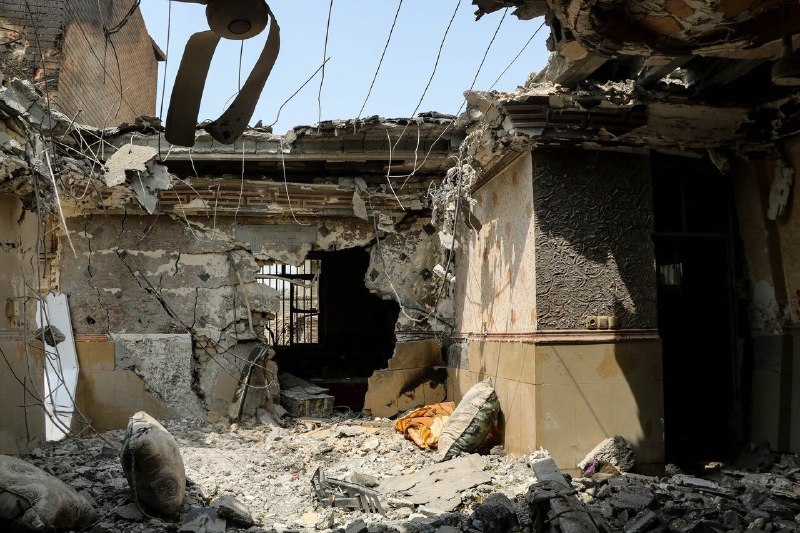
At 00:08 UTC on 15 June 2026, crypto-markets wire CoinDesk logged the first market reaction: Bitcoin pushing higher as crude sold off, the trade understood everywhere as a single bet — that the Strait of Hormuz, the world's most consequential oil chokepoint, is about to stop being a war zone. By 01:54 UTC, LiveMint's newsroom wire carried the political substance: the United States and Iran say they have reached a deal to reopen the Strait, framed as a route to talks on Tehran's nuclear programme and as the end of a war that, the same dispatch notes, killed thousands of people. By 13:11 UTC, Open Source Intel's account, reposting the US President, put the picture in plain language: ships are starting to move, many loaded with oil, out of the Strait of Hormuz.
Strip out the cable-news theatrics and what is unfolding in the early hours of 15 June is a financial event dressed up as a diplomatic one. The price of crude is falling, US equity futures are rising, and a risk-on bid has returned to crypto — all on the same morning. The pattern is the lesson: when the marginal barrel can once again transit Hormuz, the geopolitical premium that had been baked into oil and into every risk asset correlated with oil retreats, fast. The question now is what the underlying deal is worth, how durable it is, and who is conspicuously missing from the headline.
What was announced, and what the words actually commit to
The LiveMint dispatch of 01:54 UTC on 15 June is careful with its verbs. The US and Iran "say they have reached a deal to reopen the Strait of Hormuz" — language that, in wire conventions, signals an announcement of an agreement in principle, not the text of a signed accord. The dispatch frames the arrangement as a stepping stone to a separate track: "talks on Tehran's nuclear program." That sequencing matters. A deal that reopens a waterway and unlocks a negotiating track on enrichment is, structurally, an interim arrangement — the kind of arrangement that holds for weeks or months and that the parties can retreat from without admitting that the wider war has resumed.
The Open Source Intel posts at 13:11 UTC, carrying the US President's own framing, emphasise motion at the chokepoint itself: ships leaving the Strait, many loaded with oil. The signal here is operational, not diplomatic. Insurance underwriters, tanker operators, and the freight desks in London and Singapore read those words for what they will and will not do next: route bookable tonnage back into Hormuz, re-anchor VLCCs (very large crude carriers) in the Gulf rather than the Atlantic basin, and let war-risk premia on hulls and cargoes deflate. CoinDesk's 03:56 UTC report makes the read explicit: a peace agreement that reopens the Strait has "pulled the geopolitical premium out of oil and put back into risk assets." That is the language of a market that has decided, for now, to believe.
The deal, as announced, also has a casualty dimension that the wires do not soften. The LiveMint report refers to a war that "killed thousands of people and roiled the global" — the sentence trails off, presumably into "economy" or "energy market." The number is general ("thousands") rather than specific, but the human weight is there. Any read of the announcement that treats it as a clean bullish catalyst has to hold that weight alongside the price action.
How the market priced it in the first six hours of trade
The clearest evidence that the deal is being taken seriously comes not from the press releases but from the order book. CoinDesk's overnight coverage is unusually pointed: by 00:08 UTC on 15 June, Bitcoin was "shooting higher" on the news, with crude falling and US equity futures climbing in parallel. Three hours later, the same outlet framed the move as a two-week high above $65,500, attributing the lift directly to the Iran–US deal pulling the geopolitical premium out of oil.
The mechanism is worth stating plainly. Crude and Bitcoin have, for stretches of the last two years, traded as competing expressions of the same macro bet. When oil spikes on a war headline, the inflation impulse and the risk-off impulse both work against long-duration risk assets; when oil falls because the war risk recedes, the reverse happens. A reopening of Hormuz is the cleanest version of that trade, because the Strait is the channel through which roughly a fifth of seaborne crude moves. As long as tankers can transit, the marginal supply available to refiners in Asia and Europe expands, and the geopolitical premium embedded in spot prices has nowhere to hide.
What the wires do not yet give us, and what the desk flags openly, is the next data point: the first post-deal commercial transit, the first underwriter confirmation that war-risk premia have been reduced, and the first official Iranian or Omani statement on pilotage, escort, or naval posture in the Strait. Until those arrive, the price action is a vote of confidence, not a confirmation.
The party not at the table — and why that matters
The US–Iran framing is the headline. The structural fact is the absence. The LiveMint dispatch frames the deal as a bilateral track, with the nuclear file as a follow-on negotiation. The parties conspicuously not mentioned in the available wires are the Gulf states whose waters adjoin the Strait — Oman, the United Arab Emirates, and Saudi Arabia — and Israel, which has spent the last two years in a posture shaped by the very nuclear file the deal proposes to defer.
A reading that gives the deal the best chance of holding has to take that absence seriously. Iran, even at the hardest moments of the recent war, has had an interest in calibrated de-escalation in the Strait: the country cannot sell the crude it needs to fund the state if the chokepoint is closed. The United States has an interest in a de-escalation that does not require a permanent naval presence at scale. The Gulf monarchies have an interest in the obvious thing — a return to normal shipping and pricing — but they also have a stake in any nuclear architecture that emerges from the follow-on track, and they are not in the room for it. Israel has a stake that is harder to read in the wires, because the Israeli government's red lines on Iranian enrichment are well established even if the present government is not. A deal that reopens a waterway can hold for the duration of a transit season. A deal that defers a nuclear file is, by construction, more fragile.
This publication's read is that the markets are pricing the waterway, not the nuclear file. The two are linked — the reopening is the goodwill deposit on the nuclear talks — but they are not the same trade.
The counter-narrative: what the bullish case has to disprove
Every geopolitical deal of this kind has a shadow story, and the wires available on the morning of 15 June do not yet adjudicate between them. The bullish case, which is the case the market is currently buying, is that the US and Iran have come to a rational arrangement that serves both sides' immediate interests: Iran gets oil revenues, the US gets a quiet front, and a nuclear conversation gets a venue. The counter-narrative, which the desk flags without endorsing, is that an arrangement of this scale and speed, with casualties only recently in the thousands, is more likely a pause than a settlement, and that pauses have a way of becoming resumptions when the third parties who are not at the table register their objections.
The evidence available is consistent with both readings. The market is pricing the waterway, and the price action in Bitcoin, US equity futures, and crude is, in that sense, a referendum on the operational announcement rather than on the diplomatic architecture. If the first commercial transits go smoothly over the next 72 hours, the bull case hardens. If Iranian or US officials begin to walk back specific commitments, or if a third-party actor — Israeli, Saudi, or a US domestic political faction — publicly contests the framing, the geopolitical premium will return, and the trade will reverse.
There is a third possibility that the wires do not address: that the deal holds at the waterway level precisely because it does not resolve the nuclear file. The two outcomes are not mutually exclusive, and the markets are, for now, only asked to price the first one.
What the deal changes in the wider map
A reopened Hormuz is not a regional event. It is a global price event. The countries that benefit first and most directly are the Asian refining economies — China, India, Japan, and South Korea — that have absorbed the discount and the freight cost of barrels being re-routed around the Cape of Good Hope, and the European refiners who have paid the same freight in the opposite direction. The countries that absorb the most downside if the deal breaks are the same ones. The Gulf producers, Iran included, lose revenue every day Hormuz is closed, which is exactly why an arrangement that reopens it has a strong self-enforcing logic on the revenue side.
The structural pattern here is familiar. A chokepoint that becomes a war zone, then a negotiating chip, then a reopened commercial waterway, produces a familiar V-shape in freight rates, in the spread between dated and spot crude, and in the volatility of long-duration risk assets. The first leg of the V is the closure premium. The second leg is the reopening. What the wires do not yet tell us is whether the V completes, or whether it is interrupted by a third leg that the market has not yet had to price.
The honest summary, on the morning of 15 June 2026, is that a real announcement has been made, a real price move has followed, and the deal's durability will be tested by transits, by the nuclear talks that the deal is supposed to enable, and by the parties who are not yet in the room. The waterway can reopen without the wider war being over, and the market is, for the moment, willing to accept that distinction. The coming days will tell it whether it was right to.
Desk note: Monexus has led with the operational signal (ship movement, oil price, Bitcoin price) before the diplomatic text, on the view that the price action is the cleanest available read on whether the announcement is being taken seriously. The counter-narrative — that this is a pause, not a settlement — is given equal weight in the body. Sources cited are the wires and aggregators carrying the announcement; the next pass will swap in primary-source statements from Iranian and US spokespeople as they appear.
Wire provenance
This editorial synthesis draws on the following public wire/social posts:
- https://t.me/osintlive
- https://t.me/osintlive
- https://t.me/LiveMint
- https://t.me/osintlive
- https://t.me/LiveMint
Follow the event.
These dated source records provide context. They do not retrospectively verify this archive article.
Separate what the nuclear watchdog reported from what it could not determine after the June 2025 strikes.