Iran declares victory, Europe pushes conditional deal: the 12-day war that ended without a winner
Tehran claims a 12-day war was won; the EU's Ursula von der Leyen says any settlement must dismantle Iran's nuclear and ballistic programmes. Both sides are spinning the same war from opposite ends.
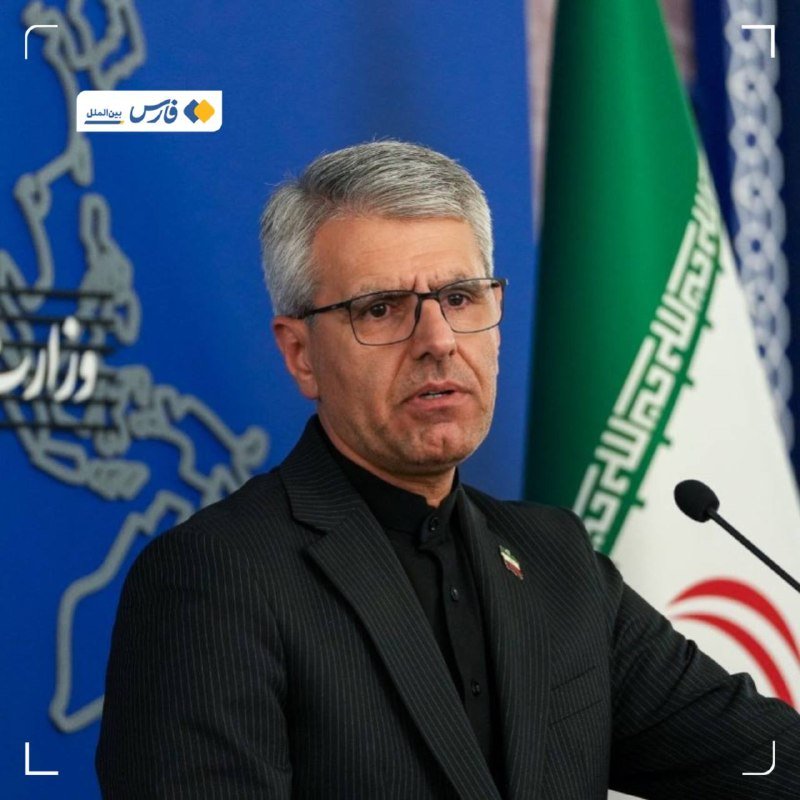
Tehran / Brussels, 15 June 2026, 16:20 UTC — Two contradictory verdicts on a 12-day war landed within an hour of each other on Sunday afternoon. In Tehran, President Masoud Pezeshkian told the nation that national unity was the decisive factor in winning what Iranian state media now routinely calls the "12-day imposed war" against Iran, a framing repeated by the official IRNA English channel at 16:20 UTC. In Brussels, European Commission President Ursula von der Leyen set out a tougher standard: any agreement with Tehran, she said, must open the door to wider talks, end Iran's nuclear and ballistic programmes, and address the country's human-rights record and weapons-of-mass-destroyer capabilities, with sanctions calibrated to those two pillars. The two readings cannot both be right, and the gap between them now sets the terms for whatever comes next.
The war itself is the connective tissue. Pezeshkian's claim of victory — echoed in a more combative register by outlets aligned with the Islamic Republic of Iran Military channel, which declared at 15:34 UTC that the adversary "came, got beaten, and returned empty-handed" — rests on the assumption that Iran absorbed the 12-day campaign and emerged with its territorial and political order intact. The EU's conditions, delivered the same hour, rest on the opposite assumption: that the fighting has produced a window in which Europe can extract substantive, verifiable concessions on enrichment, missile development, and human rights, and that the window will not stay open.
Tehran's read
The Iranian narrative, as carried by IRNA English and amplified by state-aligned Telegram channels, treats the 12-day conflict as a defensive success. Pezeshkian's framing — national unity as the decisive military-political asset — is the standard line Tehran has used after previous confrontations: the war is reframed as an external imposition ("imposed war"), the population as the principal defender, and the state as the instrument that held the line. The IRNA Military channel's line is a harder version of the same claim: a maximalist assertion that the other side failed operationally and withdrew without gains. Both are coherent, and both serve domestic purposes. Neither, on the public record, names the adversary or concedes losses; nor do they enumerate which specific Iranian capabilities were used, degraded, or retained.
Brussels' conditions
Von der Leyen's intervention, carried by Clash Report at 15:32 and 15:34 UTC, is more legally specific. The Commission is offering a sanctions framework with two named triggers — human-rights violations and weapons of mass destruction — and is making future relief conditional on a deal that ends Iran's nuclear and ballistic programmes and "opens the door to wider talks." She is also explicit that "there can be no lasting peace while Lebanon remains in flames," an acknowledgement that the European position treats the Israel–Hezbollah front, the wider regional fallout, and the Iran file as a single negotiating package. The two-pillar sanctions logic is consistent with the EU's Iran sanctions architecture since 2010; the addition of ballistic-missile language signals that the Europeans are not interested in a narrow nuclear file alone.
The structural gap
The gap is not a misunderstanding. It is the shape of the post-war contest. Tehran wants the war read as a fait accompli that confers legitimacy on the existing order; Brussels wants the war read as a leverage event that produces a different order. The European position implicitly accepts that the fighting ended Iran's nuclear and ballistic programmes is the price of relief from the existing sanctions regime — a high bar, and one that Iranian officials have historically refused. The Iranian position, by contrast, treats any preconditions of that kind as a continuation of the war by other means. Neither side has yet specified what counts as compliance, what the verification regime would look like, or which third parties would be at the table. The "wider talks" von der Leyen invokes are not yet a process; they are a precondition.
There is a further structural point. Iran's state-aligned channels frame the conflict in a register that is explicitly designed for a domestic audience, with the explicit "imposed war" language signalling that any future concession will read, at home, as surrender to a foreign power. The European framing, by contrast, is calibrated for parliamentary audiences in member states who will need a public rationale for any sanctions relief. Both sides are talking past each other in languages tuned for their own publics. That is normal in the immediate aftermath of a conflict, but it is also the precondition for either a deal or a re-escalation: deals require a common vocabulary, and re-escalation does not.
Stakes and the road to 2027
The forward risk is binary. If a diplomatic process starts, the central question is sequencing: which moves first — Iranian compliance with verifiable constraints on enrichment and missile development, or European sanctions relief — and which third party (the United States, Russia, China, the IAEA) is the guarantor. Tehran's domestic political incentive is to delay compliance; Brussels' is to lock in compliance before the political window closes. The next four to six weeks, before any G7 or UNGA window, are likely to determine which path is taken. If talks stall, the default trajectory is a slow re-imposition of sanctions under the EU's two-pillar framework, the expiry of any informal de-escalation understandings, and a higher probability of a renewed round of strikes in the autumn.
A counter-read deserves air. It is possible that the 12-day war produced a quieter alignment than either public posture suggests: that Tehran is willing to accept deep, verifiable constraints in exchange for sanctions relief and security guarantees, and that Brussels is willing to phase relief in stages, with the ballistic-missile language serving as the maximum opening position rather than a final offer. That is a plausible interpretation, but it is not what the public record shows. The Iranian read is a victory narrative; the European read is a conditional-extraction narrative. Until one side moves, the assumption should be that the two narratives harden, rather than converge.
The sources do not specify how many Iranian or adversary platforms were destroyed, what the casualty figures were, or what the verification terms of any future arrangement would look like. The narrative contest, in other words, is running ahead of the facts. That is the condition in which the next round of diplomacy — or the next round of fighting — will be decided.
This publication reported the Iranian and European statements as they were carried by the named channels on 15 June 2026, and treated Iran's state-aligned framing as a primary source for Tehran's position rather than as objective description of the war.
Wire provenance
This editorial synthesis draws on the following public wire/social posts:
- https://t.me/Irna_en
- https://t.me/ClashReport
- https://t.me/ClashReport
- https://t.me/IRIran_Military
Follow the event.
These dated source records provide context. They do not retrospectively verify this archive article.
Separate what the nuclear watchdog reported from what it could not determine after the June 2025 strikes.