Iran announces US memorandum of understanding on ending the war, with Lebanon folded in
Tehran says it has signed a memorandum of understanding with Washington to end the war on all fronts, and is treating a Lebanon ceasefire as a non-negotiable component.
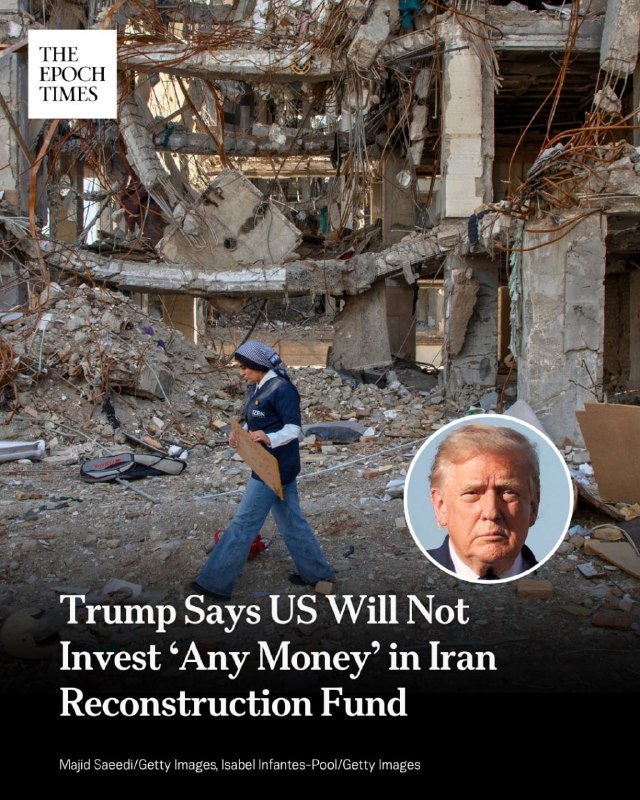
Iran's Foreign Ministry said on Monday 15 June 2026 that it had signed a memorandum of understanding with the United States to end the war on all fronts, and that an end to hostilities in Lebanon is an inseparable part of the package. Spokesperson Esmail Baqaei told reporters in Tehran that the finalisation of the document had been driven by a "convergence of diplomacy and the field," and that the details of its diplomatic provisions would be released to the media in the coming days, including a planned travel itinerary to several regional and neighbouring countries, according to a Tasnim news agency wire published at 11:47 UTC (Tasnim, 15 June 2026, 11:47 UTC; Tasnim, 15 June 2026, 11:49 UTC).
The announcement is the first explicit confirmation from the Islamic Republic that the wartime understanding under negotiation since the spring has been converted into a signed, if still vaguely defined, bilateral instrument. The Iranian framing matters: Tehran is publicly committing to a paper trail with Washington at a moment when its Lebanese ally is itself the subject of a parallel war that has killed civilians, displaced populations and triggered repeated Israeli strikes on what Israeli authorities describe as Hezbollah military infrastructure.
What Baqaei actually said
The briefing, broken into rolling Tasnim and Fars updates between 11:47 UTC and 12:16 UTC on 15 June 2026, carried four distinct claims. First, that the memorandum of understanding with the United States "finalised the agreement to end the war" across all fronts (Tasnim, 15 June 2026, 11:49 UTC). Second, that "the end of the war in Lebanon is an inseparable part of the comprehensive ceasefire understanding," with Iran reserving the right to monitor the strict implementation of the other parties' international commitments (Tasnim, 15 June 2026, 11:53 UTC). Third, that "respect for Lebanon's national sovereignty is one of the main pillars of the memorandum of understanding," with Baqaei objecting to the omission or diminishment of the word "Lebanon" in third-party characterisations of the deal (Tasnim, 15 June 2026, 11:54 UTC). Fourth, that the diplomatic clauses would be released in the coming days alongside a travel plan to "some regional and neighbouring countries" (Tasnim, 15 June 2026, 11:58 UTC; Fars, 15 June 2026, 11:59 UTC).
In a separate clip distributed by Mehr News, Baqaei added a clause that warrants close reading. Reaching an understanding to end the war, he said, "does not mean that we have forgotten or forgiven the crimes committed against the Iranian people" (Mehr News, 15 June 2026, 12:00 UTC). The sentence does two things at once: it preserves the agreement's political legitimacy inside Iran, where any deal that appears to whitewash wartime damage would face hard pushback, and it signals that Tehran intends to keep a public record of alleged violations for later use.
The same Mehr News dispatch also reported Baqaei's response to remarks attributed to the Lebanese Foreign Minister that, in the Iranian telling, cast the country and Hezbollah in an unflattering light. The spokesperson's reply was televised but not transcribed in the source material, and the precise wording of the Lebanese minister's original claim is not in the public thread (Mehr News, 15 June 2026, 12:16 UTC). That asymmetry is itself worth flagging: Iran's state-aligned wires are the only available window into the diplomatic exchange, and the Lebanese side of the conversation is, for now, hearsay filtered through Tehran.
Why Lebanon is the load-bearing wall
The insistence that "Lebanon" appear by name, and that the war there be treated as integral, is not a clerical nicety. Israel fought a 2024 campaign against Hezbollah that, on Israeli and UN counts, displaced roughly a million people from southern Lebanon and the southern suburbs of Beirut, killed several thousand Hezbollah fighters and Lebanese civilians, and produced the eventual November 2024 ceasefire that has frayed visibly over the past eighteen months. For Iran, a deal that delivers a quiet front with the United States while leaving the Lebanese theatre active would amount to a strategic loss: Tehran's deterrent value to its remaining non-state allies depends on its capacity to link the files together.
Baqaei's choice of phrase — that respect for Lebanon's national sovereignty is "one of the main pillars" of the memorandum — is the diplomatic equivalent of a tripwire. It is a public, on-the-record constraint that the United States and any other counterparty will now have to either honour or visibly breach. Lebanese sovereignty is, of course, contested terrain: Beirut's own political class is split between a presidential faction closer to Tehran and a prime minister's office more sceptical of the Hezbollah-led order, and the term itself has been a battleground in Lebanese politics for decades. By embedding the language in a bilateral instrument with Washington, Iran is trying to give those words an external guarantor.
The Lebanese Foreign Ministry has not, in the source material available to this article, publicly confirmed the contents of the memorandum. That gap is significant: a deal announced in Tehran and not echoed in Beirut is, at best, half a deal.
The counter-narrative worth taking seriously
Two readings compete. The first, dominant in Western commentary since the spring, treats Iran's public diplomacy as a face-saving wrapper around a de facto capitulation: the wartime pressure on Tehran's regional axis has been severe, the Israeli campaign dismantled the Hezbollah front, and the memorandum is essentially a managed retreat. On that view, Baqaei's language about monitoring, sovereignty and unforgiven crimes is rhetorical insurance for a domestic audience that has paid a real price.
The second reading, more credible inside the region, holds that the Islamic Republic is securing a structured exit rather than a defeat. By demanding the Lebanese file be included, by publishing a travel plan to neighbouring countries, and by reserving the right to monitor compliance, Tehran is converting battlefield attrition into a written arrangement with explicit reciprocal obligations. From this vantage, the deal preserves Iran's status as a regional actor with a seat at the table, even if the table is smaller than it was in 2023.
This publication finds the second reading more consistent with the textual evidence. A purely face-saving document would not need to name Lebanon three times in a single briefing, would not need to flag the omission of the word "Lebanon" in third-party coverage, and would not need to reserve the right to monitor compliance. Each of those moves is a constraint on Washington, and constraints on the stronger party are the tell of a negotiation rather than a surrender.
What the sources do not yet show
The most consequential unknowns are not in the Iranian readout. No American source in the available thread has confirmed the memorandum's signing, scope or sequence. The State Department, the White House and the office of any US special envoy are absent from the source set. No independent wire service — Reuters, Associated Press, Agence France-Presse, Bloomberg, the BBC, Al Jazeera — has, in the materials available to this article, corroborated Baqaei's account. The Lebanese Foreign Ministry, the Israeli Prime Minister's Office and the office of the UN Special Coordinator for Lebanon have not been heard from in the source material.
The absence matters. Memoranda of understanding in this region have, in recent years, been announced, denied, re-announced and quietly shelved within the same news cycle. The Baqaei briefing, taken on its own, establishes that Tehran says it has signed something. It does not establish what the document binds, who signed for the United States, what the verification mechanism is, or whether the agreement survives the first serious test. Readers should treat the announcement as the start of a verification process, not as a conclusion.
A second source of uncertainty is the war's underlying trajectory. Iranian, Israeli and US sources have disagreed throughout 2026 about whether a ground campaign against Iran itself remains on the table, about the scale of any continuing covert operations, and about the disposition of US carrier groups in the eastern Mediterranean. None of that operational picture is visible in the public thread that produced this article. A deal that ends the war on all fronts means little if the underlying military pressure continues under a different name.
Stakes over the next ninety days
If the memorandum holds, the immediate effect is the de-escalation of three interlocking fronts: the direct Iran-United States confrontation, the Iranian-Israeli exchanges that have run through proxies and direct strikes, and the Lebanese theatre where Hezbollah's remaining infrastructure and Israel's stated red lines still collide. In that scenario, Lebanon's reconstruction financing, the long-stalled IMF programme, and the question of Hezbollah's residual military posture all become negotiable in a way they have not been for nearly two years.
If the memorandum frays, the tripwire is exactly where Baqaei placed it: any US or Israeli action that is publicly characterised as disregarding Lebanese sovereignty, or any Hezbollah reconstitution that Israel treats as a casus belli, returns the file to active conflict. The instrument is, in other words, a stress test rather than a settlement. The 11:53 UTC Tasnim line — "Iran monitors the strict implementation of the international commitments of the other parties" — is the sentence to watch when the inevitable first dispute arises.
For now, the announcement is the first serious procedural milestone in what is shaping up to be a written rather than purely tacit arrangement. That is a real, if modest, gain over the pattern of 2024 and 2025. It is not, by itself, peace.
This article is built from Iranian state-aligned wire material published on 15 June 2026. Where the thread surfaced only one side of a claim — most notably the exchange with the Lebanese Foreign Minister — that limitation is flagged in the body rather than smoothed over. Independent corroboration from Western, Israeli, Lebanese and UN sources has not yet entered the public record in a form this article can cite, and the desk will update the picture as that material appears.
Wire provenance
This editorial synthesis draws on the following public wire/social posts:
- https://t.me/Tasnimnews_en
- https://t.me/JahanTasnim
- https://t.me/JahanTasnim
- https://t.me/JahanTasnim
- https://t.me/farsna
- https://t.me/mehrnews
- https://t.me/mehrnews
- https://t.me/JahanTasnim
Follow the event.
These dated source records provide context. They do not retrospectively verify this archive article.
Separate what the nuclear watchdog reported from what it could not determine after the June 2025 strikes.