Tehran and Washington move to seal a memorandum as the search for a wider settlement enters its final hours
Iran's foreign ministry says a final decision on how to sign a US-Iran memorandum will come within 24 hours, with respect for Lebanon's sovereignty named as a core pillar — a framing that puts the prospective deal at the centre of a wider regional settlement.
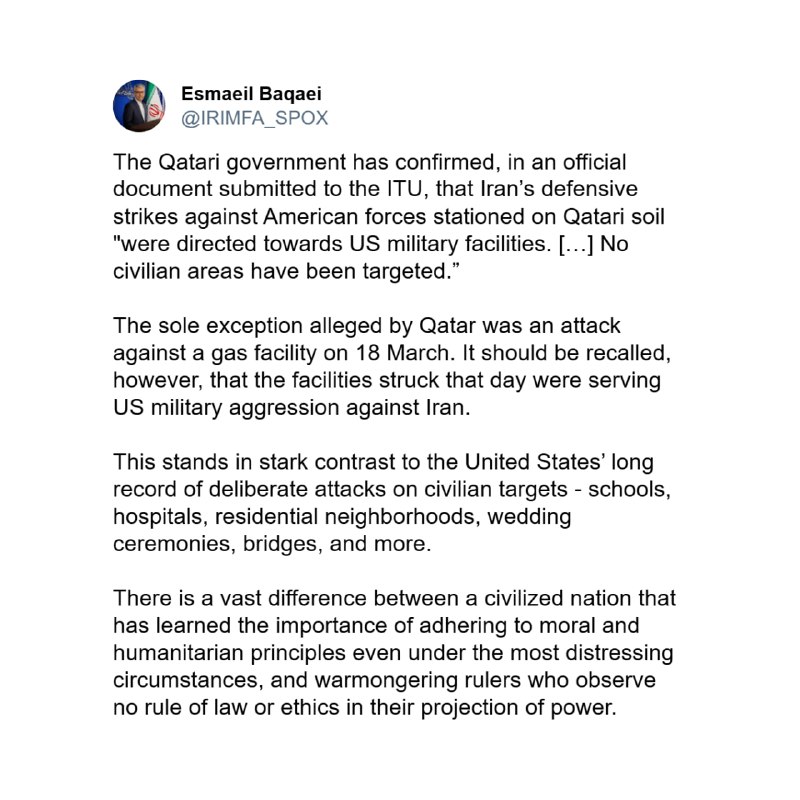
Iran and the United States are within a day of deciding how to sign a memorandum of understanding that Tehran's foreign ministry says is intended to end the war on all fronts — language that goes well beyond a narrow nuclear file and explicitly elevates Lebanon's sovereignty to a core pillar of the prospective deal. In a briefing carried by Iranian state outlets on the morning of 15 June 2026, foreign ministry spokesperson Esmaeil Baqaei said the text was being finalised and that a decision on the method of signature would come within twenty-four hours.
The framing matters. A memorandum of understanding is not a treaty; it is the diplomatic instrument of choice when two governments want to lock in political intent without submitting the text to a domestic ratification process that could be derailed by spoilers on either side. That procedural choice, in itself, tells you something about the level of trust the two sides are willing to extend to one another — and about the political pressures each is trying to manage at home.
What Baqaei actually said, and what he did not
Baqaei's public statements clustered around three points, repeated across state-aligned channels through the morning of 15 June. First, that respect for Lebanon's national sovereignty is one of the main pillars of the memorandum. Second, that the reference to the name "Lebanon" three times in the text is deliberate, a flag that the file is not being treated as a stand-alone Iran-US matter. Third, that a final decision on the method of signature would be taken within a day, leaving the diplomatic choreography — full ceremony, low-key exchange of initialled pages, or something in between — as the remaining open question.
What Baqaei did not do, in the statements that reached the wire by midday UTC, was name a counterpart in Washington, disclose the legal status the text would carry once signed, or place a date on entry into force. The omission is itself informative: a memorandum that names Lebanon three times but does not name a US signatory is a text whose political weight, at this stage, is being carried by the Iranian side's framing of it. That is a normal feature of negotiations in their final, most fragile phase, when a single leaked paragraph can collapse weeks of work.
The Mehr News wire, carried on Telegram at 11:56 UTC on 15 June, treated the spokesperson's comments as the lead foreign-policy item of the day. Tasnim's English service and its Farsi-language sister channel carried the same quotes within minutes, with the additional gloss that the memorandum is for "ending the war on all fronts" — a phrase that situates the deal inside a regional settlement rather than a nuclear one.
Why Lebanon is in the text at all
The conspicuous insertion of Lebanon into a US-Iran memorandum is the part of the story most likely to be misread by Western commentary that has, by default, framed the file as a nuclear-deal redux. Read against the public record of the past eighteen months, the Lebanese pillar is not extraneous. It binds the deal to the resolution of a separate, parallel confrontation along the Israel-Lebanon border — one in which Iran-aligned actors have carried principal weight — and it gives Tehran a written commitment from Washington that any cessation of hostilities will not be used as a pretext to roll back the position of those actors in Lebanese politics.
For Tehran, that is a hard requirement. For Washington, it is a way to put a single signature on what would otherwise be two or three separate negotiations with different timetables and different spoilers. The diplomatic logic is straightforward; the political logic, on Capitol Hill and in the Knesset, is considerably less so.
It is worth noting what the framing does not claim. The spokesperson did not say that the memorandum resolves the question of armed non-state actors on Israel's northern border, did not name Hezbollah, and did not commit either side to a specific sequence of de-escalation steps. A memorandum that names a country three times and a militia not at all is a text that has been carefully written to allow each side to read it as covering what it needs covered, and no more.
The signing question — ceremony versus quiet exchange
The remaining variable is the method of signature, and it is the variable on which the deal is most likely to be judged by audiences who will never read the text. Three options are realistically available. A high-profile ceremony, with foreign ministers present and cameras running, would lock in political buy-in from both governments at the cost of generating headlines that hardliners on each side can use against the deal for months. A quiet exchange of initialled pages in a third capital would let both governments point to a signed text while reserving the right to deny that a political event has occurred. A third option — a public announcement that the text has been agreed in principle, with technical teams given a further window to finalise the legal language — is the one that the spokesperson's "within today and tomorrow" formulation most closely resembles.
The choice is not cosmetic. In US domestic politics, a ceremony invites a Senate reaction; in Iranian domestic politics, a ceremony invites a Majles reaction. The lower the visible ceremony, the easier it is for each government to sell the deal as a technical arrangement rather than a strategic concession. That is the diplomatic logic of the format being floated, and it is also the reason the next twenty-four hours will be consumed by procedural negotiation rather than substantive renegotiation.
What the deal does not solve, and what it might still break
A memorandum that names Lebanon three times and contains no implementation timetable is, by construction, a political commitment rather than an operational one. It does not, on the public wording available on 15 June, dismantle any specific weapons programme, halt any specific convoy, or open any specific border crossing. What it does is create a shared written text that both governments can be held to — a baseline against which subsequent provocations can be measured and, in theory, priced.
That is a meaningful but narrow achievement. It is meaningful because the absence of such a baseline has been one of the structural drivers of escalation across the region for the better part of two years. It is narrow because every previous written commitment between the same two governments has, at some point, been declared dead by one side or the other, often on the basis of a single incident that the text itself did not anticipate.
The Iranian foreign ministry's choice of phrase — "ending the war on all fronts" — is the part of the framing most exposed. The war on all fronts is a phrase that implies a scope the memorandum, on the wording available to the public, does not match. Either the text is broader than the excerpts suggest, in which case the absence of those details from the briefing is itself a signal; or the text is narrower than the phrase, in which case the phrase is doing diplomatic work that the text cannot back up. Which of those readings is correct is, at the time of writing, not knowable from the open record.
Stakes over the next forty-eight hours
If a memorandum is signed in some form by 16 June 2026, the immediate effect will be a regional de-escalation premium: shipping insurance rates in the eastern Mediterranean, sovereign-bond spreads in Beirut and Baghdad, and the price of crude options on中东-sensitive strikes will all move on the assumption that the next ninety days are less dangerous than the last ninety. If the deal slips past the window Baqaei named, the move is the opposite — a premium for escalation, and a return to the pre-memorandum baseline in which each side's next move is interpreted through the lens of an imminent collapse.
The people with the most to lose from a collapse are, as usual, those who were not in the room. The populations along the Israel-Lebanon border, the civilian infrastructure of southern Lebanon, and the Lebanese banking system — already operating under a multi-year stress regime — all price a memorandum in the same currency: a reduction in the probability of a kinetic event on a given day. The governments that would pay the smallest price for failure are the same governments that have the largest domestic veto players.
What remains genuinely uncertain, and what the public record does not yet allow a reader to adjudicate, is whether the text the spokesperson described is the text that will actually be signed. Spokesperson statements during the final phase of a negotiation are themselves a negotiating instrument, and the version of the deal being sold to the Iranian public at midday UTC on 15 June is not necessarily the version that will be initialled in a third capital within the next twenty-four hours. The next datapoint will be the signature itself, and — depending on its visibility — the photograph, or the absence of one.
How Monexus framed this versus the wire: the Western wire services that have so far carried the story have, with limited exceptions, treated the prospective memorandum as a nuclear file with a Lebanese footnote. This publication treats it as a regional settlement file in which the nuclear question is one component, on the basis of the spokesperson's own characterisation that the text names Lebanon three times and is intended to end the war on all fronts. The diplomatic reading is closer to the latter, and the discrepancy will matter for how the deal is judged in the weeks after signature.
Wire provenance
This editorial synthesis draws on the following public wire/social posts:
- https://t.me/mehrnews
- https://t.me/tasnimnews_en
- https://t.me/JahanTasnim
- https://en.wikipedia.org/wiki/Iran%E2%80%93United_States_relations
- https://en.wikipedia.org/wiki/Ministry_of_Foreign_Affairs_of_Iran
Follow the event.
These dated source records provide context. They do not retrospectively verify this archive article.
Separate what the nuclear watchdog reported from what it could not determine after the June 2025 strikes.