Iran pushes back on US naval blockade as Netanyahu vows the Lebanon fight goes on
Iranian outlets say its ships crossed a US blockade line unhindered, while Tehran holds firm on Lebanon and sanctions in talks mediated by Pakistan. In Tel Aviv, Netanyahu insists the campaign is unfinished.
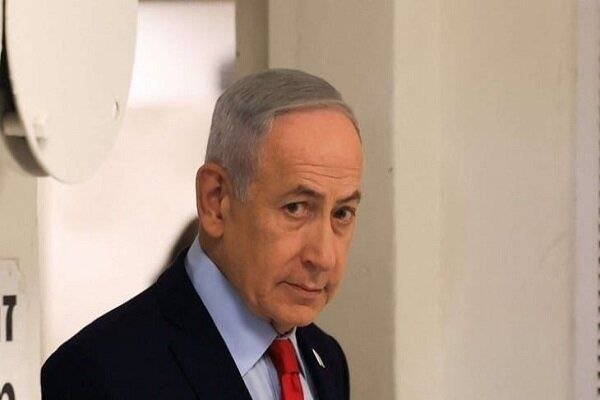
Two dispatches landing within the same hour on 15 June 2026 sketch a Middle East at a tactical impasse and a strategic crossroads. Iranian state-aligned outlet Fars reported at 20:53 UTC that Iranian ships had crossed a US naval blockade line "without issues." Minutes earlier, Israeli Prime Minister Benjamin Netanyahu, speaking from Tel Aviv, warned that the fight against Iran "is not over" and vowed continued occupation in Lebanon. Together, the two messages point to a region in which Iran is signalling maritime confidence while Israel is signalling that the campaign against Tehran's regional axis is unfinished, and where a Pakistan-mediated diplomatic track is being held hostage to disagreements over Lebanon and sanctions relief.
The pattern is not new but the tempo is. The naval theatre, the Israeli front in the north, and the negotiating track in Islamabad are now moving on parallel rails, and any one of them can blow the others up.
A blockade that did not block
The Fars report, picked up by the Clash Report wire on Telegram at 20:53 UTC on 15 June 2026, is brief and one-sided. It asserts that Iranian vessels transited a US naval blockade line "without issues," a phrase that, on its own, is more posture than proof. The claim is consistent with the long-running Iranian practice of testing US maritime enforcement in the Strait of Hormuz and the Gulf of Oman: state media tends to publicise successful transits and stay quiet about the unsuccessful ones. The US Navy's Central Command has, in recent years, framed Iranian tanker and cargo movements as routine enough to intercept, board, or shadow; Fars is now framing the same movements as routine enough to ignore. The two narratives can be true at once. A blockade is enforced selectively, and a single uneventful transit is not a refutation of the blockade's existence.
What is more telling is that Fars chose to publish the line at all. Tehran wants the United States, and the shipping market, to price in the possibility that Iranian commercial traffic can move freely. That has commercial value for Iranian crude exports under sanctions, and political value inside the country at a moment when the negotiating track in Islamabad is being held up over demands that go well beyond the maritime file.
Netanyahu's unfinished business
On the Israeli side, the Cradle Media wire carried Netanyahu's remarks at 20:51 UTC on 15 June 2026, in which the prime minister claimed he had saved Israel from "nuclear annihilation" while boasting of "destroying" Iranian military infrastructure, and pledged that the campaign would continue. He coupled that with a specific vow of continued occupation in Lebanon, a phrase that ties the Iran file directly to the northern front.
Two things are worth separating here. The first is the rhetorical move: in a single speech, Netanyahu frames the Iran campaign as a defensive necessity, the Lebanon campaign as an extension of it, and his own political record as the guarantor of both. That is a domestic pitch as much as a strategic one. The second is the operational substance. Continued occupation in Lebanon is not a slogan; it is a force posture. It tells Hezbollah, and Tehran, that Israel intends to hold ground in the south, and it tells the mediators in Islamabad that the Lebanon question cannot be quietly traded away in a nuclear-adjacent negotiation.
The Israeli framing has a coherent logic: as long as Iranian-aligned forces hold positions within striking distance of the Galilee, any deal that leaves those positions intact looks like a concession. The counter-framing, more common in regional press, is that an open-ended occupation in Lebanon creates the very long-run security problem it claims to solve.
What Iran is actually demanding
The third thread, again from the Cradle Media wire at 20:37 UTC on 15 June 2026, is the most consequential for the diplomatic track. Iranian media reports cited in the channel say that Article 4 of the Pakistani-mediated US–Iran deal demands a withdrawal of Washington's forces from a forward position in the region as a condition for Tehran to freeze or roll back parts of its nuclear and missile programmes, and ties any movement to Lebanese and sanctions files.
Read together, the package is harder than the public version of the talks usually admits. Tehran is asking for sanctions relief and a regional footprint adjustment, and is using Lebanon, not just enrichment, as a bargaining chip. That is the inverse of how the US side has historically preferred to sequence a deal: Washington wants a narrow nuclear file first, with regional questions parked. Iran's sequencing is closer to a comprehensive settlement, in which everything moves together or nothing does.
The structural read is straightforward. The United States is the incumbent order-setter in the Gulf; Iran is a sanctioned regional power with leverage over chokepoints, allied militias, and a nuclear threshold. A negotiation between them, mediated by Pakistan rather than by an EU-3 or Gulf venue, is itself a small piece of news: it tells you that the channels the United States is most comfortable with are not the ones producing movement.
Stakes, and what could still go wrong
Three things could break this picture in the next 72 hours. A serious maritime incident in the Gulf would convert Fars's boast into a casus belli, and would almost certainly collapse the talks. An Israeli ground operation of meaningful scale in southern Lebanon would foreclose the Lebanon clause of any deal before it is even tabled. And a sanctions-easing offer from Washington that is too small to satisfy Tehran's domestic audience would let hardliners in Tehran kill the package on their own terms.
The counter-narrative worth holding onto is the boring one. A single uneventful Iranian transit, a single Netanyahu speech, and a single set of Iranian demands are not, on their own, evidence of a turning point. They are evidence of a negotiation in which each side is signalling to its own audience while the mediators try to keep the file open. The most plausible read is that the blockade is being enforced selectively, the Lebanon occupation is being entrenched rather than expanded, and the Islamabad track is being held together by procedural momentum rather than by substantive agreement.
What remains genuinely uncertain is whether the US Navy has actually loosened its posture in the Gulf or whether Fars is simply narrating a single transit as a policy change. The sources do not specify. The honest version is that the public record, as of 20:53 UTC on 15 June 2026, is consistent with either reading.
Desk note: Monexus ran the Israeli side through the Cradle Media wire carrying Netanyahu's remarks and read Iran's demands through the same channel's coverage of the Pakistani-mediated track. The US naval-side reporting was sourced solely to the Fars-cited Clash Report line; no independent US Navy CENTCOM confirmation was available in the thread and none has been asserted.
Wire provenance
This editorial synthesis draws on the following public wire/social posts:
- https://t.me/ClashReport
- https://t.me/thecradlemedia
- https://t.me/TheCradleMedia
- https://t.me/thecradlemedia
- https://t.me/TheCradleMedia
Follow the event.
These dated source records provide context. They do not retrospectively verify this archive article.
Separate what the nuclear watchdog reported from what it could not determine after the June 2025 strikes.