Israel's Coalition Faces a Public Crack Over a US-Iran Deal That May Not Yet Exist
Finance Minister Bezalel Smotrich declared a US-Iran deal 'bad for Israel and for the entire free world.' The harder question is whether the deal he is attacking has actually been signed.
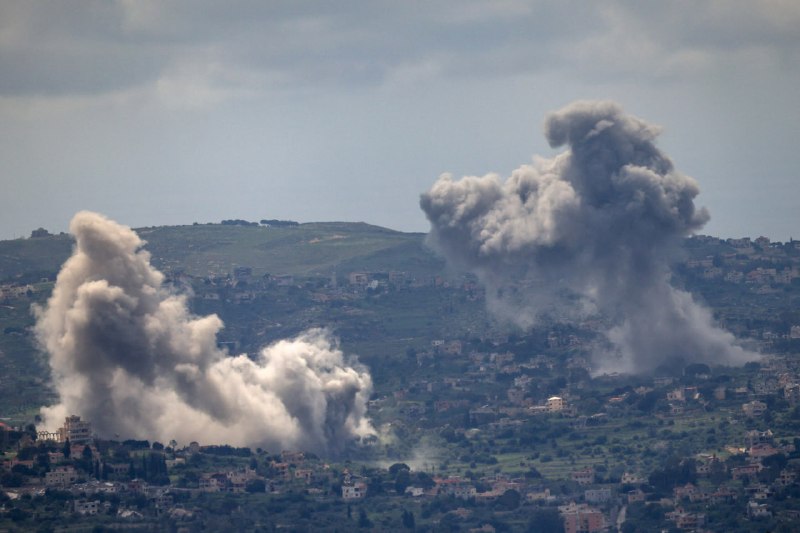
On the morning of 15 June 2026, Israel’s Finance Minister Bezalel Smotrich walked into a controversy that may, or may not, have a counterpart on the other side of the world. In remarks carried by the Telegram channel Clash Report at 07:42 UTC, Smotrich declared that "the agreement with Iran is bad for Israel and for the entire free world. Period." The same post credited the joint US-Israeli campaign with "many achievements in weakening Iran" and signalled — in clipped English, as is the channel’s habit — that more was to come. Two hours earlier, at 05:53 UTC, Al Alam Arabic had reported an Israeli official, speaking to Hebrew Channel 13, calling any deal "shocking for the entity" and insisting that "there is no one in the leadership, from the Prime Minister to the Chief of Staff, who" backs it. By 07:07 UTC the Telegram channel RNIntel paraphrased the same line, attributing it to a "senior Israeli official." The Israeli political class, in other words, is loudly rejecting a deal that, in the public record available at the time of writing, has not been formally announced.
That gap — between the certainty of the attack and the elusiveness of the object being attacked — is the story. A grand-bargain narrative is moving through Israeli coalition politics faster than the diplomatic text appears to be moving through any negotiating channel, and the result is a cabinet argument being conducted partly in the dark. To read Smotrich and the unnamed official at face value is to conclude that Washington is on the verge of conceding something intolerable. To read the same two sources against the absence of any signed document is to conclude that Israel’s political system is, for now, performing its opposition before it knows the terms.
The shape of the objection
Smotrich’s framing is unambiguous: the deal, in his telling, is bad for Israel and bad for the world. The follow-on claim — that the US-Israeli campaign has "many achievements in weakening Iran" — is the more revealing of the two. It concedes that something has changed. A Finance Minister who believed the status quo remained intact would not need to take a victory lap while denouncing a surrender. The sequence implies that the Israeli right reads the diplomatic moment as the closing of a window in which pressure on Tehran was producing results, and that the proposed agreement would reopen that window from the other side.
The "shock" register used by the unnamed official quoted by Channel 13 carries the same logic. Senior officials who expect to be ignored rarely brief against a prospective deal in real time. They brief against it when they believe their objection might, in the narrow window before signature, actually move a decision. The political economy of the leak is itself evidence that something is on the table — even if the text of that something has not been made public.
What the wire says, and what it does not
It is worth being honest about what the public record on 15 June 2026 contains, and what it does not. The Telegram channels cited above are reporting Israeli reactions and Israeli leaks. None of them publishes the text of a US-Iran agreement, the date of any signing ceremony, the name of an Iranian signatory, or the location of any talks. The Israeli objections are sourced and on the record. The deal they describe is, as of 07:42 UTC on 15 June 2026, an asserted object — present in the rhetoric of its opponents, not yet present in any document a reader can consult.
That asymmetry is the single most important fact in the story, and it is easy to lose. Smotrich has spent political capital on denouncing a deal. A senior Israeli official has spent credibility on a quote to Channel 13. These are not free actions; both are bets that the deal will be announced and that opposition now will be cheaper than opposition later. The alternative reading — that the entire exercise is preparatory positioning for a negotiation that may produce a much narrower arrangement, or no arrangement at all — is harder to maintain in the face of the language used, but is consistent with the public absence of the underlying document.
Coalition arithmetic, in plain language
The political reading is more straightforward than the diplomatic one. Smotrich is a member of a coalition whose right flank treats any accommodation with Tehran as a strategic error. The objection is not new; it is a continuation of a years-long position. The novelty is the public coordination. Smotrich speaks; an unnamed official confirms, on a Hebrew-language channel with a domestic audience, that the position is shared "from the Prime Minister to the Chief of Staff." That formulation — head of government, head of military, Finance Minister, all aligned — is the language of a unified front, not of a factional outburst.
If the front is genuinely unified, the question becomes what the government intends to do with that unity. Public objection alone does not stop a deal. The instruments that would stop a deal — parliamentary action, pressure on the US Congress, public preparation of alternative policy, coordination with Gulf partners — have not, in the materials available on 15 June, been documented as under way. The objection is therefore either the opening bid in a longer campaign, or a way of recording dissent in advance so that, whichever way the deal goes, no one in the Israeli political system can later be accused of having stood silent.
The structural pattern
A wider pattern is in view. In the last several years, the public phase of US-Iran diplomacy has repeatedly proceeded in two tracks running at different speeds: a fast diplomatic track in which drafts move between capitals, and a faster political track in which regional allies and domestic constituencies take positions on drafts they have not been shown. Israel’s role in that pattern is to be the most vocal of those constituencies, and to be visibly so. The effect is to raise the domestic political cost in Washington of any concession that can be read as Israeli rejection — which, in practice, is most concessions of any kind. The structural question is not whether Israel can veto an American agreement with Iran; under the formal architecture of alliance it cannot. The structural question is whether the cost of overruling an ally that has positioned itself publicly and early is one that any US administration, of either party, will reliably choose to bear.
The counter-position, articulated most clearly in Iranian state media and in some Gulf commentary, is that a public Israeli objection campaign is itself part of the negotiating environment Tehran is pricing in. From that vantage, the louder the objection, the more credibly Iran can argue that any agreement it signs represents a meaningful change in the regional political weather, and the more political value it extracts at home. The objection campaign, on this reading, is not an obstacle to a deal; it is the deal’s amplifier.
What the evidence does not yet support
Several things remain genuinely unsettled. The first is whether a US-Iran agreement in the form Smotrich and the unnamed official are describing has actually been initialled by anyone. The sources reviewed here establish the existence and content of Israeli opposition. They do not establish the existence, text, or signatories of the agreement being opposed. The second is whether the unanimity claimed by the Channel 13 source — from the Prime Minister to the Chief of Staff — reflects a formal decision of the security cabinet, a coordinated talking-points exercise, or the reporter’s compression of multiple less-aligned briefings into a single line. The third is the role, if any, of Israel’s military and intelligence chiefs in the coming days. Public objections by ministers are easy to read; quiet preferences of security services, which in past Israeli coalitions have not always matched ministerial rhetoric, are not.
A reader looking for a forecast will not find one here. What can be said is that on 15 June 2026, the loudest voices in Israeli politics are speaking against a deal whose public footprint is, as of the timestamps above, almost entirely a function of their own objection to it. That is a coherent posture. It is also a posture that, in the absence of the document, leaves the rest of us to argue about a thing whose shape we have not been shown.
Desk note: Monexus has reported this story from the Israeli and Iranian-language wires carried in the Telegram cluster, with no editorial presumption about the text of any deal until a primary document or an on-the-record statement from a named signatory is available. The Israeli objections are on the record and have been quoted as such; the deal itself has been treated as an asserted object pending verification.
Wire provenance
This editorial synthesis draws on the following public wire/social posts:
- https://t.me/ClashReport
- https://t.me/rnintel
- https://t.me/alalamarabic
Follow the event.
These dated source records provide context. They do not retrospectively verify this archive article.
Separate what the nuclear watchdog reported from what it could not determine after the June 2025 strikes.